Menu

Why Choosing the Best Water Heater Type for the Pacific Northwest Is Different From Anywhere Else
Choosing the best water heater type for the Pacific Northwest is not the same decision it would be in Arizona or Georgia. Oregon and Washington homeowners deal with cold mountain-fed groundwater, damp winters, and utility costs that make efficiency a real priority — not just a selling point.
Most households here lose more hot water capacity in winter than they expect. A unit rated for three showers in a warmer climate may only deliver one and a half showers when groundwater temperatures drop to 40–45°F. That gap between expectation and performance is where the wrong choice gets expensive.
Here is a quick-reference guide to help you choose:
Best water heater type by situation in the Pacific Northwest:
| Situation | Best Choice |
|---|---|
| Maximize long-term energy savings | Hybrid heat pump water heater |
| Endless hot water for busy households | Tankless (on-demand) water heater |
| Lowest upfront cost, reliable backup | Traditional storage tank water heater |
| Small household, limited space | Tankless (gas or electric) |
| Medium-to-large home with a garage or basement | Hybrid heat pump water heater |
| Rural property, no natural gas access | Electric heat pump or electric tankless |
Water heating accounts for roughly 20% of your home's total energy use. In Oregon and Southwest Washington, that means the type of water heater you choose has a direct and lasting impact on your monthly utility bills, your comfort during cold months, and how long you go before your next replacement.
The good news is that 2026 is one of the best years on record to upgrade. Between federal tax credits, Energy Trust of Oregon incentives, and utility rebates from providers like Puget Sound Energy, the right choice has never been more financially accessible.
The sections below cover everything you need to make that decision with confidence — groundwater temperatures, system comparisons, sizing guidance, rebates, and maintenance — specific to homes across the Portland metro and surrounding Oregon communities.

Best water heater type for the pacific northwest basics:
- heat pump water heater vs tankless cost comparison
- tankless vs tank vs heat pump water heater comparison
- which water heater saves the most energy
The PNW Groundwater Challenge and Sizing Your System
When choosing a water heater, many homeowners focus solely on the size of the tank or the physical footprint of the unit. However, the most critical factor in the Pacific Northwest is our incoming groundwater temperature.
During our damp, chilly winter months, groundwater temperatures in areas like Portland, Forest Grove, and Oregon City can plunge to between 40°F and 45°F. To deliver a comfortable, relaxing shower, your water heater must raise that water to approximately 120°F. This requires an incredible 75-to-80-degree temperature rise.
This temperature rise directly impacts how much hot water your system can produce at any given moment. A water heater that easily handles back-to-back showers in summer might leave you shivering in January because the heating elements or burners have to work twice as hard to heat up the icy incoming water.
When selecting your ideal system, keep these key selection factors in mind:
- Peak Demand: Think about your household's busiest hour of water usage (usually the morning rush when showers, the dishwasher, and the washing machine might run simultaneously).
- Fuel Source Availability: Do you have natural gas running to your home, or are you fully electric? This will dictate your installation path.
- Space Constraints: Is your water heater tucked into a tiny closet, or does it have ample room in an unconditioned basement or garage?
- Efficiency Goals: Are you aiming to slash your monthly utility bills as much as possible?
Sizing the Best Water Heater Type for the Pacific Northwest
Sizing a water heater is not a one-size-fits-all equation. If you choose a storage tank system, you must look closely at its first-hour rating (FHR). The FHR is the number of gallons of hot water the heater can supply per hour starting with a fully heated tank. If you have a family of four in a home with multiple bathrooms, a standard 50-gallon tank might fall short during peak morning demand, meaning you may need to upsize to a 65-gallon or 80-gallon model.
For tankless systems, sizing is all about flow rate measured in gallons per minute (GPM). Because of our cold winter groundwater, a tankless unit rated for 10 GPM in a warm climate might only deliver 5 GPM of actual hot water in Oregon during winter. This means sizing must be based on winter groundwater performance, ensuring the unit can handle your primary shower and a kitchen sink simultaneously without dropping in temperature.
If you are noticing your current system struggling to keep up with your household's needs, it might be time for a professional assessment. Homeowners looking to upgrade can explore options for Water Heater Replacement Beaverton OR to ensure their new system is perfectly calibrated for our local climate.
Comparing the Best Water Heater Type for the Pacific Northwest
To make the right choice for your lifestyle and home layout, it helps to see how the three primary water heater technologies stack up. Each system has unique strengths and trade-offs regarding standby heat loss, recovery rates, and space requirements.
For a deep dive into how these systems compare side-by-side, check out our Tankless vs Tank vs Heat Pump Water Heater Comparison.
Comparison Table: Tankless, Hybrid, and Traditional Tank Systems
| Feature | Traditional Storage Tank | Tankless (On-Demand) | Hybrid Heat Pump |
|---|---|---|---|
| Energy Efficiency (UEF) | Low (0.90 to 0.95) | High (0.87 to 0.97+) | Ultra-High (3.50 to 4.0+) |
| Lifespan | 8 to 12 years | 20+ years | 10 to 15 years |
| Space Required | High (takes up 10-15 sq. ft.) | Very Low (wall-mounted) | High (requires 1,000 cu. ft. of air) |
| Standby Heat Loss | Yes (heats water continuously) | None (heats on demand) | Minimal |
| Recovery Rate | Slow (30-60 minutes) | Instantaneous | Moderate |
| Best Location | Closet, basement, garage | Utility room, exterior wall, closet | Garage, unconditioned basement |
Traditional Storage Tank Water Heaters
Traditional storage tank water heaters remain the most common choice in older homes throughout the Portland metro area. They function by keeping 40 to 80 gallons of water constantly heated to 120°F, ensuring a reservoir of hot water is always ready to go.
The primary advantage of a traditional tank is its upfront affordability and reliability. If your water heater suddenly bursts on a Friday night, replacing it with another standard tank is often the fastest, most straightforward solution.
However, standard tanks suffer from standby heat loss. They constantly turn on to reheat the water inside the tank even when you are sleeping or at work, which wastes energy. Furthermore, once you exhaust the stored hot water, you have to wait 30 to 60 minutes for the tank to recover. Over time, the constant presence of standing water leads to internal corrosion, meaning these units typically last only 8 to 12 years in our region.
If you are weighing your options between a standard tank and a modern upgrade, you can read our comparison on Tankless vs Tank Water Heater for Your Home.
Tankless On-Demand Water Heaters

Tankless water heaters are incredibly compact, wall-mounted units that completely eliminate the storage tank. Instead of keeping water hot all day, they use high-powered burners or electrical elements to heat water instantly as it flows through a compact heat exchanger.
The most famous benefit of going tankless is the endless supply of hot water. If you are the last person in your household to shower in the morning, you will still enjoy the exact same hot water temperature as the first person. Additionally, because they only heat water when you turn on a tap, tankless systems are between 24% and 34% more energy-efficient than traditional tanks for homes using moderate amounts of hot water.
Another massive benefit is space savings. Reclaiming the 10 to 15 square feet of floor space occupied by a bulky storage tank is a game-changer for homeowners in cozy bungalows or townhomes. Gas-powered tankless units are generally preferred in our area because they can easily handle the heavy temperature rise required by our cold winter groundwater without requiring massive electrical panel upgrades.
If you live in the west metro area, you can learn more about local installation options by visiting our service pages for Tankless Water Heaters Tigard OR and Tankless Water Heaters Hillsboro OR.
Hybrid Heat Pump Water Heaters
Hybrid heat pump water heaters represent the pinnacle of energy efficiency in 2026. Instead of generating heat directly through electrical resistance elements, a heat pump water heater works like a refrigerator in reverse. It pulls heat from the surrounding ambient air and transfers it into a storage tank of water.
Because moving heat requires significantly less electricity than generating it, hybrid heat pumps are two to three times more energy-efficient than standard electric water heaters. In fact, they can save a family of four hundreds of dollars per year on their electricity bills.
As a secondary benefit, these systems dehumidify and slightly cool the space where they are installed. This makes them a fantastic fit for damp basements or garages in the Pacific Northwest, where excess moisture can sometimes be an issue. However, they do require a larger footprint and need to be installed in spaces that remain between 40°F and 90°F year-round with at least 1,000 cubic feet of surrounding air space to operate efficiently.
To understand how this innovative technology works, check out our resource on What is a Heat Pump Water Heater or read through our Heat Pump Water Heaters Complete Guide.
To further compare your choices, you might also find these guides helpful:
- Ultimate Heat Pump Water Heater Guide
- Heat Pump Water Heater Benefits for Homeowners
- Heat Pump Water Heater vs Traditional Tank Comparison
Energy Efficiency and Long-Term Savings in Oregon and Washington
When evaluating the best water heater type for the Pacific Northwest, looking at the long-term operating costs is crucial. While a highly efficient water heater may require a higher initial investment for the equipment and installation, the monthly utility savings accumulate quickly.
To compare the efficiency of different models, look at the Uniform Energy Factor (UEF). The higher the UEF, the more efficiently the system converts energy into hot water. Traditional electric tanks usually have a UEF around 0.90 to 0.95, while tankless gas units can reach 0.97. Hybrid heat pump water heaters blow these numbers out of the water with UEF ratings often ranging from 3.50 to 4.0, meaning they are up to 400% efficient.
To see which systems yield the highest financial returns over their lifespan, take a look at Which Water Heater Saves the Most Energy and explore Energy Efficient Water Heater Options Compared.
Finding the Best Water Heater Type for the Pacific Northwest to Maximize Rebates
In 2026, upgrading to a high-efficiency water heater is highly incentivized. Homeowners in Oregon can take advantage of substantial financial incentives to offset their installation costs.
The Energy Trust of Oregon offers generous incentives for qualifying energy-efficient upgrades. By working with an approved contractor, you can secure instant discounts or post-purchase rebates on hybrid heat pump water heaters and high-efficiency gas tankless units. Additionally, local utilities offer rebates for qualifying models that meet specific UEF thresholds.
On top of local utility incentives, the federal government offers robust tax credits through the Energy Efficient Home Improvement Credit (Section 25C). Homeowners can claim a federal tax credit of up to 30% of the total installed cost (up to a maximum of $2,000) for qualifying hybrid heat pump water heaters.
To make sure you don't leave any money on the table, review our guides on Heat Pump Water Heater Rebates and Incentives and Federal Tax Credits for Heat Pump and Water Heater Upgrades.
Installation, Maintenance, and Water Quality Considerations
No matter which water heater type you choose, keeping it running smoothly requires a basic understanding of maintenance and water quality. While Portland's Bull Run water supply is remarkably soft and clean, homeowners in surrounding rural areas like Banks, Gaston, or Yamhill often rely on well water, which can carry elevated levels of calcium, magnesium, and sediment.
When hard water is heated, minerals crystallize and settle at the bottom of storage tanks or inside the narrow water passages of a tankless heat exchanger. This scale buildup acts as a barrier between the heating source and the water, forcing your system to run longer and hotter to achieve the same results. This can decrease efficiency by 15% to 25% and cause premature equipment failure.
To combat this, we recommend these essential maintenance practices:
- Annual Flushing: Storage tanks should be flushed once a year to remove accumulated sediment. Tankless units require regular descaling with a mild vinegar solution every one to two years to keep the heat exchanger clear of mineral scale.
- Anode Rod Inspection: Traditional storage tanks rely on a sacrificial anode rod to attract corrosive elements in the water, protecting the steel tank lining. These rods should be checked every three to five years and replaced when they become heavily degraded. Tankless systems do not use anode rods, which is one reason they enjoy a longer lifespan.
Garage and Basement Installations in Mild Climates
In the Pacific Northwest's relatively mild climate, garages and unconditioned basements are highly popular installation locations for water heaters. However, putting a hybrid heat pump water heater in these spaces requires careful planning.
Because a hybrid heat pump extracts heat from the surrounding air, it needs access to a steady volume of air to function efficiently. If you install one in a tiny, sealed utility closet, it will quickly exhaust the available heat and be forced to switch over to its backup electric resistance elements, defeating the purpose of its high-efficiency design. Placing the unit in a spacious garage or unconditioned basement provides the necessary air volume (typically 1,000 cubic feet, or roughly a 10' x 12' room).
In the winter, unconditioned spaces can get chilly. Fortunately, modern heat pumps are designed to operate efficiently even when ambient temperatures dip into the 40s. However, proper freeze protection is still vital for any water supply lines running through unheated areas.
To learn more about how these units perform in unheated spaces, check out Do Heat Pump Water Heaters Work in Garages and review the Heat Pump Water Heater Benefits for Homeowners.
Frequently Asked Questions About PNW Water Heaters
How does cold winter groundwater affect tankless water heater flow rates?
During winter, incoming groundwater temperatures in the Pacific Northwest can drop to around 40°F. Because a tankless water heater must raise this water to 120°F (an 80-degree rise), the unit has to slow down the flow of water through the heat exchanger to ensure it reaches the target temperature. As a result, a tankless unit that provides 8 GPM in the summer might only deliver 4 to 5 GPM in the winter. We always size tankless systems based on these winter conditions to ensure you never experience a sudden drop in water pressure or temperature.
Are hybrid heat pump water heaters effective in unheated PNW garages?
Yes, hybrid heat pump water heaters are highly effective in unheated Pacific Northwest garages. Because our winter temperatures are relatively moderate compared to the Midwest or East Coast, garages rarely drop below freezing for extended periods. Most modern hybrid units operate efficiently down to 40°F. If the garage temperature drops below this threshold during an unusual cold snap, the hybrid system will automatically switch to standard electric resistance mode temporarily to ensure you still have plenty of hot water.
What is the average lifespan of a water heater in Western Oregon?
The average lifespan of a water heater depends heavily on the technology type and how well it is maintained. A traditional storage tank water heater in Western Oregon typically lasts 8 to 12 years before internal corrosion sets in. A hybrid heat pump water heater generally lasts 10 to 15 years. Meanwhile, a well-maintained tankless water heater can easily reach 20 to 25 years of service life because it does not store water and is not subject to the same constant corrosive pressure as a storage tank.
Conclusion
Choosing the best water heater type for the Pacific Northwest comes down to aligning your home’s layout, your family’s daily routine, and your long-term energy goals. Whether you want to slash your monthly utility bills with a hybrid heat pump, reclaim valuable floor space with a sleek tankless unit, or replace an old storage tank with a reliable, budget-friendly option, making an informed choice pays off for years to come.
At Best Owner Direct HVAC & Electrical, we are proud to be a family-owned business based in Cornelius, OR. We focus on providing reliable, affordable, and energy-efficient services to our neighbors across the Portland metro area. Our licensed, professional technicians are always ready to help you size, select, and install the perfect system for your home.
We serve homeowners and businesses throughout Banks, Beaverton, Canby, Carlton, Cornelius, Dayton, Dundee, Forest Grove, Gaston, Gladstone, Hillsboro, King City, Lafayette, Lake Oswego, Milwaukie, Newberg, North Plains, Oregon City, Portland, Sherwood, Tigard, Tualatin, West Linn, Wilsonville, and Yamhill, OR.
If you are ready to upgrade your home comfort and start saving on your energy bills, visit our Water Heater Services Page today to schedule a professional consultation!


Why Forest Grove Basements Need Specific Ventilation Strategies in FallAs September rains raise local water tables, your subterranean spaces can quickly become damp and musty. Find out if your home needs dedicated HVAC return air.
Read more
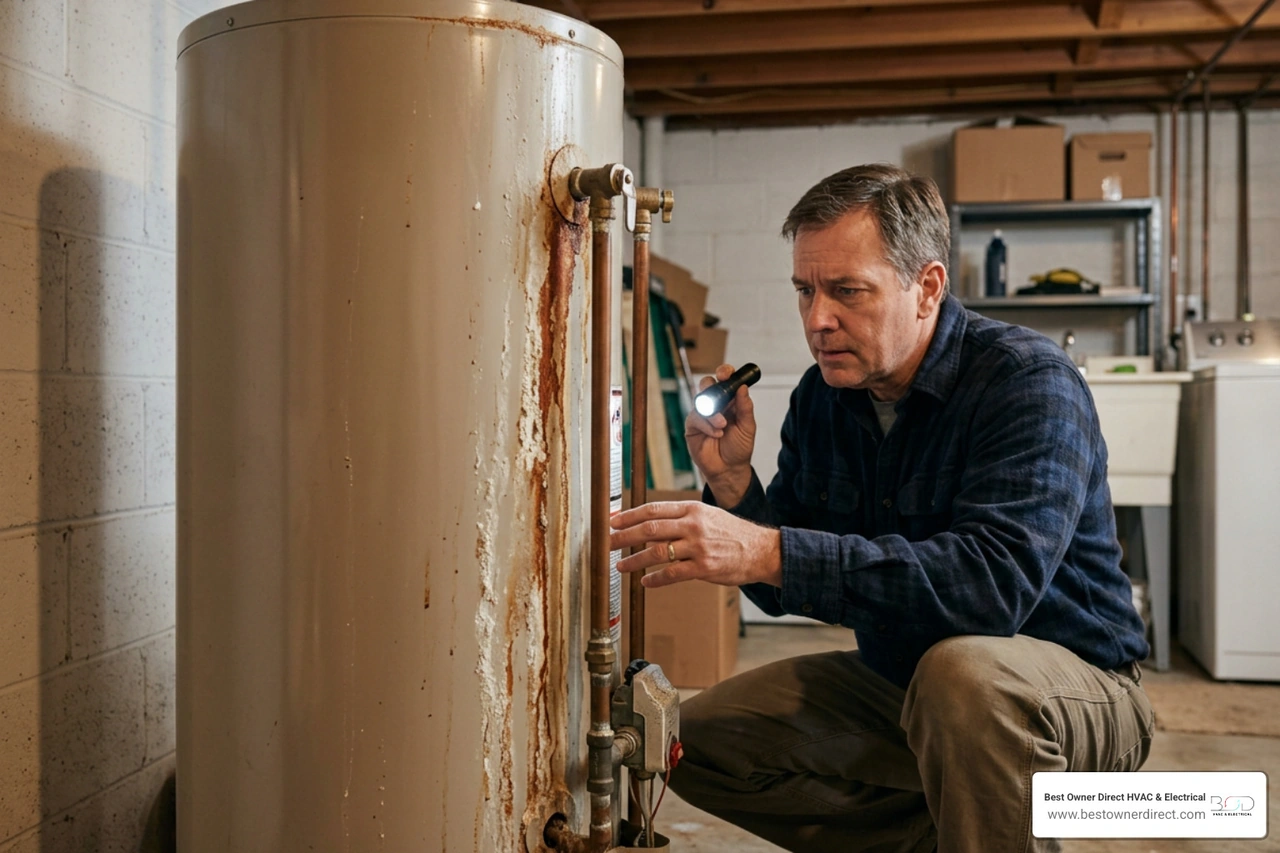
How to Identify Water Conditions Harming Your Water Heater in 5 Simple StepsLearn how water conditions affect your water heater faster. Discover 5 simple steps to identify damage from hard water, acidity, and scale buildup.
Read more
Preparing Your Home's Electrical System for Space Heaters and Heavy Winter LoadsA standard 1500W space heater consumes nearly 80% of an older bedroom circuit's capacity instantly. Find out why resetting that tripped breaker is a hidden fire hazard.
Read more