Menu


How Sediment Buildup Affects Water Heater Life
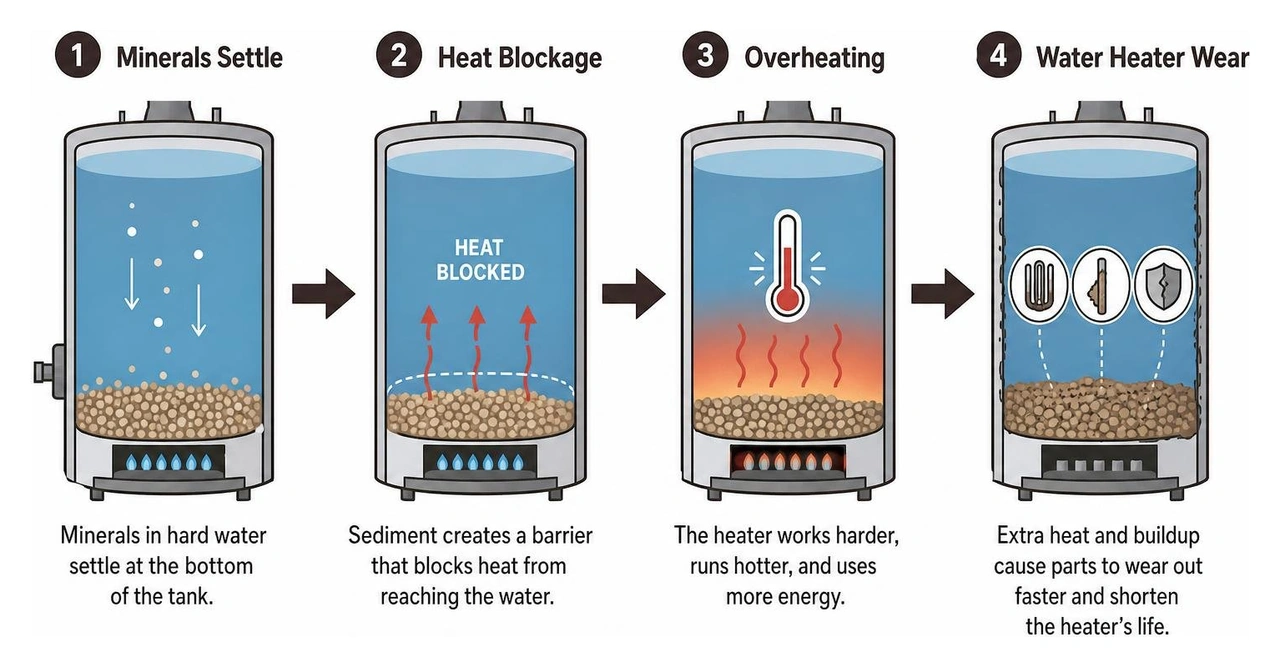
How sediment buildup shortens your water heater life is simple: minerals settle at the tank bottom, creating a barrier between the heat source and the water. The unit must run longer and hotter to do its job. Over time, that extra heat can strain the tank, wear out heating parts, reduce hot-water capacity, and raise energy use. Hard water makes this problem happen faster. For homeowners needing water heater services in Cornelius, OR, Best Owner Direct HVAC & Electrical is a family-owned company serving homes and businesses across the Portland metro and nearby Oregon communities.
Explore our water heater services or schedule water heater repair service.
I am Chandrine Stepisnik, and the sections below explain what sediment is, how to spot it, and why early attention matters.
If your water heater is rumbling, producing less hot water, or taking longer to recover, contact Best Owner Direct HVAC & Electrical for water heater service.
What Causes Mineral Accumulation in Water Heating Systems
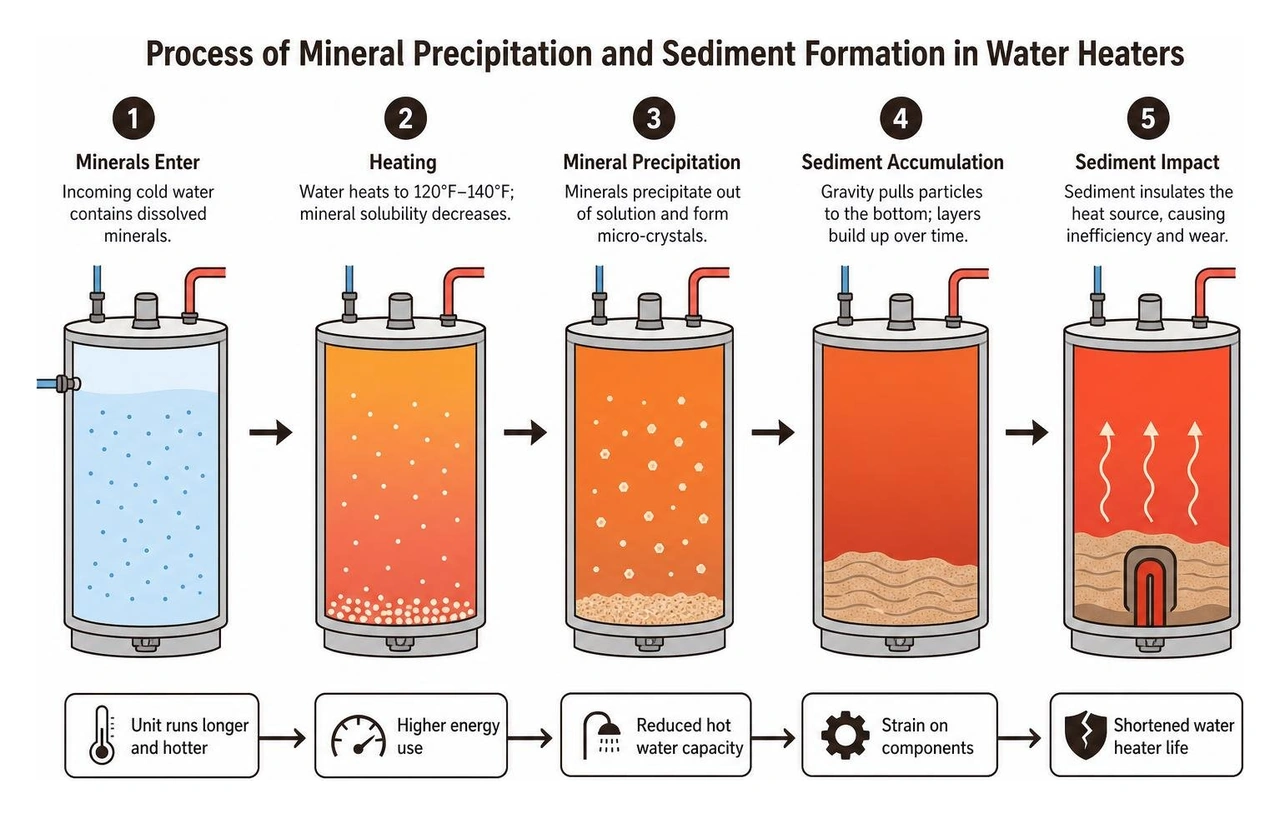
Every time fresh water enters your storage tank, it brings naturally occurring minerals with it. Water throughout our region contains varied levels of dissolved minerals—primarily calcium carbonate and magnesium hydroxide. Under normal ambient temperatures, these minerals remain completely dissolved and invisible. However, everything changes when your system initiates a heating cycle.
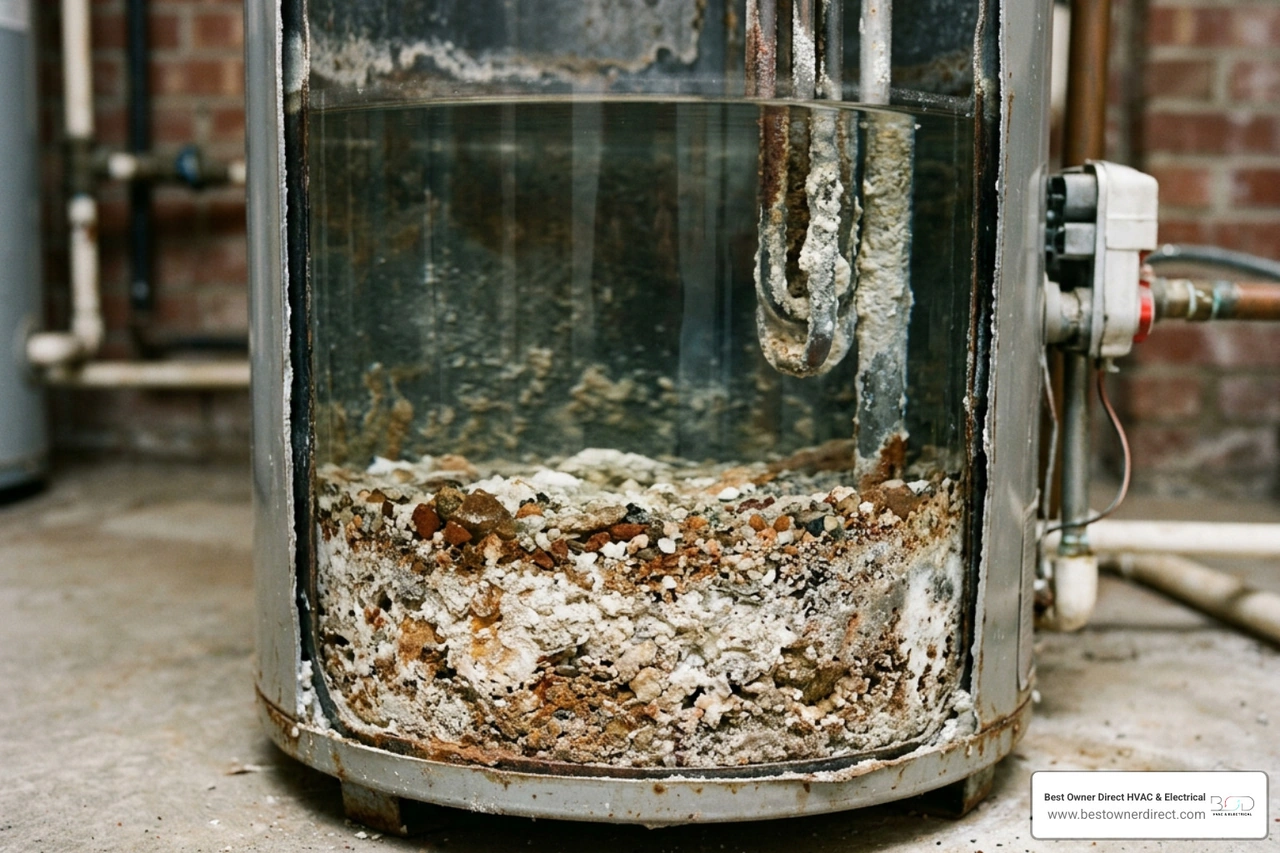
When water is heated past 120°F to 140°F, the chemical solubility of calcium and magnesium decreases rapidly. The heat forces dissolved minerals to precipitate out of the liquid, transforming into micro-crystals of solid scale. Gravity then pulls these heavy mineral particles to the floor of the tank. Over repeated heating cycles day after day, millions of tiny mineral grains accumulate into a dense sludge, eventually hardening into a rock-like calcite crust.
Setting thermostat temperatures excessively high speeds up this chemical process dramatically. High temperatures trigger faster mineral separation, turning standard tap water into a continuous source of solid deposit. Approximately 85% of American homes contend with hard water, making sediment accumulation a nearly universal challenge for tank-based systems.
Mineral Sediment vs. Dip Tube Debris
Not all debris found at the bottom of a water heater comes from mineral precipitation. It is critical to distinguish between natural calcium sediment and plastic dip tube debris, as they signal entirely different problems.
The plastic dip tube runs from the cold water inlet at the top of the tank straight down to the bottom, ensuring incoming cold water is delivered directly to the heating zone. In older or defective units, these plastic tubes can break down over time due to chemical exposure and thermal stress. When a dip tube deteriorates, it disintegrates into white, waxy, or greasy plastic flakes that migrate through your home's pipes, clogging aerators, showerheads, and appliance intake valves.
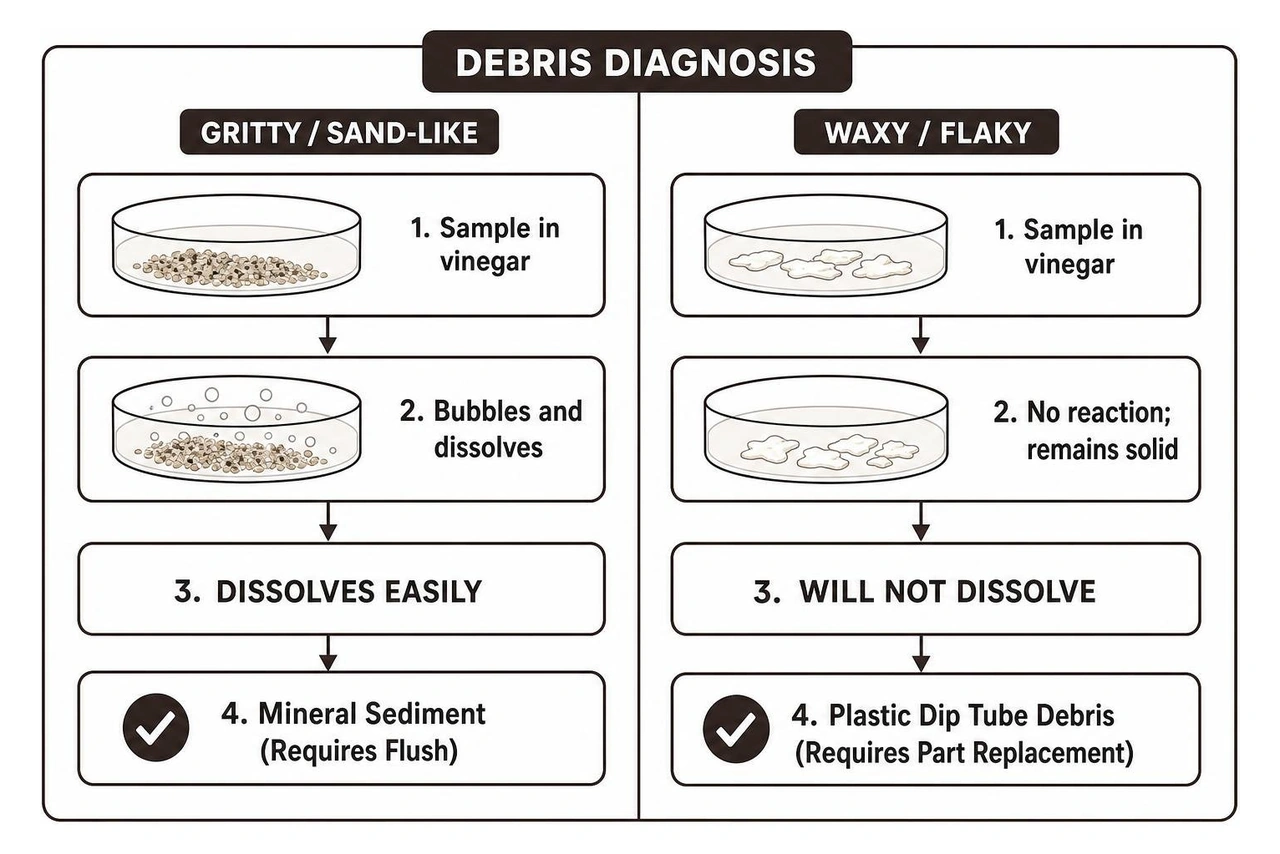
To identify what is inside your system, collect a small sample of the white sediment from your tank's drain valve or a clogged tap aerator and place it in a bowl of household vinegar:
- Calcium Carbonate Sediment: The acetic acid in vinegar reacts vigorously with alkaline minerals, causing the sand-like granules to bubble and dissolve completely. This confirms hard water scale accumulation.
- Dip Tube Flakes: Plastic fragments will sit in the vinegar without reacting or dissolving. This indicates mechanical plastic failure rather than hard water scale, requiring a specialized component replacement rather than a simple tank flush.
How Sediment Buildup Shortens Your Water Heater Life Through Thermal Stress
The primary reason how sediment buildup shortens your water heater life centers on extreme thermal stress. Sediment acts as a dense thermal insulator sitting directly over the primary heat source. In a clean unit, heat transfers freely from the burner or element through the steel tank into the water. When a 1-inch to 2-inch sediment blanket covers the bottom, heat cannot escape into the water effectively.
This thermal barrier creates a destructive feedback loop:
- Localized Overheating: The steel tank bottom or internal heating elements reach dangerously high temperatures because the water above cannot absorb the thermal energy.
- Metal Expansion and Fatigue: Storage tanks are constructed of heavy steel coated with a delicate protective glass lining. Extreme heat causes localized "hot spots" where the steel expands rapidly beyond its design limits.
- Glass Lining Failure: Repeated expansion and contraction cycles crack the interior glass lining, exposing bare raw steel to water.
- Accelerated Corrosion & Leaks: Once water touches raw steel under intense thermal stress, internal rust forms quickly, resulting in structural tank failure and major leaks.
- Storage Capacity Displace: Beyond thermal damage, physical space is compromised. Heavy sediment can occupy 15% to 20% of a tank's interior storage volume. A 1-inch sediment layer in a 40-gallon tank displaces 3 to 5 gallons of usable hot water capacity.
Without routine maintenance, a unit designed to last 10 to 15 years can suffer structural damage and fail in as little as 5 to 7 years. When thermal stress symptoms appear, professional Water Heater Repair Service is essential to preserve the unit before structural failure occurs.
Warning Signs: How Sediment Buildup Shortens Your Water Heater Life
Catching sediment accumulation early protects your home from sudden appliance breakdowns. Your system usually gives clear audible, visual, and performance indicators long before total system breakdown occurs.
Here are the primary warning signs to watch for:
- Loud Rumbling or Popping Sounds: Often referred to as "kettling," this classic symptom sounds like marbles rattling inside the tank or water boiling violently in a tea kettle. Water gets trapped underneath the dense layer of mineral sediment at the bottom of the tank. As the burner heats this trapped water, it turns to superheated steam. The steam bubbles expand rapidly and burst violently through the hard mineral crust, creating loud popping and rumbling noises.
- Fluctuating Water Temperatures: If your morning shower suddenly turns lukewarm before reverting to hot, mineral deposits are likely insulating the thermostat sensor or disrupting natural water circulation inside the tank.
- Decreased Hot Water Volume: Running out of hot water much faster than before is a physical sign that compacted sediment is occupying a large portion of your tank's usable volume.
- Slower Hot Water Recovery Time: When a thick thermal barrier blocks heat transfer, the burner or electric element must stay energized significantly longer to bring incoming cold water up to the target temperature.
- Cloudy, Rusty, or Discolored Hot Water: If tap water runs yellow, brown, or cloudy only when set to hot, fine sediment particles are being stirred up from the tank bottom and pushed into your home's distribution pipes.
If you observe any of these warning signs, our team at Best Owner Direct HVAC & Electrical provides comprehensive Water Heater Services across Oregon to evaluate and restore system performance.
Gas vs. Electric Water Heater Vulnerability to Sediment
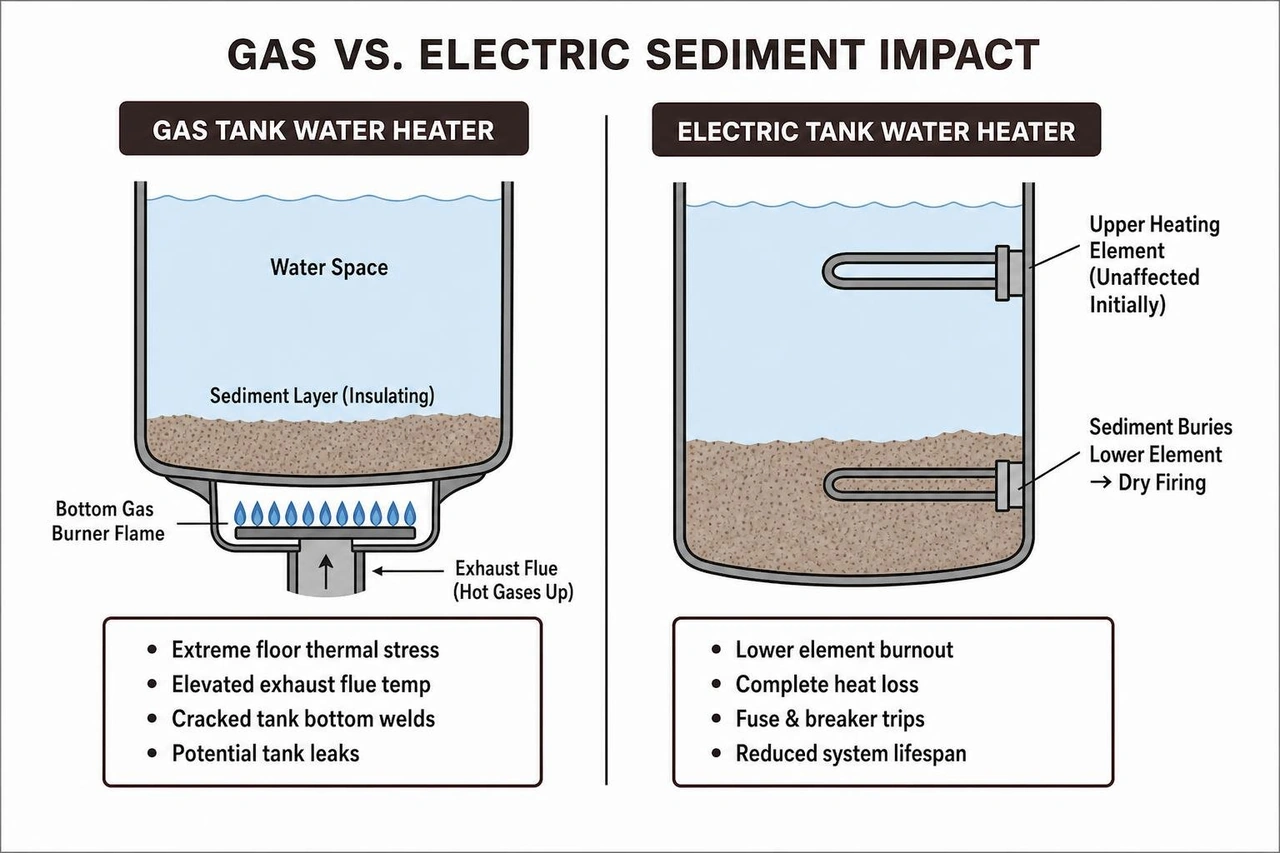
While both gas and electric storage systems suffer from mineral deposits, the physical mechanisms of damage differ based on how each system applies heat.
Gas Water Heaters
In gas water heaters, the main burner flame sits directly underneath the curved steel floor of the tank. Exhaust gases travel up through a central internal flue. Sediment settles naturally on this bottom surface—the exact spot where heat transfer must take place.
As sediment thickens, heat from the intense burner flame gets trapped inside the bottom metal assembly. This raises exhaust flue gas temperatures and causes severe thermal stress along the bottom welded seams. Over time, the constant overheating warps the tank floor, cracks the internal glass protective barrier, and leads to direct tank leaks.
Electric Water Heaters
Electric water heaters feature upper and lower electric heating elements that extend horizontally into the middle of the water volume. Sediment settles to the floor, gradually rising until it completely submerses the lower heating element.
Once buried in mineral scale, the lower element cannot dissipate its intense heat into the surrounding liquid. The element overheats, burns out from dry-firing, or shorts out electrically. When the lower element fails, the home experiences a severe drop in hot water capacity because only the upper portion of the tank gets heated.
Maintenance Solutions and Flushing Protocols
Preventive maintenance is the most effective approach to counteract how sediment buildup shortens your water heater life. By routinely clearing accumulated mineral solids from the system, you preserve thermal efficiency, prevent metal fatigue, and keep hot water flowing dependably.
Our technicians follow a comprehensive maintenance strategy that includes:
- Annual System Flushing: Thoroughly removing settled mineral debris before it hardens into solid calcite deposits.
- Sacrificial Anode Rod Inspections: Checking internal anti-corrosion components to shield raw steel from aggressive oxidation.
- Thermostat Management: Adjusting water temperature settings to 120°F (49°C) to slow down mineral precipitation while avoiding scalding risks and legionellae bacterial growth.
- Water Quality Solutions: Recommending whole-home filtration or softening systems to eliminate dissolved minerals before they reach heating equipment.
For a deep dive into comprehensive maintenance best practices, explore our Ultimate Water Heater Guide 2026.
Preventing How Sediment Buildup Shortens Your Water Heater Life Through Maintenance
Draining and flushing your water heater tank regularly keeps mineral accumulation under control. Homeowners in areas with high mineral content should flush their systems every 6 months, while annual flushing is standard for moderate water conditions.
Follow these steps to safely flush a conventional storage water heater:
- Power Down the Heat Source: Switch off the electric circuit breaker for electric units. For gas units, turn the gas control valve knob to the "PILOT" setting. Never drain a powered system, as dry firing will burn out electric elements in seconds or overheat empty gas tanks.
- Shut Off the Cold Water Supply: Turn the cold water inlet valve at the top of the heater to the fully closed position.
- Connect a Hose and Route to Drain: Attach a heavy-duty garden hose to the brass drain valve located at the base of the unit. Direct the opposite end of the hose to a floor drain, utility sink, or outdoor location capable of handling scalding water.
- Relieve Internal Vacuum: Open a hot water faucet inside your home (such as a bathtub or kitchen tap) to break the vacuum inside the plumbing lines and allow water to drain smoothly.
- Open the Drain Valve: Carefully open the tank drain valve. Let the water flow until the tank empties completely.
- Agitate Bottom Sediment: To break up heavy, stubborn sludge lying on the tank floor, briefly open the main cold water supply valve in short 10-second bursts. The sudden influx of pressurized cold water stirs up settled minerals, helping them flush through the drain hose.
- Refill and Restore Power: Close the drain valve and disconnect the hose. Turn the cold water inlet valve back on to fill the tank completely. Keep a hot water tap open upstairs until a steady stream of water flows without air bubbles. Once full, restore electrical power or turn the gas valve back to "ON."
If your drain valve is clogged with heavy deposits or refuses to open, turn to our localized specialists providing Water Heater Repair Hillsboro OR for prompt professional intervention.
The Critical Role of the Sacrificial Anode Rod
The sacrificial anode rod is your water heater's primary defense against internal rust and corrosion. Suspended inside the tank, this long rod made of magnesium, aluminum, or zinc sacrifices itself by corroding faster than the steel tank walls through a natural electrochemical process called galvanic corrosion.
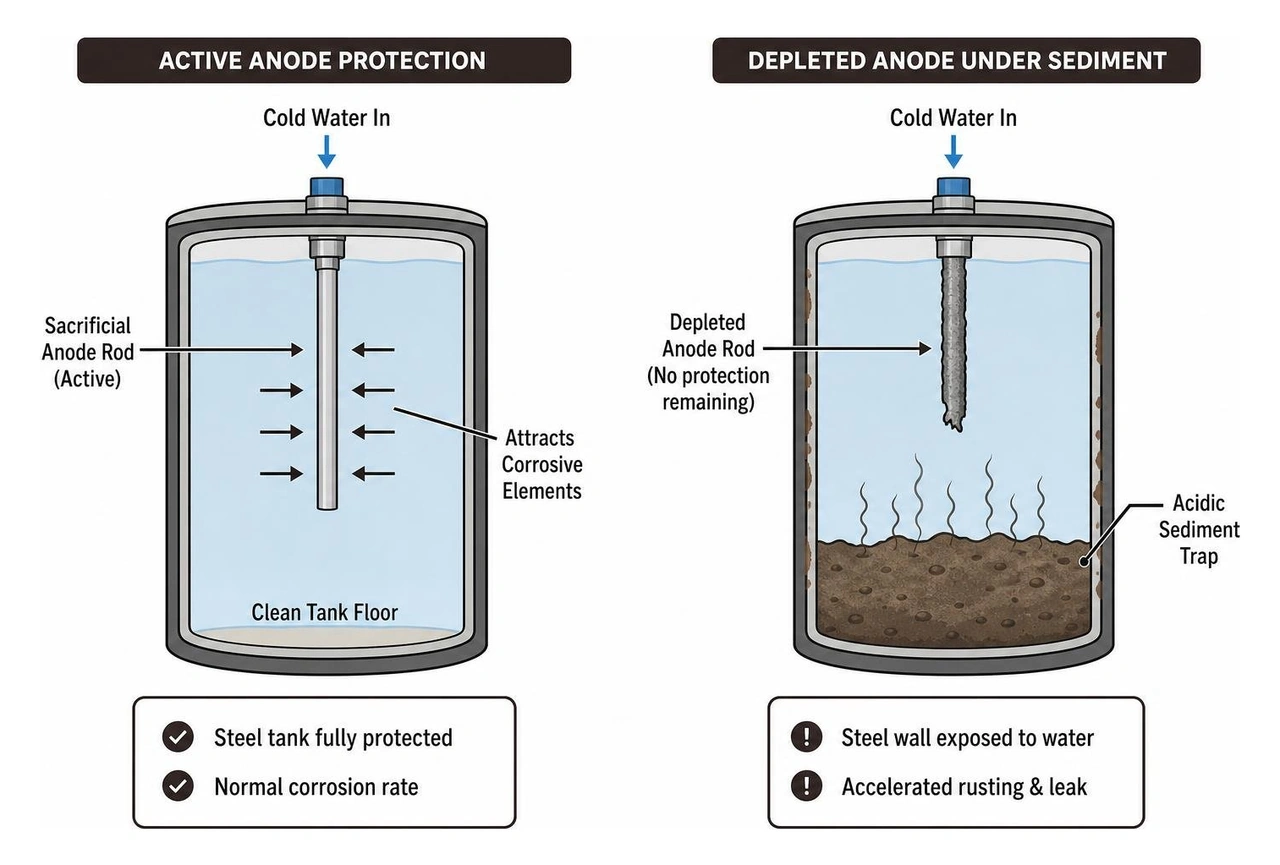
Sediment accumulation drastically shortens an anode rod's lifespan. Compacted mineral deposits trap moisture and corrosive ions against the bottom of the tank, creating a localized acidic environment. This acidic sludge accelerates the rate at which the anode rod dissolves.
Once the anode rod is fully consumed—typically within 3 to 5 years—corrosive minerals attack the exposed steel walls and tank welds. Checking and replacing the sacrificial anode rod every 3 years doubles the functional service life of your storage tank.
Repair vs. Replacement: When to Upgrade Your Water Heater
When facing severe sediment accumulation, homeowners must decide whether performing a major repair or replacing the entire system makes the most sense. Use the evaluation criteria below to choose the right path for your home:
| Condition Parameter | Attempt Professional Flushing / Repair | Upgrade to a New System |
|---|---|---|
| Appliance Age | Less than 8 years old | 8 to 12+ years old |
| Sediment Condition | Soft, loose slurry cleared during flush | Hardened calcite layer that blocks flushing |
| System Noise | Minor popping that stops post-maintenance | Loud, persistent rumbling and kettling |
| Tank Physical Integrity | Fully sealed; zero active leaks | Structural moisture, weeping seams, or bottom rust |
| Heating Performance | Hot water volume restored after service | Recovery rates remain slow despite maintenance |
| Efficiency Goals | Standard operational efficiency | Upgrading to high-efficiency Heat Pump or Tankless |
If your system is nearing the end of its useful service life or has suffered structural tank damage from intense thermal overheating, flushing will not reverse internal metal fatigue. Upgrading to modern technology provides consistent hot water while dramatically cutting energy usage.
Explore your replacement options with our comprehensive resources:
- Learn about full-service installation through Water Heater Installation & Replacement.
- Evaluate different technologies using our Tankless vs Tank vs Heat Pump Water Heater Comparison.
- Explore continuous hot water solutions with Tankless Water Heaters Beaverton OR.
- Maximize efficiency with Heat Pump Water Heater Installation & Replacement.
Frequently Asked Questions About Water Heater Sediment
Can severe sediment buildup cause a water heater tank to leak?
Yes. Severe sediment buildup causes localized thermal hot spots along the bottom of the steel tank. Because heat cannot transfer into the water through the thick mineral barrier, the temperature of the steel structure rises far beyond normal design limits.
This extreme heat forces the metal floor to expand unnaturally, causing the protective interior glass lining to crack. Once the glass lining fails, water comes into direct contact with bare steel, leading to internal rust, metal fatigue along welded seams, and eventual structural leaks. Read our detailed guide on Can a Leaking Hot Water Heater Be Repaired to learn more.
How often should you flush a water heater in hard water areas?
In regions with hard or very hard water, storage water heaters should be flushed every 6 months. Frequent flushing prevents loose mineral crystals from compacting into solid, hardened scale that resists removal. Homes equipped with whole-home water softeners or those with soft water can maintain an annual (12-month) flushing schedule.
Will flushing an old, neglected water heater cause new problems?
Flushing a system older than 8 to 10 years that has never been maintained carries specific risks. In heavily neglected systems, hardened calcite scale may be the only thing sealing microscopic hairline cracks along an old glass lining or rusty drain valve seal.
Removing that scale during an aggressive flush can open up dormant leaks. Additionally, large dislodged chunks of hard mineral scale can jam plastic drain valves open. For older, neglected units, schedule a professional evaluation before performing a DIY flush.
Conclusion
Understanding how sediment buildup shortens your water heater life is the key to preventing premature appliance failure and maintaining quiet, energy-efficient hot water in your home. Mineral precipitation is a natural chemical process, but letting scale accumulate leads to severe thermal stress, element burnout, discolored water, and structural tank leaks. Regular preventive maintenance—such as annual flushing, thermostat optimization, and timely anode rod replacement—can extend your water heater's functional life by 3 to 5 years.
Best Owner Direct HVAC & Electrical is a family-owned HVAC, electrical, and water-heater services company based in Cornelius, OR, serving homeowners and businesses throughout the Portland metro and surrounding Oregon communities. Our licensed technicians provide reliable same-day and emergency water heater maintenance, repairs, and energy-efficient replacements tailored to your specific household needs.
Don't wait for popping noises or cold showers to signal an emergency. Contact Best Owner Direct HVAC & Electrical today for expert water heater services!



Evaluating HVAC Companies Near Me: What Cornelius Residents Should AskA late-summer AC breakdown often forces rushed decisions. Asking the right questions over the phone ensures you hire an accountable, licensed professional instead of a sales-driven corporation.
Read more
How to Understand Sediment Damage and Extend Your Water Heater Life in the Right WayLearn how sediment buildup shortens your water heater life and discover essential maintenance tips to prevent damage and extend your system's lifespan.
Read more
The Link Between Pet Hair and Dirty Evaporator Coils in AugustWhen your AC runs constantly but blows weak air late in the summer, your filter might not be the problem. See how heavy shedding bypasses cheap filters to choke your system.
Read more