Menu


When Should You Replace Your Heat Pump in Portland, OR, and Nearby Oregon Communities?
Knowing when should you replace your heat pump can help you avoid losing heating or cooling when your Oregon home needs it most. Most heat pumps last between 10 and 15 years, though well-maintained units in Oregon's mild climate can sometimes reach 20 years. The tricky part is knowing whether your current system is worth repairing again or whether replacement is the smarter move for comfort, efficiency, and reliability.
Here is a quick-reference guide to help you decide:
You should likely replace your heat pump if:
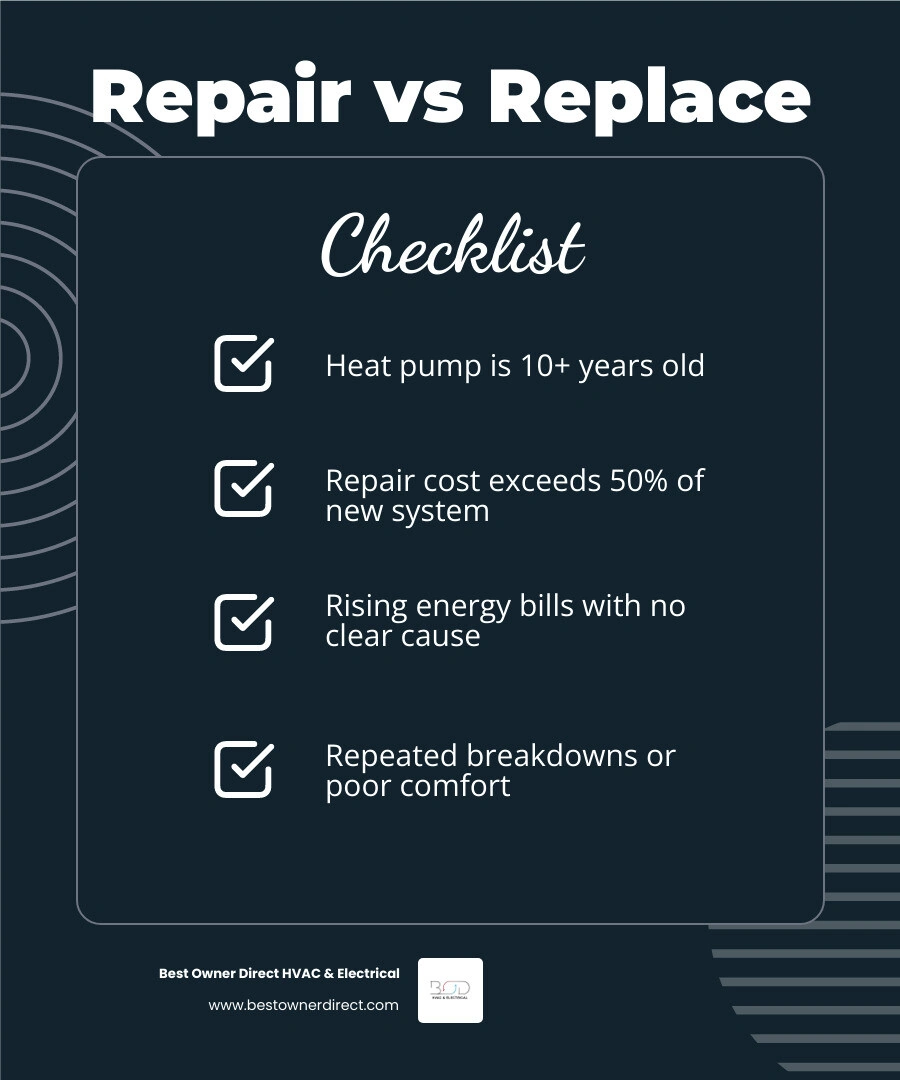
- Your system is 10 or more years old and showing performance problems
- Your energy bills have been rising steadily without an obvious cause
- You are experiencing uneven temperatures, poor humidity control, or weak airflow
- The system breaks down repeatedly, especially before or during peak seasons
- Your unit uses R-22 refrigerant, which is no longer manufactured
- You want to take advantage of federal tax credits up to $2,000 and state rebates before they change
Repair may still make sense if:
- Your heat pump is under 10 years old with a solid maintenance history
- The issue is minor — such as a dirty filter, faulty thermostat, or blocked coil
- Your comfort and efficiency are still acceptable between service visits
Oregon homes rely on heat pumps year-round — for heating through the rainy season and cooling during summer. That dual-season demand puts real hours on your system. Whether your unit is starting to struggle or you just want to plan ahead, the sections below walk you through every factor that matters for homeowners in Portland, Beaverton, Hillsboro, Tigard, Lake Oswego, Cornelius, and nearby communities.
When Should You Replace Your Heat Pump?
In most Oregon homes, the answer starts with age, performance, and repair history. A residential heat pump typically lasts about 10 to 15 years. Some make it closer to 20 years with excellent maintenance, clean airflow, and a little luck. Others wear out sooner if they run hard year-round, have dirty coils, or were oversized or undersized from day one.
Because heat pumps both heat and cool, they usually log more operating hours than a furnace-only system. In places like Portland, Beaverton, Hillsboro, Tigard, Lake Oswego, and the surrounding communities we serve, that matters. Oregon's climate is generally favorable for heat pumps, but the long heating season and summer cooling demand still add up.
If your system is getting older and your home is less comfortable, that is usually your clue to stop thinking only about the next repair and start thinking about the next system.
When should you replace your heat pump based on age?
Age alone does not mean automatic replacement, but it absolutely changes the math.
- Under 10 years old: repair is often reasonable if the issue is minor
- Around 10 years old: start planning and watch for warning signs
- Between 10 and 15 years old: replacement becomes much more likely if comfort or efficiency is slipping
- 15 years and older: most homeowners should be seriously considering replacement
- Near 20 years old: replacement is usually the practical choice, even if the unit still limps along
A big reason is efficiency. Replacing a heat pump that is more than 10 years old with an ENERGY STAR qualified model can save up to 20% on heating and cooling costs. Depending on your old system's condition and the new equipment you choose, utility savings can be even higher.
Maintenance history matters too. A 12-year-old system that has had regular service and only one small repair is very different from a 12-year-old system with weak airflow, noisy operation, and a scrapbook of service invoices. If you want a deeper look at lifespan, read How Long Does a Heat Pump Last When Should You Replace It.
When should you replace your heat pump instead of waiting for failure?
Usually sooner than your heat pump would prefer.
Waiting until total failure can leave you making a rushed decision during a January cold snap or a summer heat wave. Replacing before failure gives you time to compare options, check incentives, and schedule installation without panic-shopping for comfort.
The best time to plan replacement is often during the shoulder seasons, usually spring or fall, when your system is still running but showing its age. That way you avoid the classic homeowner experience of "it made one weird noise, then retired without notice."
Proactive replacement is often better when:
- The unit is older than 10 to 15 years
- Repairs are becoming more frequent
- Your backup or auxiliary heat runs more often
- Temperatures in the home are getting harder to control
- You want better efficiency before another high-use season starts
Signs Your Heat Pump Is Near the End of Its Life
Some heat pumps fail dramatically. Others fade slowly and take your comfort with them. Knowing the common signs helps you make a smart decision before the system turns your living room into a science experiment.

The most common warning signs homeowners notice first
These are often the earliest clues that replacement may be closer than you think:
- Rising energy bills without a clear reason
- Rooms that feel too warm, too cool, or just inconsistent
- Weak airflow from vents
- Long run times or constant cycling
- Trouble controlling indoor humidity
- Frequent thermostat adjustments because the house never feels quite right
If your bills have climbed over the last year or two and your usage habits have not changed, your heat pump may be losing efficiency. Research shows high-efficiency heat pumps can reduce utility bills by 20% to 50% compared with older models, depending on climate and existing system performance.
Uneven temperatures are another big clue. If one bedroom feels like November and another feels like July, the issue could be aging equipment, duct leakage, airflow problems, or a combination of all three. We also often hear homeowners say the house feels muggy in summer or less comfortable during damp Oregon weather. Older systems tend to struggle more with humidity control.
For more homeowner-facing symptoms, see Signs Your Heat Pump Needs to Be Replaced.
Mechanical signs that often point to replacement
Some symptoms are less subtle. If your heat pump is making new noises, icing up, or leaking refrigerant, it is asking for help in the only language it knows.
Watch for:
- Grinding, rattling, banging, or buzzing sounds
- Burning smells or sharp electrical odors
- Refrigerant leaks
- Ice buildup on the outdoor unit or indoor coil
- Compressor trouble
- Short cycling
- Frequent need for emergency or auxiliary heat
A single repairable issue does not always mean replacement. But when major parts start failing on an older system, replacing the heat pump is often more practical than continuing the repair parade.
Compressor problems are especially important because they can be expensive and often appear late in a system's life. Refrigerant issues also deserve close attention, especially if your system uses R-22 refrigerant. Since R-22 is no longer manufactured, repairs involving that refrigerant can become more difficult and less sensible.
You can learn more about these red flags in Warning Signs Your Heat Pump Needs Repair or Replacement.
Problems that may look like replacement but could be repairable
Not every struggling heat pump is ready for retirement.
Sometimes the real problem is something simpler, such as:
- A dirty air filter
- A blocked or dirty coil
- A thermostat problem
- Leaky ductwork
- Insulation gaps in the home
- An electrical issue affecting operation
This is why a proper diagnosis matters. A system can look weak when the real culprit is poor airflow, a duct leak, or attic insulation that is letting your comfort escape. In some homes, the heat pump is fine but the house itself is making it work too hard.
If you are troubleshooting symptoms, Understanding Resolving Common Heat Pump Issues is a helpful next read.
Repair or Replace: How to Make the Right Call
The simplest rule of thumb is this: if the repair would cost more than 50% of replacement and the system is older, replacement usually makes more sense.
Here is a quick comparison:
| Situation | Repair Often Makes Sense | Replacement Often Makes Sense |
|---|---|---|
| System age | Under 10 years | 10+ years |
| Repair history | First major issue | Repeated breakdowns |
| Repair type | Minor part or control issue | Compressor, refrigerant, major electrical failure |
| Warranty | Still covered | Out of warranty |
| Comfort | Still good overall | Uneven temps, humidity issues, weak airflow |
| Efficiency | Bills stable | Bills rising steadily |
When repair usually makes sense
Repair is often the better move when:
- Your heat pump is relatively new
- The issue is isolated and minor
- The system is still under warranty
- This is the first significant repair
- Your comfort has otherwise been good
- Your energy use has been stable
For example, a thermostat issue, capacitor problem, contactor failure, or clogged drain on a younger system may be worth fixing. If your heat pump is 6 years old and has been reliable, replacement is probably premature.
When replacement is usually the smarter choice
Replacement is usually the better long-term decision when:
- The unit is more than 10 years old
- Repairs are becoming frequent
- A major component has failed
- The warranty has expired
- Efficiency has clearly declined
- Comfort problems keep returning
- Repair costs are approaching half the value of a new system
A few repairs over many years are normal. But if your heat pump has become a regular character in your monthly budget, it may be time to let it rest.
How rising energy bills factor into the decision
Energy bills are one of the clearest real-world clues. If your utility costs are rising and your habits have not changed, the heat pump may be running longer, using more backup heat, or losing efficiency because of age.
That matters in Oregon, where many homes rely on the same system for both heating and cooling. Even a modest efficiency decline can show up in your annual energy use.
New systems can offer substantial gains:
- Up to 20% savings when replacing older heat pumps with qualifying ENERGY STAR equipment
- Roughly 20% to 50% lower utility bills compared with much older or inefficient systems, depending on the home and setup
- Better use of variable-speed operation, which helps avoid energy-wasting on-off cycling
If your Home Energy use seems unusually high, it is worth evaluating both the equipment and the home itself.
Should You Replace Just the Heat Pump or the Entire Matched System?
This is one of the most common questions we hear. Technically, you can sometimes replace only the outdoor heat pump. In practice, replacing the full matched system is often better.
That usually means evaluating the outdoor unit, indoor coil, and air handler together.
Why replacing both indoor and outdoor equipment is often better
A matched system is designed to work as a team. When the indoor and outdoor components are paired correctly, you are more likely to get:
- The rated efficiency you are paying for
- Better airflow and humidity control
- Quieter operation
- More reliable performance
- Fewer compatibility issues
- Better warranty alignment
Mixing an old indoor unit with a new outdoor unit can create problems with refrigerant compatibility, controls, blower performance, and overall efficiency. It is a bit like putting one brand-new running shoe on one foot and keeping the flattened old one on the other. You can still move, but it is not ideal.
When replacing only the heat pump may be reasonable
There are situations where partial replacement can make sense, such as when:
- The indoor air handler is still relatively new
- The equipment is confirmed as a compatible match
- Refrigerant and control requirements line up
- A professional has verified performance expectations
The key word here is confirmed. Assumptions can get expensive. A proper evaluation helps avoid reduced performance and warranty headaches.
Ducted vs ductless replacement considerations in Oregon homes
Not every Oregon home should replace like-for-like.
If you have a ducted system, your ductwork should be inspected too. Leaky or poorly insulated ducts can reduce comfort and waste energy, even with a brand-new heat pump. Duct sealing may improve performance more than homeowners expect.
For homes with limited duct space, older additions, or room-by-room comfort issues, a ductless option may be worth considering. Ductless mini-splits can be especially useful for zoned comfort and some older homes around Portland-area communities where duct layouts are not ideal. If that sounds familiar, check out Should You Get a Ductless Heat Pump.
What to Look for in a New Heat Pump
A replacement should not just solve today's problem. It should improve comfort, efficiency, and reliability for years to come.
Efficiency ratings and features that matter most
When comparing systems, pay close attention to:
- SEER2 for cooling efficiency
- HSPF2 for heating efficiency
- ENERGY STAR qualification
- Inverter-driven compressors
- Variable-speed fans
- Sound ratings
- Smart thermostat compatibility
SEER2 and HSPF2 are the current efficiency measurements homeowners will see in 2026. Higher ratings generally mean better efficiency, though proper sizing and installation matter just as much as the label.
Variable-speed and inverter technology are especially valuable because they allow the system to adjust output gradually instead of blasting on and off at full speed. That often means steadier temperatures, quieter operation, and better dehumidification.
Features that improve comfort in Oregon’s climate
In our service area, useful features often include:
- Strong low-temperature heating performance
- Good defrost control
- Variable-speed operation for better humidity control
- Smart controls for easier scheduling
- Improved filtration options
- Quiet indoor and outdoor performance
Modern cold-climate heat pumps are much better than older generations. Some newer models can maintain strong heating capacity at very low outdoor temperatures, making them a good fit for many Oregon homes.
If you are weighing broader benefits, Heat Pump Benefits for Pacific Northwest Homeowners offers more context.
Rebates, tax credits, and financing options to review before replacing
Incentives can significantly improve the value of replacement, so it pays to check what is available before you choose equipment.
Homeowners should review:
- Federal tax credits for qualified heat pumps, which can be up to $2,000
- State incentive programs
- Local utility rebates
- Manufacturer promotions, if available
- Financing options for spreading out the investment
A simple checklist helps:
- Confirm the equipment qualifies before purchase
- Keep product and installation documentation
- Verify efficiency ratings
- Ask whether the full matched system affects eligibility
- Review deadlines, since programs can change
How to help your current heat pump last longer if you are not replacing yet
If replacement is not the right move today, good maintenance can absolutely buy you time.
Do these consistently:
- Change or clean filters on schedule
- Schedule maintenance in spring and fall
- Keep the outdoor unit clear of leaves and debris
- Clean coils when needed
- Keep vents open and unobstructed
- Use reasonable thermostat settings
- Address duct leaks and airflow problems promptly
Twice-yearly maintenance is especially smart for heat pumps because they work in both seasons. Regular service helps catch small issues before they become replacement-level problems.
Frequently Asked Questions About When Should You Replace Your Heat Pump
Should I replace a 12-year-old heat pump that still runs?
Maybe. A 12-year-old heat pump is in the range where replacement becomes a serious consideration, even if it still operates. Look at the full picture:
- Has it needed repeated repairs?
- Are energy bills rising?
- Is comfort getting worse?
- Is it louder than it used to be?
- Does it rely on auxiliary heat more often?
If the system still runs well, has a clean maintenance history, and keeps your home comfortable, repair may still be reasonable. But if performance is fading, planning replacement now is often smarter than waiting for a mid-season failure.
Can a new heat pump really lower energy use and improve comfort?
Yes. In many homes, a newer heat pump can lower utility use and noticeably improve comfort. Research shows high-efficiency models can reduce utility bills by 20% to 50% compared with older systems, depending on what you are replacing.
Homeowners also often notice:
- More even temperatures
- Quieter operation
- Better humidity control
- Less short cycling
- Improved airflow
- Fewer repair calls
In short, newer equipment usually feels better, not just looks better on paper.
Is the heat pump really the problem, or could it be my ducts or insulation?
It could absolutely be the ducts, insulation, or airflow balance.
A heat pump can only do so much if conditioned air is leaking into an attic or crawl space, or if insulation is weak enough that your home loses heat as fast as the system provides it. Duct leakage, blocked returns, poor insulation, and thermostat placement can all mimic equipment failure.
That is why we recommend looking at the whole comfort system, not just the outdoor unit. In some cases, improving ducts or insulation can solve comfort problems without immediate replacement. In others, both the home and the equipment need attention.
Conclusion
Knowing when should you replace your heat pump comes down to a few core factors: age, repair frequency, comfort, efficiency, and whether your current system is still worth investing in. For many Oregon homeowners, the tipping point happens somewhere in the 10- to 15-year range, especially when energy bills rise and comfort slips.
At Best Owner Direct HVAC & Electrical, we help homeowners across the Portland metro and surrounding Oregon communities make practical, informed decisions about heat pump repair and replacement. Our focus is reliable, affordable, energy-efficient comfort with quality workmanship and customer care.
If your system is aging, struggling, or simply not keeping up the way it used to, now is a good time to plan ahead instead of waiting for a complete breakdown. For more information, visit More info about heat pump services.


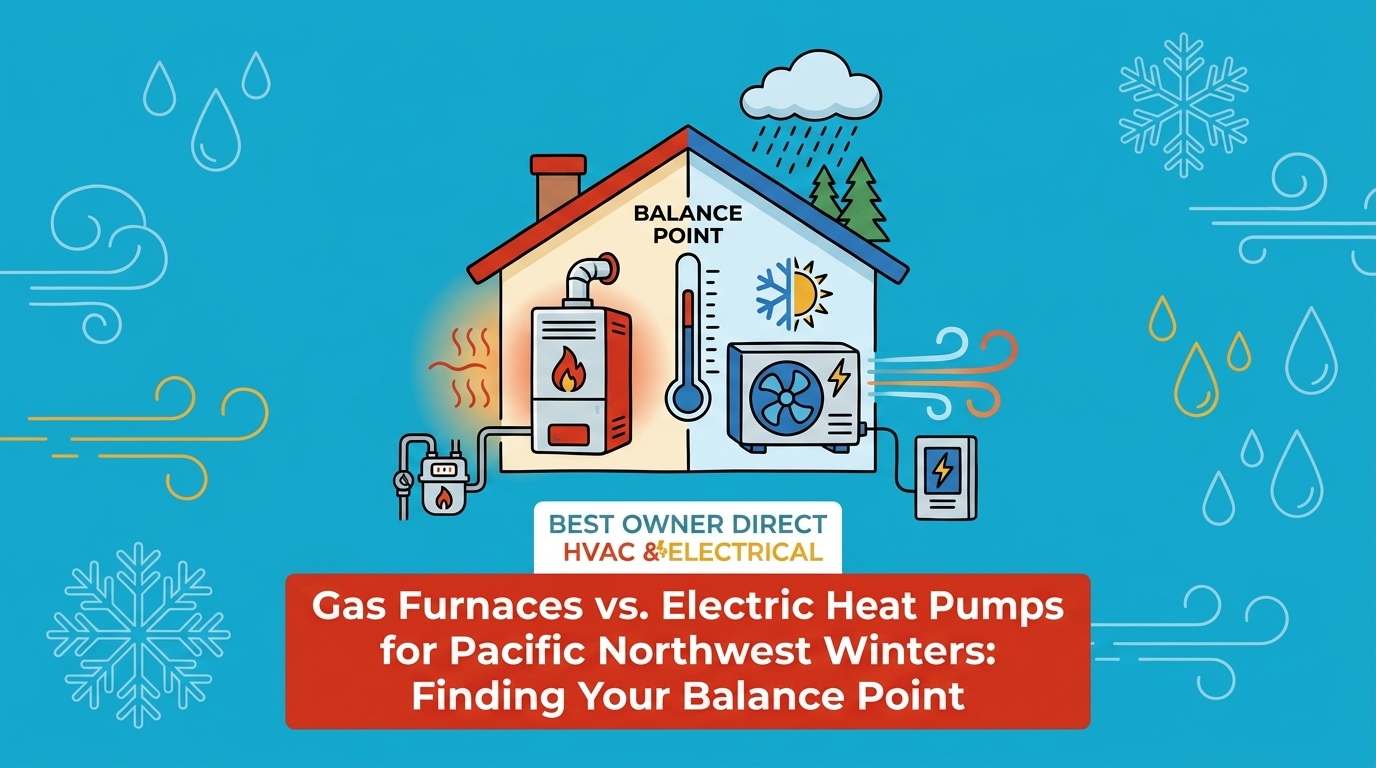
Gas Furnaces vs. Electric Heat Pumps for Pacific Northwest WintersBefore the cold sets in, deciding between a standard heat pump and a dual-fuel system is crucial. Explore how wet, near-freezing climates impact your heating choices.
Read more

How the Anode Rod Protects Your Water Heater Tank: 3 Methods That Guarantee ResultsLearn how the anode rod protects your water heater tank from rust with three proven methods for longer life and fewer repairs.
Read more
Navigating Fall HVAC Tune-Ups in Cornelius Before the Rain StartsThe Pacific Northwest's sudden shift to autumn rain creates a narrow window for outdoor maintenance. Booking your heating tune-up in September prevents dangerous delays once the storms hit.
Read more