Menu


Why the Operating Cost Comparison: Gas vs Electric vs Heat Pump Actually Matters for Portland Homeowners
The operating cost comparison gas vs electric vs heat pump water heaters is one of the most practical questions a homeowner can ask — because the wrong choice can quietly add hundreds of dollars to your utility bills every single year.
Here's a quick look at how the three main water heater types stack up on annual operating costs for a typical home:
| Water Heater Type | Efficiency Rating | Relative Annual Operating Cost |
|---|---|---|
| Electric resistance (standard) | ~100% EF | Highest |
| Natural gas (standard tank) | ~60–70% EF | Moderate |
| Heat pump (hybrid electric) | 200–350% COP | Lowest |
A few key points to know upfront:
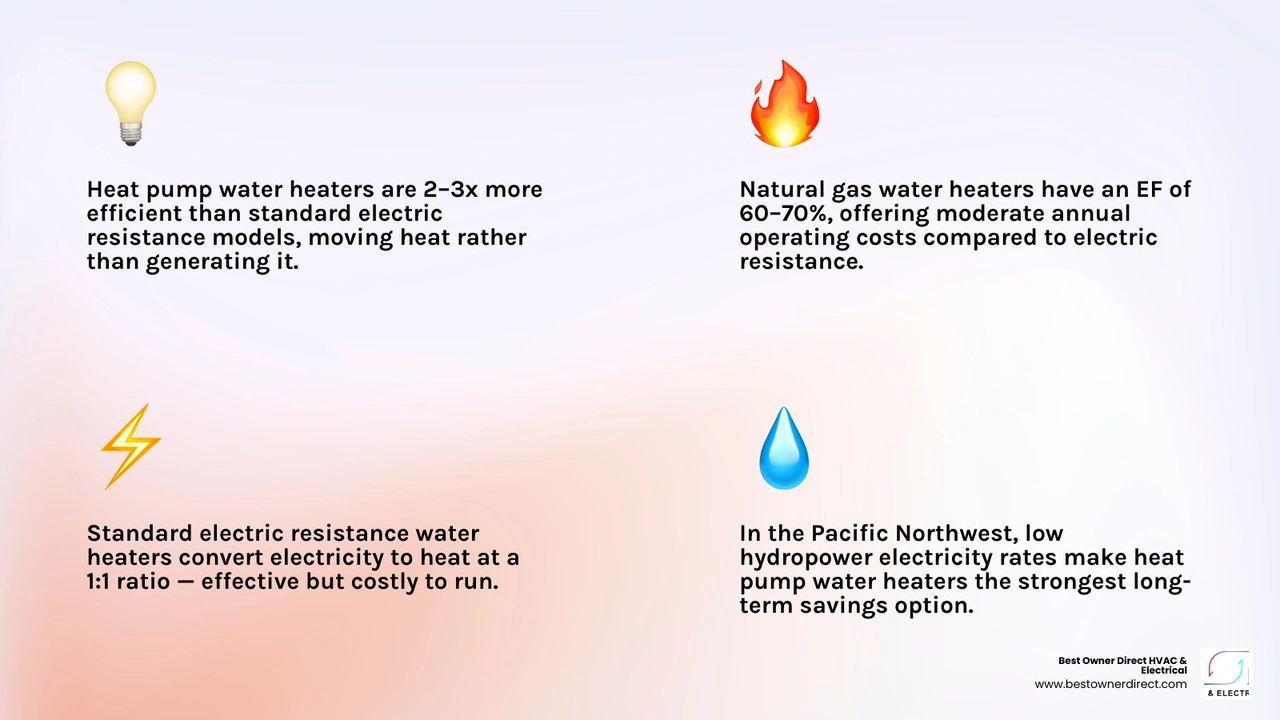
- Heat pump water heaters move heat rather than generate it, making them 2 to 3 times more efficient than standard electric models.
- Gas water heaters are typically cheaper to run than standard electric resistance, but more expensive than heat pump models.
- Electric resistance water heaters convert electricity directly to heat at a 1:1 ratio — effective, but costly to operate.
- In the Pacific Northwest, where electricity rates tend to be lower than the national average thanks to hydropower, heat pump water heaters often deliver the strongest long-term savings.
The right answer for your home depends on your local utility rates, your existing fuel infrastructure, and how long you plan to stay in the home. In the Portland metro and surrounding Oregon communities, those variables can shift the math significantly — and that's exactly what this guide breaks down.
Operating cost comparison gas vs electric vs heat pump word list:
- gas vs electric vs heat pump water heater comparison
- how gas water heaters heat faster than electric
- how heat pump water heaters are the most efficient option
Understanding the Technology: How Gas, Electric, and Heat Pump Water Heaters Work
To make sense of how these systems impact your monthly utility bills, we first need to look under the hood. While all three systems are designed to deliver a hot shower, they use completely different physical principles to achieve that goal.
Natural Gas Water Heaters: The Power of Combustion
A traditional natural gas water heater relies on a burner located at the bottom of the tank. When the thermostat detects that the water temperature has dropped, a gas valve opens, and electronic ignition sparks a flame. The heat from this combustion process rises through a central flue, transferring thermal energy to the surrounding water before venting the combustion byproducts safely out of your home.
Because burning gas creates intense, direct heat, gas water heaters have a rapid recovery rate. However, they are inherently limited by combustion physics: some heat always escapes up the flue, which is why standard gas models lose a significant percentage of their fuel energy to the atmosphere.
Electric Resistance Water Heaters: Simple but Demanding
An electric resistance water heater is mechanically straightforward. It features one or two electric heating elements that extend directly into the water tank. When the system calls for heat, electricity flows through these elements. The electrical resistance of the metal causes it to heat up, warming the water in a process very similar to how a kitchen toaster toasts bread.
While electric resistance is highly efficient in a strict physical sense—nearly 100% of the electricity consumed is converted directly into heat—it is incredibly energy-intensive. Creating heat from raw electricity requires a massive amount of electric current, which can quickly drive up utility bills in areas with high electric rates.
Heat Pump Water Heaters: Moving Heat Instead of Creating It
A heat pump water heater (often called a hybrid water heater) uses a approach: it does not actually create heat. Instead, it works like a refrigerator running in reverse.
The system features a small, integrated heat pump unit mounted on top of the storage tank. A fan draws in warm ambient air from the surrounding room. This air passes over an evaporator coil containing a cold liquid refrigerant. The refrigerant absorbs heat from the air, evaporates into a gas, and is then compressed by a compressor. Compressing the gas raises its temperature dramatically. This super-heated refrigerant then flows through a condenser coil wrapped around the water tank, transferring its heat directly to the water.
To understand the core physics of this process, you can read our detailed guide on how does a heat pump work. Because moving heat requires far less energy than creating it through combustion or resistance, a heat pump water heater can achieve efficiencies of 300% or more. For a deeper dive into this technology, check out our article on what is a heat pump water heater.

Operating Cost Comparison: Gas vs Electric vs Heat Pump Water Heaters
When evaluating the operating cost comparison gas vs electric vs heat pump water heaters, we must look beyond the initial purchase price and focus on the ongoing energy consumption.
The fundamental rule of thumb for operating costs comes down to local utility rates. In many parts of the United States, natural gas has traditionally been the cheaper fuel source compared to raw electricity when comparing raw heat energy. However, the extreme efficiency of modern heat pumps completely flips this equation.
If we compare the cost of delivering a set amount of heat energy to your water, a standard electric resistance water heater is almost always the most expensive option. Even though it converts electricity to heat at a 1:1 ratio, the high cost per kilowatt-hour makes it incredibly demanding on your wallet.
A natural gas water heater is significantly more economical to run than electric resistance because natural gas is a highly cost-effective fuel source. However, because a heat pump water heater operates at three to four times the efficiency of electric resistance, it comfortably beats both options on monthly operating costs in almost every scenario.
For a broader look at how these fuel sources compare across all home comfort systems, you can read our gas vs electric vs heat pump guide 2026. If your primary goal is to minimize your carbon footprint and your monthly utility spend, we also have a comprehensive guide on which water heater saves the most energy.
Analyzing the Operating Cost Comparison: Gas vs Electric vs Heat Pump for Portland Homeowners
For those of us living in the Portland metro area—including communities like Hillsboro, Beaverton, Cornelius, and Oregon City—our local climate and utility landscape play a massive role in this decision.
In Oregon, our electricity rates are highly competitive, largely due to the abundance of regional hydropower. At the same time, natural gas rates can fluctuate based on seasonal demand and market conditions. This unique rate structure makes the Pacific Northwest one of the most financially rewarding regions in the country for heat pump technology.
Because our winters are relatively mild and our summers are temperate, heat pump water heaters can easily draw heat from the ambient air in a garage, basement, or utility room year-round. When you pair our affordable local electricity with a system that operates at 300% efficiency, a heat pump water heater easily delivers the lowest operating costs in our region.
To see if this upgrade makes sense for your specific home layout in Oregon, take a look at our regional analysis on is a heat pump water heater worth it in oregon. We also break down how our local climate impacts different water heating technologies in our guide to the best water heater type for the pacific northwest.
How Efficiency Metrics Impact Your Operating Cost Comparison: Gas vs Electric vs Heat Pump
To understand exactly why these systems perform the way they do, we have to look at how their efficiency is measured.
- Energy Factor (EF) and Uniform Energy Factor (UEF): This is the standard metric used to measure overall water heater efficiency. It represents the portion of energy that actually goes into heating your water versus the energy lost during the process. A standard gas tank typically has a UEF around 0.60 to 0.70, meaning 30% to 40% of the fuel's energy is wasted. Electric resistance tanks have a UEF near 0.95.
- Coefficient of Performance (COP): This is the metric used for heat pumps. A COP of 3.0 means the system delivers three units of heat energy for every single unit of electricity it consumes.
Because a heat pump's COP is so high, it bypasses the traditional limitations of electric heating. This is why a hybrid system can save a household a massive amount of energy compared to standard electric resistance, and still easily outperform a high-efficiency gas model.
To see how these efficiency metrics apply across different tank styles, read our tankless vs tank vs heat pump water heater comparison. You can also explore the detailed science of these savings in our article on heat pump water heater energy savings explained.
Long-Term Value: Lifespan, Maintenance, and Incentives
When choosing a new water heater, the monthly operating cost is only one part of the equation. To find the true total cost of ownership, we must also consider how long the system will last, what it takes to maintain it, and what financial incentives are available to offset the initial installation.
Lifespan and Durability
The lifespan of your water heater depends heavily on the technology you choose and how well it is maintained:
- Electric resistance water heaters typically last 10 to 15 years. Because they have very few moving parts, they are highly reliable, though mineral buildup on the heating elements can shorten their life.
- Gas water heaters also have a typical lifespan of 10 to 15 years. The intense heat of the combustion burner can put stress on the bottom of the tank over time, eventually leading to tank failure if sediment is allowed to accumulate.
- Heat pump water heaters generally last 10 to 15 years as well. Because they contain a compressor and fan assembly, they are slightly more complex, but proper care ensures they deliver maximum service life. For a complete look at maximizing your system's longevity, check out our heat pump lifespan complete guide.
Maintenance Requirements
All water heaters require regular maintenance to operate at peak efficiency. For gas and electric resistance models, this primarily involves an annual tank flush to remove sediment.
For heat pump water heaters, there is one additional step: cleaning the air filter. Because the system draws in ambient room air to extract heat, the filter can accumulate dust over time. Cleaning this filter every few months is a simple, DIY task that ensures optimal airflow and maintains the system's high efficiency.
Rebates and Tax Credits
This is where the financial math becomes incredibly attractive for Oregon homeowners. Because state and federal agencies are heavily promoting energy efficiency, there are substantial incentives available for upgrading to a heat pump water heater:
- Federal Tax Credits: Under the Inflation Reduction Act (Section 25C), homeowners can claim a substantial federal tax credit for installing an ENERGY STAR certified heat pump water heater.
- Local Rebates: Organizations like the Energy Trust of Oregon offer excellent cash-back rebates for qualifying hybrid water heaters installed in our local service areas, including Forest Grove, Sherwood, and Tualatin.
These incentives can drastically reduce the upfront cost of a heat pump water heater, making the payback period incredibly short. To learn more about how to stack these savings, read our guide on heat pump water heater rebates and incentives.
Frequently Asked Questions About Water Heater Operating Costs
Which water heater is the most energy-efficient for Oregon homes?
Without a doubt, a hybrid heat pump water heater is the most energy-efficient option for homes in Oregon. Because our local climate is relatively mild, a heat pump can operate in its highly efficient heat-transfer mode for the vast majority of the year. This allows it to deliver substantial energy savings compared to standard electric resistance models, and easily outperform natural gas systems on overall energy use. To learn more about selecting the right system for your home, explore our ultimate water heater guide 2026.
How does a heat pump water heater perform in colder utility spaces?
A common concern is whether a heat pump water heater can keep up during our chilly Oregon winters, especially if it is installed in an unconditioned space like a garage or a basement.
Modern hybrid water heaters are designed to handle these conditions beautifully. While their efficiency may drop slightly when the surrounding air is cold, they can still extract heat from the air even at lower temperatures. Furthermore, if the ambient temperature drops below the system's threshold, the water heater will automatically switch to its backup electric resistance elements to ensure you never run out of hot water. For a complete breakdown of how these systems handle different installation environments, read our guide on heat pump water heater benefits for homeowners.
Can I transition from a gas water heater to a heat pump model?
Yes, you can absolutely transition from a gas water heater to an electric heat pump model, but it does require some planning.
Because a hybrid water heater runs on electricity, you will need a dedicated 240-volt electrical circuit run to your water heater location. Additionally, because the heat pump dehumidifies and cools the air as it runs, the system produces condensation that must be routed to a nearby drain or pump. While this retrofitting process requires professional expertise, the long-term operating savings and the opportunity to decommission gas lines make it a highly popular upgrade for many homeowners in our area. You can read more about this transition in our comparison of heat pump water heater vs traditional tank comparison.
Conclusion
When you look at the operating cost comparison gas vs electric vs heat pump water heaters, the modern hybrid heat pump water heater is the clear winner for long-term savings—especially here in the Portland metro area. By moving heat instead of creating it, these systems protect you from high utility bills while providing reliable, continuous hot water for your family.
At Best Owner Direct HVAC & Electrical, we are proud to help homeowners throughout Cornelius, Hillsboro, Beaverton, and the surrounding communities find the perfect balance of efficiency, comfort, and value. Our team of experienced, licensed professionals can assess your home's layout, evaluate your existing utility connections, and perform a flawless, high-quality installation.
If you are ready to stop overpaying on your monthly utility bills and want to explore your water heating options, we invite you to visit our water heater service page or reach out to us today to schedule a professional consultation. We are here to make your home more comfortable, safe, and energy-efficient!



How Pacific Northwest Heat Domes Made Heat Pumps a NecessityDiscover how Pacific Northwest heat domes changed the need for heat pumps for year-round resilience, cooling, and safety across Cascadia.
Read more
Understanding How Heat Pumps Defrost During Early Oregon FrostsWaking up to steam billowing from your outdoor unit is alarming, but it rarely means fire. Discover how this normal defrost cycle protects your equipment during the first fall freeze.
Read more
Why Is My Furnace Blowing Warm Air But Not Hot?Feeling lukewarm air from your vents instead of a robust blast of heat can be frustrating. Discover whether your system is operating normally or needs repair before winter arrives.
Read more