Menu


Why Your AC Is Blowing Warm Air and What to Check First
If your AC is blowing warm air, do not keep lowering the thermostat and hoping it catches up. For homeowners needing AC repair in Cornelius, OR, first set the thermostat to Cool and the fan to Auto, replace a dirty filter, make sure supply vents are open, and check whether the AC breaker has tripped. Clear leaves and debris from the outdoor unit. If you see ice, hear a steady hiss, or the breaker trips again, turn the cooling system off and arrange service to help prevent further damage.
Up: AC Not Cooling Properly: What to Check First | Down: Schedule AC Service
Warm air usually means the cooling cycle has been interrupted by poor airflow, a thermostat setting, a power issue, frozen coils, or a problem that needs HVAC diagnosis. Best Owner Direct HVAC & Electrical is a family-owned HVAC, electrical, and water-heater services company based in Cornelius, OR, serving homeowners and businesses throughout the Portland metro and surrounding Oregon communities.
For help restoring dependable cooling, schedule professional AC service.
I'm Chandrine Stepisnik, and the next steps will help you safely narrow down the cause before you call for help.
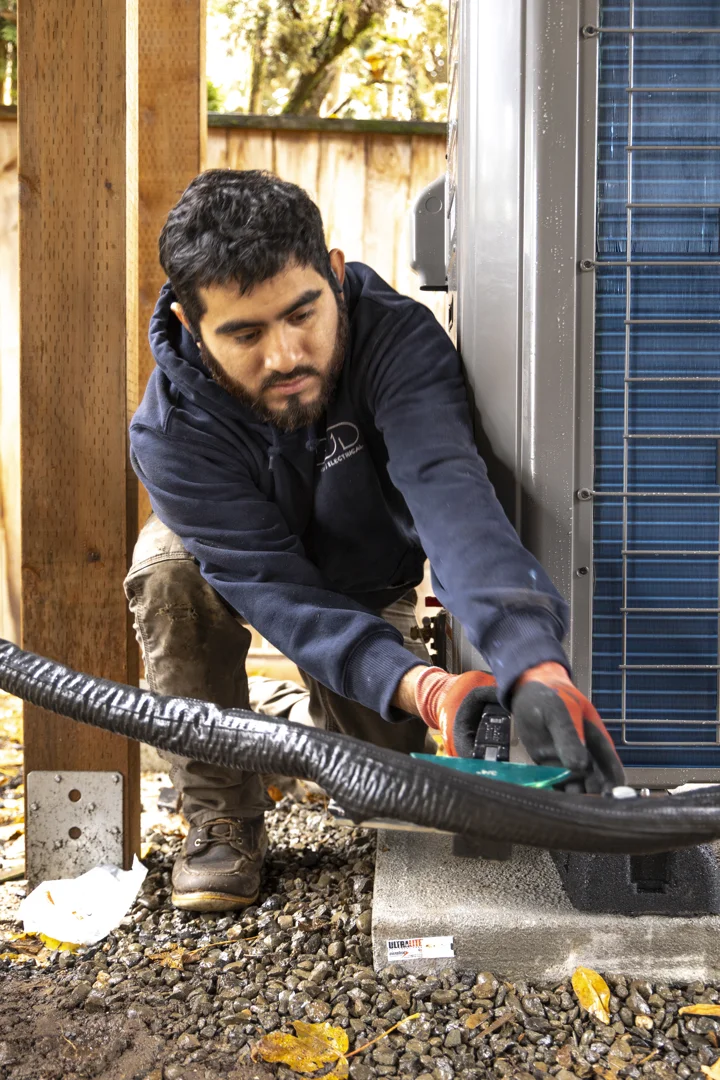
Why is my ac blowing warm air troubleshooting steps terms at a glance:
- AC Troubleshooting Tips Before Calling a Professional
- AC Not Turning On: What to Check First
- How to Check Your Thermostat Before Calling for Repair
Why Is My AC Blowing Warm Air: Troubleshooting Steps for Homeowners
When an air conditioner blows lukewarm or hot air through your vents, the underlying cause is almost always a failure within the thermodynamic heat transfer process. An air conditioner does not create cold air out of nothing; it absorbs indoor heat from your living spaces and transfers it outside via a continuous, closed-loop refrigeration cycle.
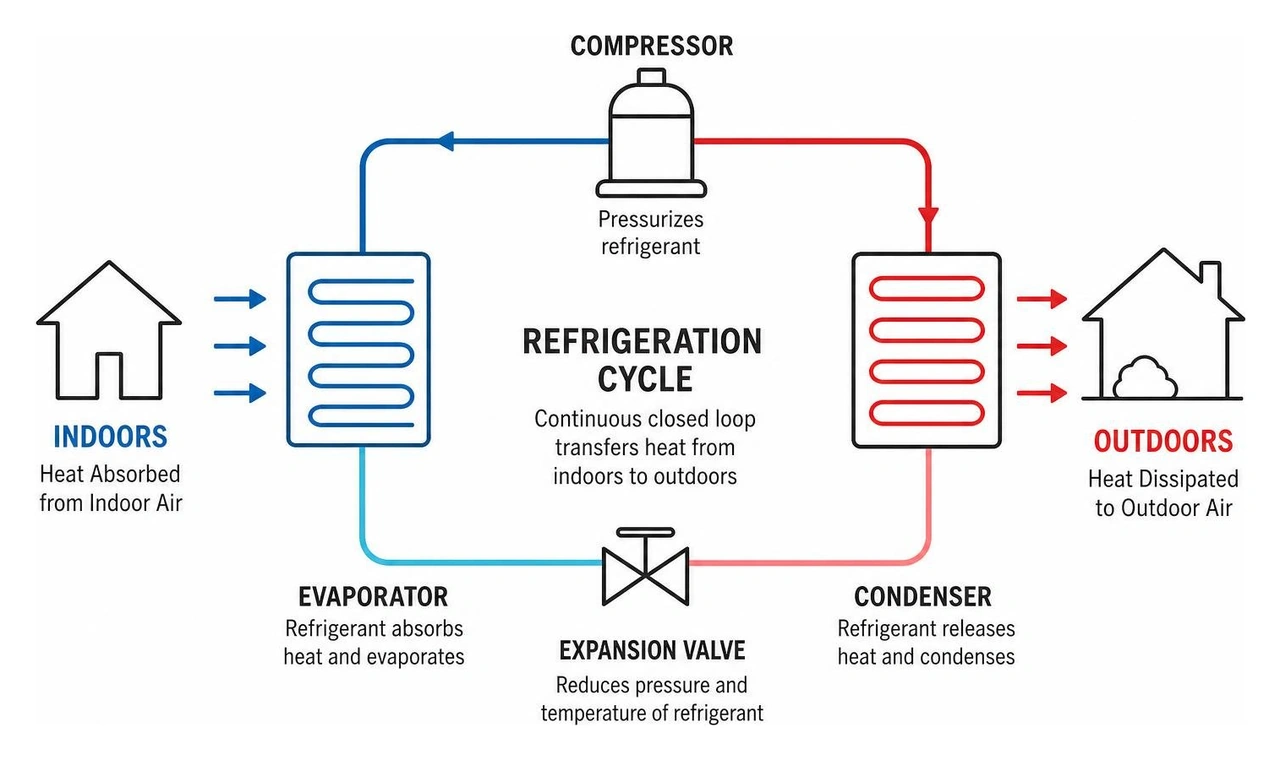
When an interruption occurs, the indoor blower fan may continue circulating room-temperature air through the ductwork while the outdoor condenser or cooling components fail to extract heat. If you find yourself wondering what to do if your air conditioner is running but not cooling your house, understanding where the process broke down is the first step toward getting cold air restored.
In our experience across the Pacific Northwest, about one out of every five warm air calls we run ends up being a straightforward issue like a thermostat setting, a tripped electrical breaker, or a restricted air filter. Roughly seven out of ten service calls end in a targeted repair rather than a complete system replacement. By working through systematic checks, you can pinpoint whether the issue is something you can address immediately or a mechanical fault requiring professional attention.
Why Is My AC Blowing Warm Air: Troubleshooting Steps for Thermostat and Airflow
Airflow restrictions and basic control settings represent the most common culprits behind warm supply vents. If the thermostat fan is set to "ON" rather than "AUTO," the indoor blower fan runs constantly—even when the outdoor compressor cycles off. During these off-cycles, the system blows unconditioned, room-temperature air through your registers.
Severely restricted airflow from clogged air filters, closed dampers, or blocked return grilles starves the indoor evaporator coil of heat. Without adequate warm air passing over it, the cold refrigerant drops the coil temperature below freezing, causing condensation to freeze into a solid block of ice. Once the coil is iced over, air cannot pass through it, resulting in weak, warm airflow from the registers.
Why Is My AC Blowing Warm Air: Troubleshooting Steps for Power and Coils
Central air conditioners and heat pumps rely on two separate electrical circuits: one for the indoor air handler/furnace and one for the outdoor condenser unit. If the outdoor breaker trips while the indoor breaker remains powered, the indoor fan will happily blow warm air throughout your house while the outdoor unit sits completely dormant.
Additionally, dirt, dust, and debris buildup on the outdoor condenser coils prevents the system from shedding the heat it absorbed indoors. When heat cannot escape through the outdoor coil, the system loses efficiency, causing the compressor to overheat or enter a safety thermal lockout. Learning why AC running not lowering temperature often comes down to recognizing these power disconnects and heat dissipation bottlenecks.
6 Step-by-Step DIY Actions to Restore Cool Air Flow
Before calling a technician, you can follow these six practical steps to safely test your system and learn how to troubleshoot your AC like a pro.
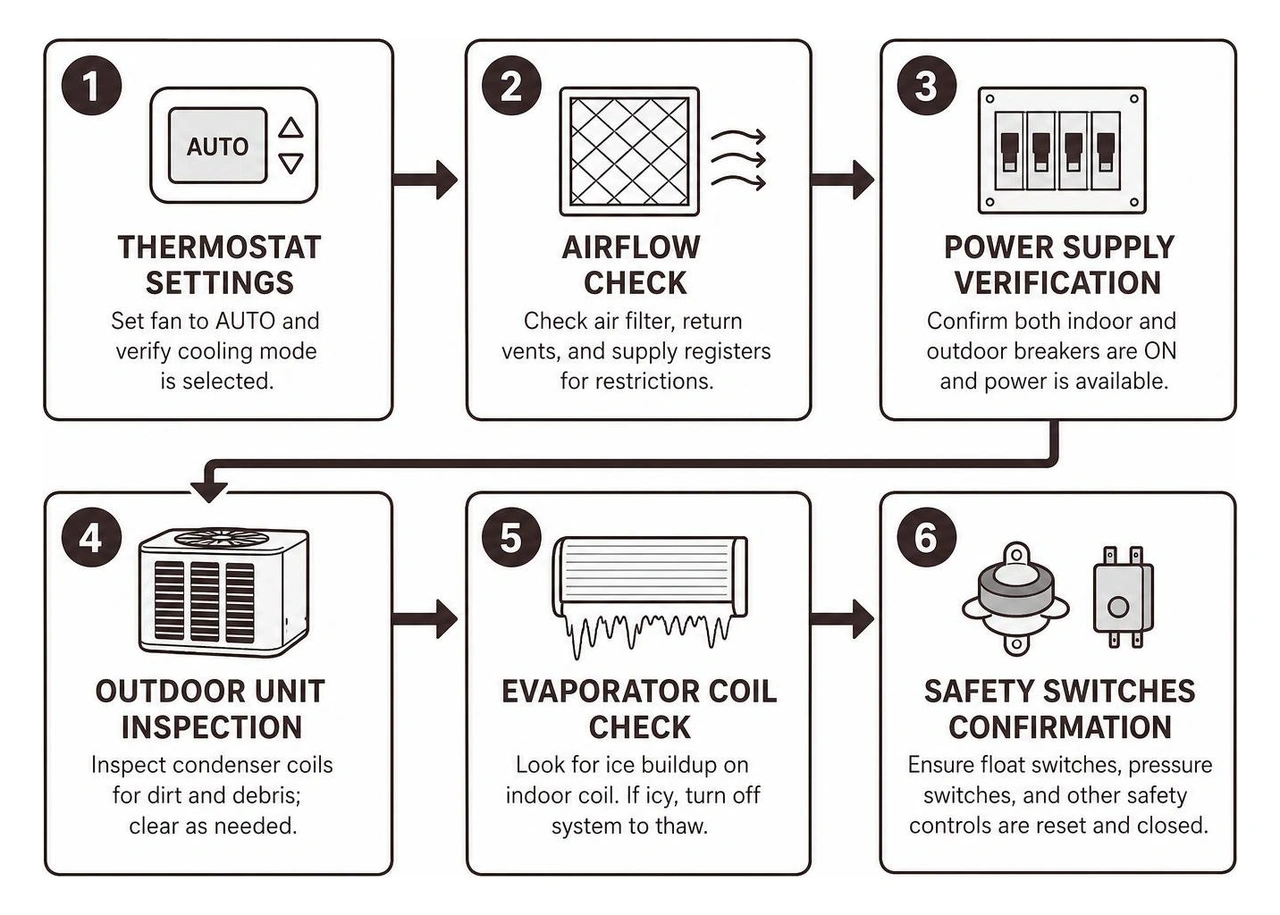
Step 1: Verify Thermostat Settings and Fan Configuration
Begin by inspecting your thermostat interface:
- Check the System Mode: Ensure the system is explicitly set to COOL. During seasonal transitions, thermostats can accidentally remain in HEAT or OFF mode.
- Examine the Fan Mode: Switch the fan setting from ON to AUTO. In the "ON" position, the blower runs 24/7 regardless of whether cooling is active. "AUTO" ensures the fan only blows when the system is actively chilling the air.
- Lower the Temperature Setpoint: Set the target temperature at least 5 degrees below the current room temperature to call for cooling.
- Check the Display and Batteries: If the screen is blank or flashing a battery icon, install fresh AA or AAA alkaline batteries to ensure the thermostat sends proper 24-volt signals to your HVAC equipment.
Reviewing what's the best AC setting for coolness and energy efficiency and setting optimal levels—such as what is the best air conditioner temperature for sleeping—helps keep your system operating smoothly without unnecessary component strain.
Step 2: Inspect and Replace Clogged Air Filters
A clogged filter restricts air intake and creates excessive static pressure across the system.
- Turn off power to the HVAC system at the thermostat.
- Slide out the air filter located in the indoor return air drop, furnace blower compartment, or wall return grille.
- Hold the filter up to a light source. If you cannot see light through the media or if it is coated in gray dust, pet hair, and dander, replace it immediately.
- Insert a fresh filter, ensuring the airflow directional arrows point toward the blower unit.
Understanding how a clogged filter makes your AC work harder highlights how restricted airflow leads directly to frozen coils and overheating. We recommend inspecting 1-inch filters every 30 days and changing them at least every 1 to 3 months to avoid what happens when you don't change the AC filter.
Step 3: Check System Power Switches and Reset the Breaker Once
If your indoor unit is blowing air but the outdoor unit is completely silent, the outdoor compressor and fan may have lost electrical power.
- Outdoor Disconnect Switch: Check the metal disconnect box mounted on the exterior wall near your outdoor unit. Ensure the handle or pull-out switch is firmly in the "ON" position.
- Indoor Power Switch: Confirm the standard toggle switch located on or near your indoor furnace/air handler is turned on.
- Main Electrical Panel: Locate the double-pole circuit breaker labeled "AC" or "Air Conditioner." If the switch sits in the middle or "TRIPPED" position, firmly push it to the "OFF" position before flipping it back to "ON."
Important Safety Rule: Only reset a tripped HVAC circuit breaker once. If it trips a second time, do not reset it again. Repeated tripping indicates an electrical short, a locked compressor motor, or a weak capacitor that requires professional diagnostic equipment to resolve safely.
Step 4: Clear Yard Debris and Clean the Outdoor Condenser
Your outdoor unit requires unobstructed airflow to release indoor heat into the outdoor environment.
- Maintain a minimum 2-foot clearance around the entire perimeter of the outdoor condenser, trimming away shrubs, tall grass, and low-hanging branches.
- Clear away fallen leaves, pine needles, grass clippings, and cottonwood that have gathered around the base and against the exterior metal cabinet.
- Shut off electrical power to the unit at the outdoor disconnect box.
- Using a garden hose with a gentle spray nozzle (never use a high-pressure power washer, which bends delicate aluminum fins), spray the condenser fins from the outside inward to flush away trapped dirt.
Following the best practices in our guide on how to clean outdoor AC units ensures maximum heat transfer efficiency during peak summer weather.
Step 5: Check for Frozen Evaporator Coils and Safely Thaw
Ice buildup on your indoor evaporator coil or the exterior copper lines indicates a severe disruption in heat absorption. Recognizing the common symptoms of a dirty evaporator coil helps you catch this early.
If you observe ice:
- Turn the thermostat setting from COOL to OFF immediately. Continuing to run the system with frozen coils can cause liquid refrigerant to flood the compressor, causing permanent mechanical damage.
- Switch the fan setting to ON. This keeps the indoor blower running without active cooling, moving ambient room-temperature air over the iced coil to gently thaw it.
- Monitor your indoor drain pan and place towels around the base of the air handler to manage melting ice water.
- Allow 2 to 6 hours for the system to thaw completely before attempting to restart it with a clean filter in place.
If the coil immediately refreezes after thawing and filter replacement, leave the system turned off and review the decision framework repairing vs replacing frozen AC before scheduling a diagnostic visit.
Step 6: Clear the Condensate Drain Line and Safety Float Switch
Air conditioners remove significant humidity from indoor air. That condensed moisture drains through a dedicated PVC pipe. If algae or sediment clogs this line, water backs up into the drain pan, tripping a safety float switch that cuts power to the outdoor cooling unit to prevent home water damage.
- Locate the PVC condensate drain line near your indoor air handler.
- Check the safety float switch installed on the drain line or secondary pan. If the float is up and resting in standing water, the safety switch has engaged.
- Connect a wet/dry vacuum to the exterior drain exit line (typically located near the outdoor unit) for 2 to 3 minutes to pull out accumulated algae and sludge.
- Pour 1 cup of regular distilled white vinegar into the indoor condensate access T-pipe to clear remaining debris and inhibit mold growth.
Addressing this promptly prevents emergency shutdowns and resolves why is my AC leaking water.
Signs of Severe AC Issues That Require Licensed HVAC Repair
When basic DIY checks fail to restore cool air, the problem likely involves mechanical, electrical, or sealed-refrigerant components that require licensed diagnostic tools.
| Problem Symptom | Likely Cause | Safe Action | Service Type |
|---|---|---|---|
| Warm air + continuous hissing/bubbling sound | Refrigerant line or coil leak | Shut system down at thermostat | Licensed EPA leak repair & recharge |
| Outdoor fan runs, but unit hums and blows warm air | Faulty run/start capacitor or contactor | Turn cooling off to protect motor | Professional electrical testing & replacement |
| Outdoor unit completely silent; breaker trips repeatedly | Grounded compressor motor or electrical short | Do not reset breaker again | Professional circuit & compressor diagnosis |
| Coil repeatedly freezes after filter replacement | Low refrigerant charge or metering valve fault | Power system down to prevent compressor flood | Refrigerant superheat/subcooling testing |
| Supply registers blowing heated air in AC mode | Stuck heat pump reversing valve | Turn system to OFF | Reversing valve solenoid inspection |
Refrigerant is housed in a hermetically sealed, closed-loop system; it does not get "used up" or consumed during normal operation. If refrigerant levels are low, a physical leak exists. Under federal EPA regulations, refrigerant handling, leak detection, and system charging must be conducted by certified professionals using specialized manifold gauges and recovery equipment.
Similarly, start and run capacitors hold dangerous high-voltage electrical charges even when power is disconnected. Reviewing the 6 signs that your capacitor needs to be replaced and understanding the most common AC repairs and what causes them can help you describe symptoms accurately when scheduling our AC repair service.
How to Prevent Warm Air Issues with Seasonal System Maintenance
The most effective way to avoid mid-summer cooling failures is proactive preventive care. Comprehensive seasonal checkups catch minor component wear before it leads to warm air emergencies on hot days.
A comprehensive professional tune-up includes:
- Testing operating electrical amperages on motors and compressors against manufacturer factory specifications.
- Measuring capacitor microfarad ratings to catch failing electrical parts before they strand you without cooling.
- Verifying precise refrigerant subcooling and superheat measurements to confirm closed-loop integrity.
- Chemically cleaning outdoor condenser coils to ensure unrestricted heat dissipation.
- Inspecting ductwork connections, clearing condensate drains, and calibrating thermostat sensors.
Consulting our AC tune up guide for Oregon homeowners and learning how an AC tune up prevents breakdowns during heat events will help you avoid the 11 of the most common central air conditioner problems in 2022 and preserve system efficiency for years to come.
Frequently Asked Questions About Warm Air from AC Vents
Should I turn off my AC if it is blowing warm air?
Yes, you should immediately turn off your air conditioner at the thermostat if it is blowing warm air or if you notice ice forming on the refrigerant lines. Running an AC system that cannot properly cool causes the compressor to overheat, operates the motor without adequate lubrication from returning refrigerant, and risks catastrophic compressor burnout. Switching the system off protects expensive internal components while you troubleshoot or wait for a technician.
What does it mean if my AC is running but not cooling the house?
If your AC is running continuously without lowering indoor temperatures, it typically means the indoor blower fan is operating while the outdoor cooling process has stalled. Common causes include a failed run capacitor preventing the outdoor compressor from starting, a tripped outdoor circuit breaker, heavily soiled outdoor condenser coils restricting heat release, or a refrigerant leak that has depleted the system's ability to absorb heat.
Can a dirty air filter cause an AC to blow warm air?
Yes, a severely clogged air filter is one of the leading causes of warm airflow. When dirt and dust block return airflow, the evaporator coil is starved of the warm air it needs to absorb heat properly. This causes the refrigerant inside the coil to drop below freezing, turning moisture on the coil into a solid barrier of ice. The ice blocks airflow entirely, leaving the system circulating weak, warm room air through your vents.
Conclusion
When your cooling system blows warm air, working through these basic troubleshooting steps—checking your thermostat settings, changing your air filter, clearing exterior debris, and inspecting circuit breakers—often resolves the issue quickly. However, when complex electrical faults, frozen coils, or refrigerant leaks are involved, prompt professional service is essential to protect your equipment.
Best Owner Direct HVAC & Electrical is a family-owned HVAC, electrical, and water-heater services company based in Cornelius, OR, serving homeowners and businesses throughout the Portland metro and surrounding Oregon communities, including Hillsboro, Beaverton, Forest Grove, Tigard, Tualatin, Lake Oswego, Oregon City, and Newberg. Our licensed technicians provide dependable same-day diagnostic expertise to get cold air circulating through your home again quickly.
Contact our team today to schedule professional Portland AC service and restore complete comfort to your home.


Most Common Heat Pump Repairs and Their CausesDiscover the most common heat pump repairs and what causes them so you can keep your Pacific Northwest system running efficiently year-round.
Read more
Why August Is the Best Time to Plan a Furnace ReplacementAvoid the September supply chain bottleneck by upgrading your aging heating system now. Booking early secures the best equipment and an installation date that fits your busy schedule.
Read more
A Practical Guide to Ductless Mini Split Value in OregonIs a ductless mini split worth the investment in Oregon? Discover zoned comfort, energy savings, and incentives for older homes.
Read more