Menu


Fix Uneven Room Temperatures With a Ductless Mini Split
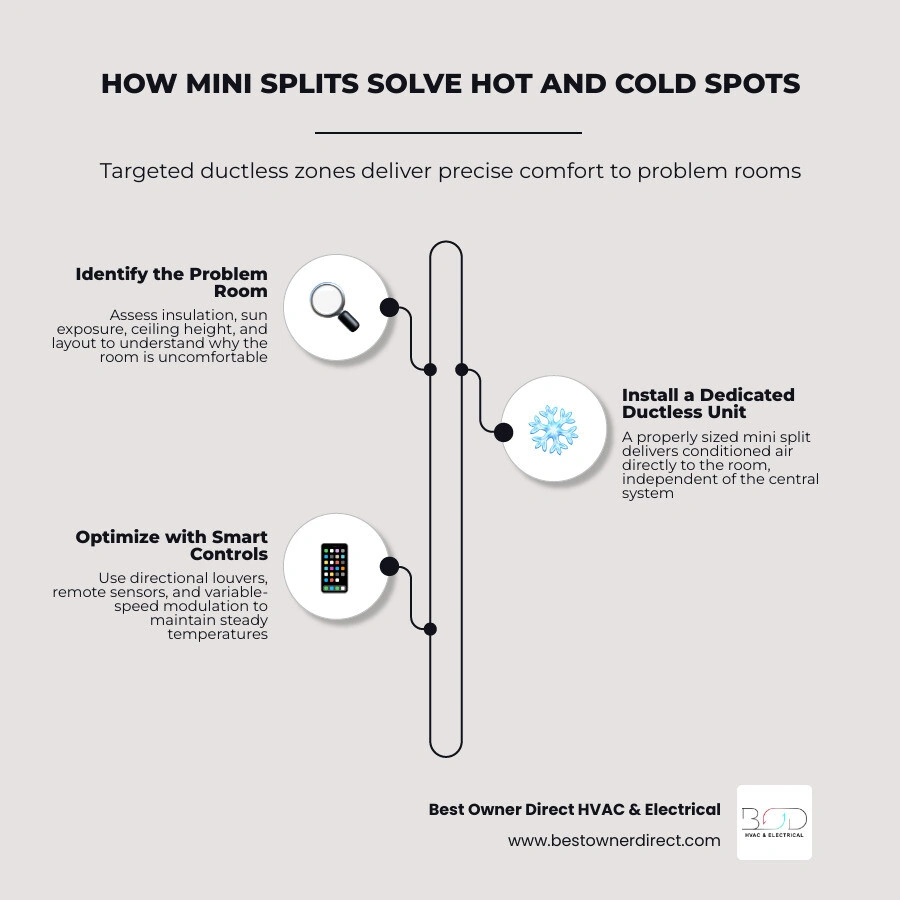
Hot upstairs bedrooms, chilly back rooms, sunny home offices, and stuffy additions often happen when one central thermostat cannot respond to each room's needs. Mini split installation in Cornelius, OR, can solve these hot and cold spots by giving the problem room its own heating and cooling zone. A properly sized ductless unit delivers conditioned air directly where comfort is missing, so you do not have to adjust the central system and make the rest of the home too warm or too cold. Smart controls and good airflow settings help keep temperatures steady.
Explore ductless mini split solutions | Schedule mini split installation
The best results start with identifying why the room is uncomfortable, then sizing the unit for its insulation, sun exposure, ceiling height, and layout. Air sealing and insulation also matter because a mini split cannot fully overcome major drafts or heat loss.
I am Chandrine Stepisnik, and I will walk you through how targeted ductless comfort can help balance your home.
Contact Best Owner Direct HVAC & Electrical for mini split help.
Simple how mini splits solve hot and cold spots in your home glossary:
- ductless heating and cooling for pacific northwest homes
- how ductless systems save energy with zone control
Why Uneven Temperatures Happen in Modern and Older Homes
Common Causes of Persistent Temperature Imbalances
Temperature variations rarely happen by accident. In most homes across the Pacific Northwest, uneven comfort is the result of architectural quirks, natural physics, and distribution flaws within your existing heating and cooling layout.
One primary culprit is solar heat gain. Rooms with large, south- or west-facing windows absorb massive amounts of radiant thermal energy during the afternoon. While the main floor remains shaded and temperate, a sunny bonus room or home office quickly turns into an oven. Conversely, multi-story thermal rise causes warm air to naturally migrate upward, leaving main levels brisk while upper-floor bedrooms trap stale heat.
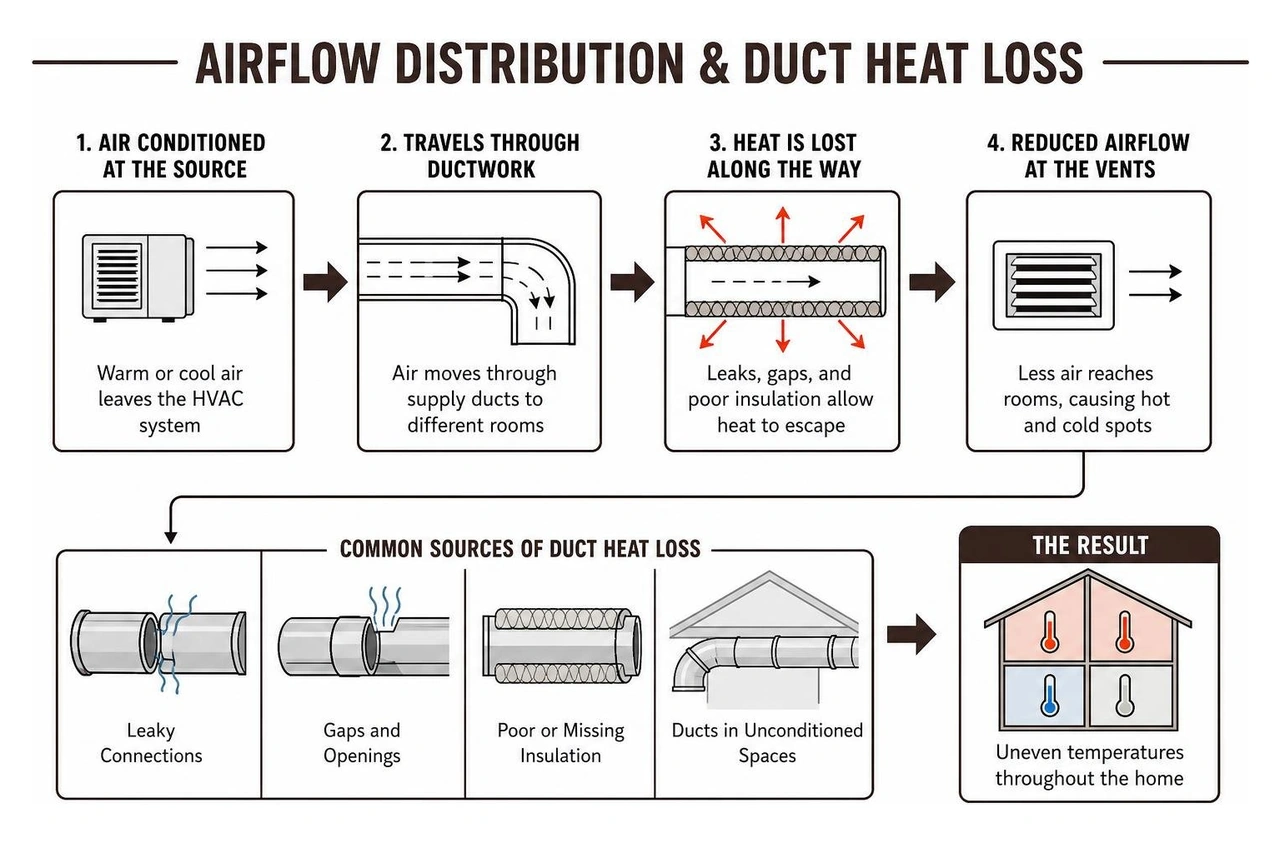
Ductwork problems exacerbate these issues significantly. Leaky, uninsulated, or poorly routed duct runs lose thermal energy long before air reaches the furthest vents. Understanding proper air balancing to avoid hot and cold spots is essential, as static pressure drops and airflow restrictions leave perimeter spaces starved for conditioned air. Furthermore, building envelope gaps, structural settling, uninsulated exterior wall cavities, and finished room additions often lack the thermal barrier necessary to retain conditioned indoor air.
The Limitations of Traditional Central HVAC Systems
Standard central split systems rely on a single, centrally located thermostat to dictate comfort for the entire house. If your thermostat sits in a draft-free hallway on the main level, it only registers the ambient conditions of that single hallway. When that hallway reaches 70°F, the system shuts down—regardless of whether your upstairs bedroom is baking at 78°F or your basement family room is shivering at 62°F.
Attempting to fix this by adjusting the main thermostat forces the central unit to over-condition the rest of the house, wasting energy and creating extreme temperature swings. Learning how to avoid creating hot and cold spots in your home often reveals the fundamental limitation of forced-air ducting: it supplies a fixed volume of air across rigid duct networks that cannot adapt to changing localized loads. When comparing central air vs mini split systems for older homes, central systems struggle to manage microclimates created by computers, home entertainment setups, vaulted ceilings, or unconditioned attics directly above living spaces.
How Mini Splits Solve Hot and Cold Spots in Your Home
Independent Zone Control and Inverter Compressor Technology
Ductless heat pumps provide an elegant engineering solution to persistent imbalances. If you are exploring what a mini split unit is, it is an advanced heat pump system consisting of an outdoor inverter compressor linked to one or more indoor air handlers via small refrigerant lines, eliminating ductwork entirely.
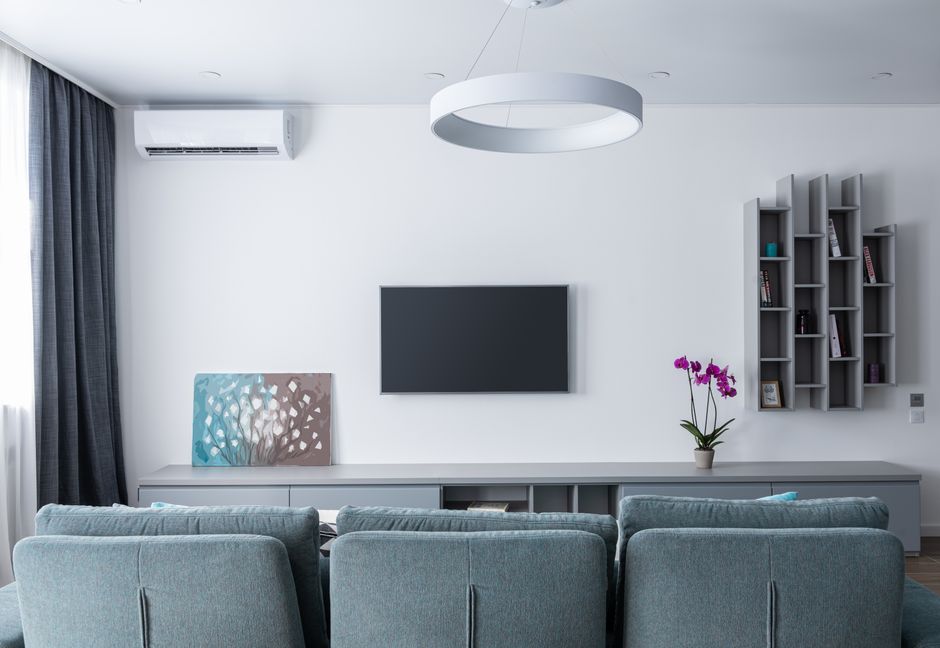
The magic of ductless climate management lies in HVAC zoning and its benefits. Instead of forcing the entire house onto a single schedule, each indoor unit acts as an independent comfort zone with its own dedicated thermostat sensor.
Unlike traditional single-stage compressors that abruptly blast on at 100% capacity and immediately shut off, ductless systems utilize variable-speed inverter technology. The compressor modulates its output continuously in tiny increments, running at steady, low-capacity cycles. This maintains steady air circulation, gently mixes stratified air layers, and achieves high seasonal efficiency ratings up to 25 SEER2 without cycling spikes.
Step-by-Step: How Mini Splits Solve Hot and Cold Spots in Your Home with Precision
Eliminating comfort imbalances requires a methodical, step-by-step approach to ensure each problem space receives the exact heating and cooling output it requires.
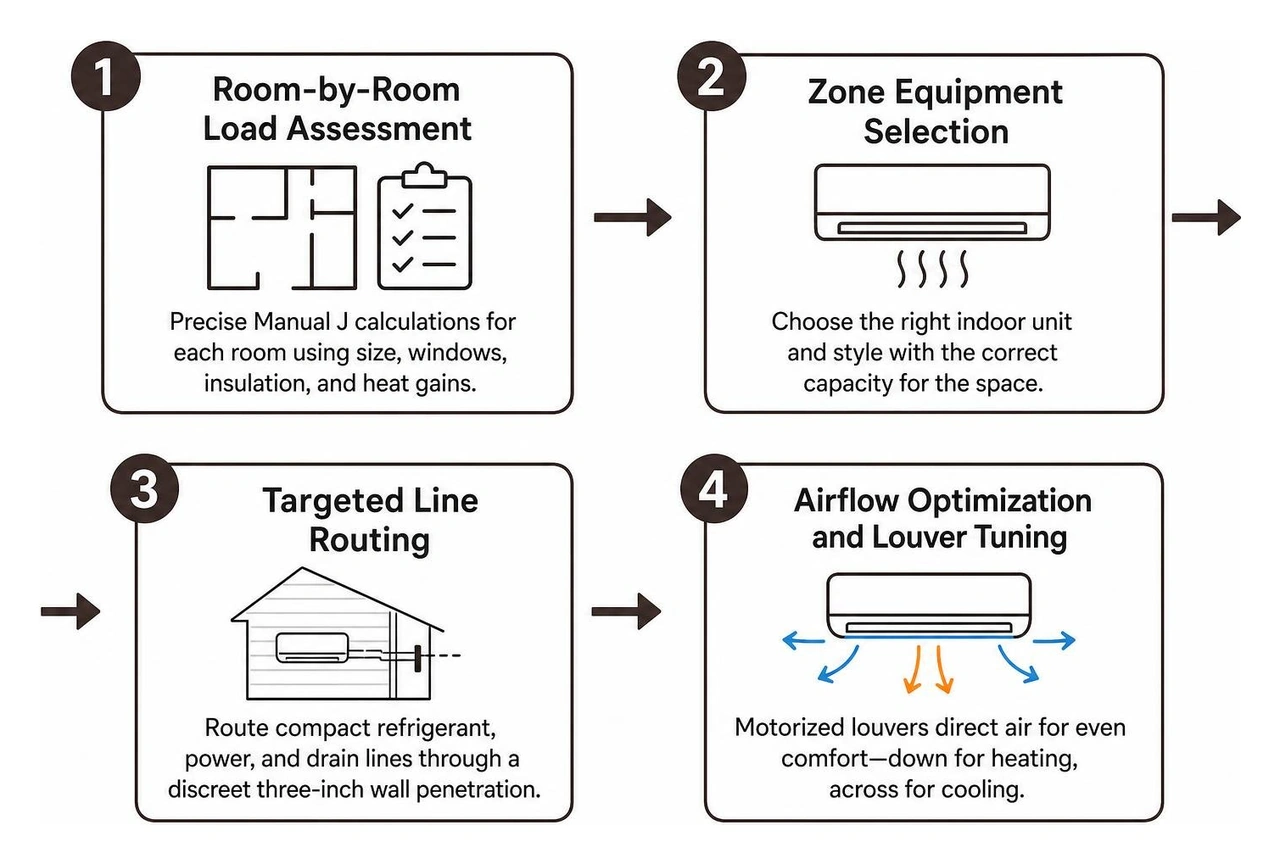
- Room-by-Room Load Assessment: Rather than estimating whole-house tonnage, our licensed technicians perform precise room-by-room Manual J calculations. We evaluate square footage, window orientation, ceiling heights, insulation values, and internal heat gains.
- Zone Equipment Selection: We select indoor air handlers with modulating ranges that match the specific thermal requirements of the space. As outlined in our guide on mini split air conditioning systems as the ultimate home comfort solution for homeowners, choosing the right chassis style—wall-mounted, floor-mounted console, or ceiling cassette—ensures optimal air distribution.
- Targeted Line Routing: Following our standard process for how a mini split installation works step by step, we route compact refrigerant, power, and drain lines directly through a discreet three-inch exterior wall penetration.
- Airflow Optimization and Louver Tuning: Once commissioned, the indoor unit uses motorized, multi-directional louvers to sweep conditioned air across the room. In heating mode, louvers direct warmth toward the floor to combat natural rising air; in cooling mode, they direct chilled air horizontally across the ceiling for gentle, draft-free falling distribution.
Real-World Applications: Problem Areas Resolved
Ductless zoning provides targeted relief across common household trouble zones:
- Finished Attics and Bonus Rooms: Positioned directly under rooflines, these spaces absorb extreme solar radiant heat in summer and suffer rapid heat loss in winter. A dedicated mini split neutralizes these extremes independently.
- Sunrooms and Enclosed Patios: Expansive glass walls create rapid thermal fluctuations that standard duct branches cannot satisfy.
- Converted Garages and ADUs: Adding living space without burdening your existing furnace is straightforward with zoned ductless units.
- Home Offices and Workspaces: Running high-end computers, monitors, and studio lighting creates localized heat that requires cooling even on crisp autumn days.
For homeowners in Clackamas County, opting for a dedicated mini split AC in Oregon City allows hard-to-condition rooms to maintain stable comfort year-round without overhauling existing ductwork.
| Feature | Central Forced-Air HVAC | Ductless Mini-Split Zoning |
|---|---|---|
| Temperature Control | Single central thermostat for entire house | Independent thermostat for each room/zone |
| Duct Thermal Loss | Up to 20–30% energy loss through duct runs | Zero duct loss (direct refrigerant transfer) |
| Compressor Operation | Single-stage or two-stage (on/off cycling) | Fully modulating variable-speed inverter |
| Air Stratification | High (blasts air, then turns off) | Low (continuous low-speed air mixing) |
| Installation Impact | Major drywall cutting for new duct runs | Non-invasive (single 3-inch wall penetration) |
| Efficiency Rating | Typically 14 to 17 SEER2 | Up to 25+ SEER2 |
Optimizing Ductless Performance and Sizing for Maximum Comfort
Avoiding Oversizing, Sensor Offsets, and Micro-Zoning Pitfalls
While ductless mini splits are exceptionally capable, improper system design can introduce new comfort challenges. One of the most frequent building science mistakes is equipment oversizing. Standard bedrooms in well-insulated homes may only require 1,500 to 3,000 BTU/hr of climate conditioning under normal conditions. If an installer places an oversized 9,000 or 12,000 BTU unit in a small bedroom, the equipment exceeds its minimum modulating turndown limit. This forces the unit to short-cycle, turning on and off rapidly. Short-cycling prevents continuous air circulation, leading to thermal stratification where hot air gathers at the ceiling while room corners remain cold.
Another common issue involves temperature sensing. Wall-mounted ductless heads measure ambient conditions at the intake grille located near the ceiling. Because heat naturally rises, the intake sensor may read 72°F while the living space at floor level sits at 66°F.
To solve this, learning how to make your mini split smart with a thermostat allows you to pair the unit with an external wireless wall sensor or smart thermostat mounted at eye level on an interior wall. This ensures the unit modulates based on the true temperature in your living zone rather than the hot air trapped near the ceiling.
Cold-Climate Performance, Air Sealing, and Supplemental Operation
Modern cold-climate heat pump systems feature specialized inverter compressors with vapor-injection technology. These advanced systems deliver 100% heating capacity at outdoor temperatures well below freezing, operating efficiently down to -15°F and cooling smoothly in exterior heat up to 126°F.
However, mechanical heating and cooling work hand-in-hand with your home's building envelope. A mini split cannot completely overcome uninsulated wall cavities, leaky window frames, or open attic bypasses. Performing targeted air sealing and insulation upgrades—such as insulating exterior wall cavities behind old heating alcoves with rigid foil-faced polyisocyanurate foam—dramatically reduces room heat loss. When paired with a tight building shell, an energy-efficient mini split AC easily handles localized heating and cooling demands while reducing the runtime and strain on your primary central system.
Installation and Maintenance Requirements for Lasting Comfort
Non-Invasive Setup and Local Permitting Considerations
Adding a ductless system to an existing home is fast and non-invasive. Unlike central duct retrofits that require tearing open ceilings and framing soffits, mini splits connect indoor and outdoor units via flexible line sets containing copper tubing, power cabling, and a condensate drain.
Homeowners frequently ask how long a mini split installation takes. A standard single-zone installation is typically completed within a single day by our licensed technicians.
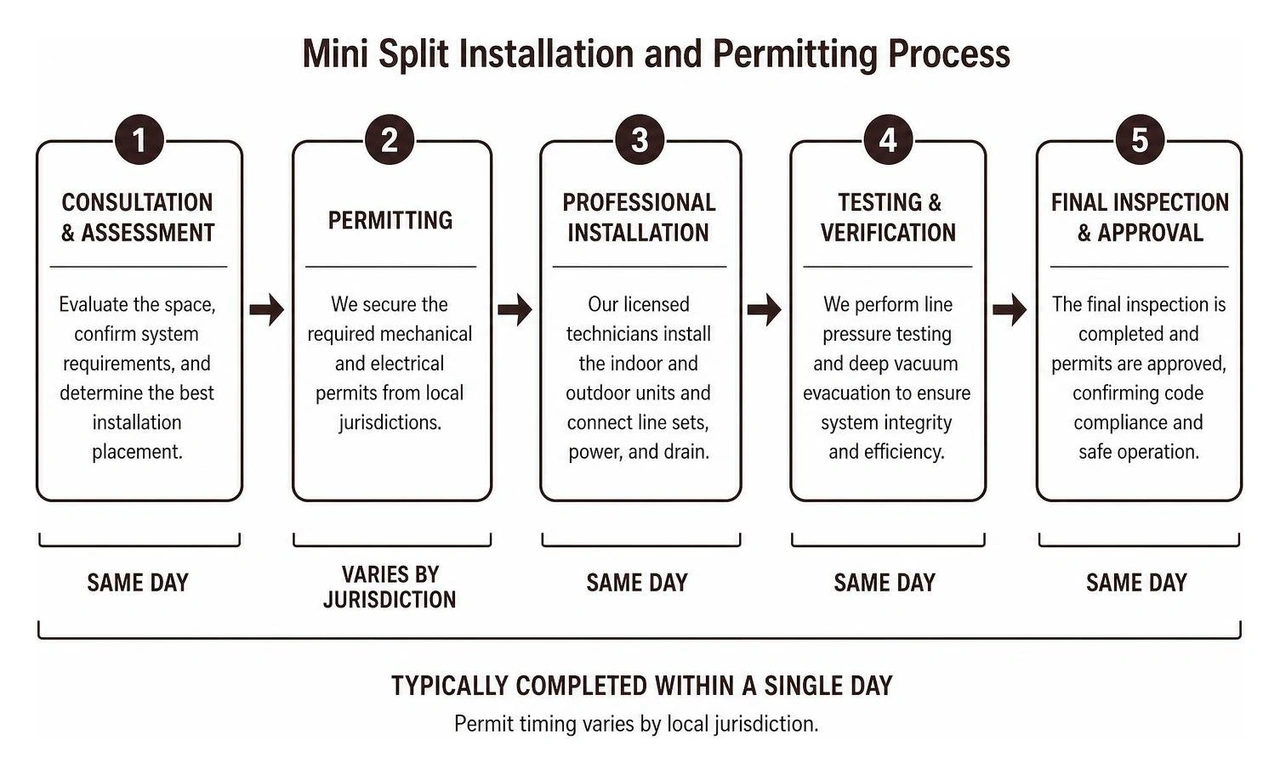
Ensuring code compliance and safety is paramount. Navigating what permits are needed for mini split installation in Oregon involves securing proper mechanical and electrical permits from local jurisdictions across Washington, Multnomah, and Clackamas counties. When you schedule professional mini split installation in Oregon City or surrounding areas, our licensed team handles all code compliance, line pressure testing, and deep vacuum evacuations for a seamless setup.
Routine Care and Ongoing System Reliability
To maintain steady air delivery and balanced temperatures, ductless units require simple, regular maintenance:
- Bi-Weekly Filter Cleaning: Indoor air handlers utilize washable, reusable mesh filters. Keeping these clear of dust ensures maximum airflow across the evaporator coil.
- Coil and Blower Wheel Inspections: Deep cleaning the indoor blower wheel and outdoor condensing coil prevents debris buildup that impairs heat transfer.
- Condensate Drain Line Flushes: Routine line flushing prevents algae blockages and condensate overflow.
- Refrigerant Charge Verification: Ensuring precise refrigerant levels keeps the inverter operating at its peak efficiency curves.
If you notice unusual noises, reduced airflow, or temperature drift, scheduling prompt mini split repair service with our team prevents small mechanical issues from compromising your home's comfort balance.
Frequently Asked Questions About Eliminating Hot and Cold Spots
Can a single ductless mini split head heat and cool multiple adjoining rooms?
A single ductless head works best within the open space where it is installed. While conditioned air naturally migrates through wide archways and open floor plans, standard interior doorways restrict passive airflow. For multiple partitioned rooms or adjoining bedrooms, installing a multi-zone outdoor condenser connected to dedicated, appropriately sized indoor heads in each room ensures balanced, predictable comfort.
How do cold-climate mini splits maintain comfort in freezing weather?
Cold-climate ductless heat pumps utilize variable-speed inverter compressors paired with flash-injection or vapor-injection cycles. This allows the system to extract ambient thermal energy from outdoor air even in sub-zero conditions without relying on inefficient electric resistance heat strips, providing steady, reliable heat across Pacific Northwest winters.
Can adding a mini split reduce energy waste from my central heating and cooling?
Yes. By using a mini split to provide supplemental heating or cooling in difficult problem rooms, you eliminate the need to adjust your central thermostat up or down to compensate for a single uncomfortable space. The mini split handles the localized load efficiently, allowing your central system to operate smoothly without unnecessary cycling or energy waste.
Conclusion
Uneven indoor temperatures do not have to disrupt your daily routine. By introducing independent zone control, variable-speed inverter modulation, and continuous gentle air circulation, ductless mini split heat pumps solve persistent hot and cold spots with precision. Whether you are conditioning a bright sunroom, a finished bonus room, or an entire floor of an older home, zoned mini splits provide reliable year-round climate control tailored to your lifestyle.
Best Owner Direct HVAC & Electrical is a family-owned HVAC, electrical, and water-heater services company based in Cornelius, OR, serving homeowners and businesses throughout the Portland metro and surrounding Oregon communities, including Beaverton, Hillsboro, Lake Oswego, Tigard, Tualatin, West Linn, and Oregon City. Our licensed technicians provide same-day service, expert installations, and emergency support focused on lasting comfort and energy efficiency.
Take the first step toward balanced home comfort today. Explore our ductless mini split solutions or reach out to our team to schedule your personalized in-home consultation.



How to Troubleshoot AC Blowing Warm Air in X Simple StepsLearn why your AC is blowing warm air with these troubleshooting steps, and discover DIY fixes to restore cool airflow in your home.
Read more
Most Common Heat Pump Repairs and Their CausesDiscover the most common heat pump repairs and what causes them so you can keep your Pacific Northwest system running efficiently year-round.
Read more

Why August Is the Best Time to Plan a Furnace ReplacementAvoid the September supply chain bottleneck by upgrading your aging heating system now. Booking early secures the best equipment and an installation date that fits your busy schedule.
Read more