Menu


What It Means When Your AC Circuit Breaker Keeps Tripping
Understanding ac circuit breaker keeps tripping what it means is the first step to protecting your home — and your cooling system — from serious damage. Simply put, your breaker tripped because your AC drew more electrical current than the circuit could safely handle. The breaker did exactly what it was designed to do: shut things down before that excess current could overheat wires, damage components, or start a fire.
Here are the most common reasons this happens:
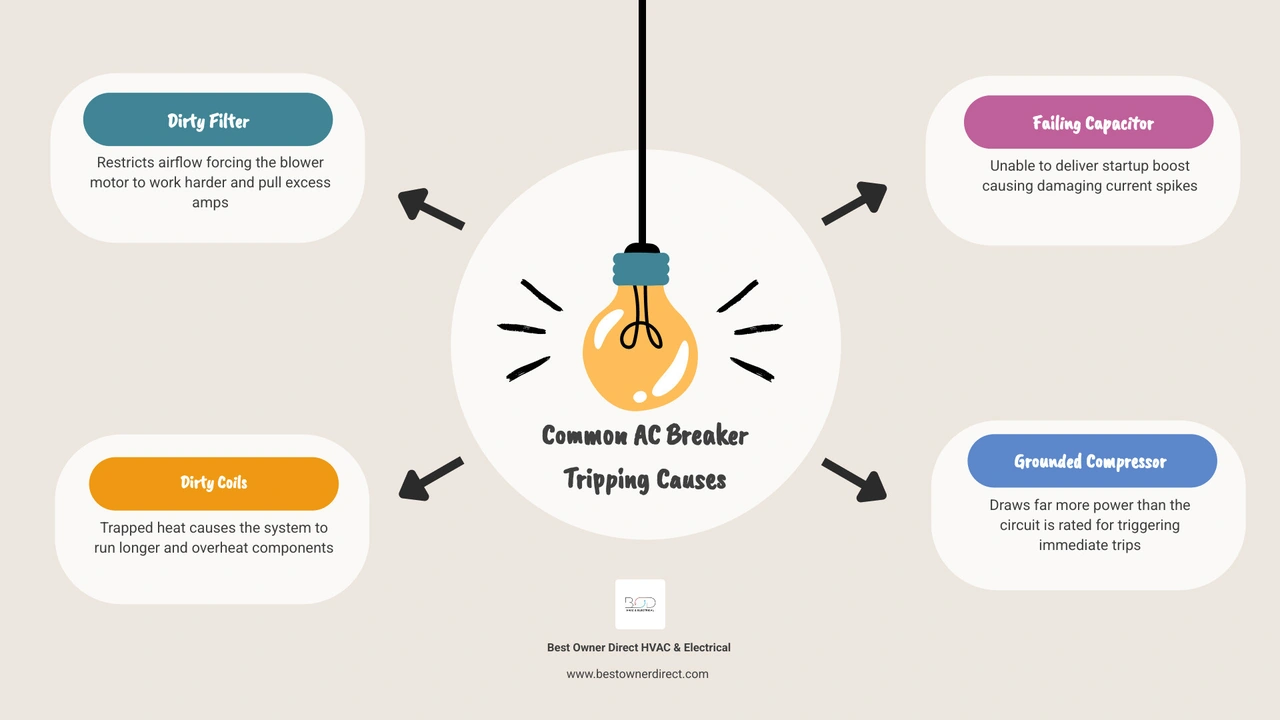
- Dirty air filter - restricted airflow forces the blower motor to work harder and pull more amps
- Dirty condenser coils - trapped heat causes the system to run longer and overheat
- Failing capacitor - can't provide the startup boost motors need, causing a current spike
- Hard-starting or grounded compressor - draws far more power than the circuit is rated for
- Loose or damaged wiring - creates shorts or ground faults that immediately trip the breaker
- Worn-out breaker - an aging breaker may trip even when current draw is within normal range
A single trip isn't always cause for alarm. But if your AC breaker trips repeatedly, that's your electrical system telling you something is wrong — and it needs attention before it becomes a safety hazard.
AC circuit breaker keeps tripping what it means for your home's safety
When we talk about ac circuit breaker keeps tripping what it means, we have to talk about safety first. It is easy to view a tripped breaker as a nuisance, especially during a sweltering July afternoon in Hillsboro or Beaverton. However, that "click" you hear at the electrical panel is actually a safety switch preventing a potential disaster.
A circuit breaker is designed to monitor the flow of electricity. If the amperage (the volume of electricity) exceeding the circuit's rating, the breaker snaps into the "off" position. This prevents the wire insulation inside your walls from melting due to extreme heat. If you Why Is My A/C Tripping the Breaker, you are essentially bypassing a fire hazard warning. Repeatedly resetting a breaker without fixing the underlying issue can lead to permanent damage to the AC unit and, in worst-case scenarios, an electrical fire.
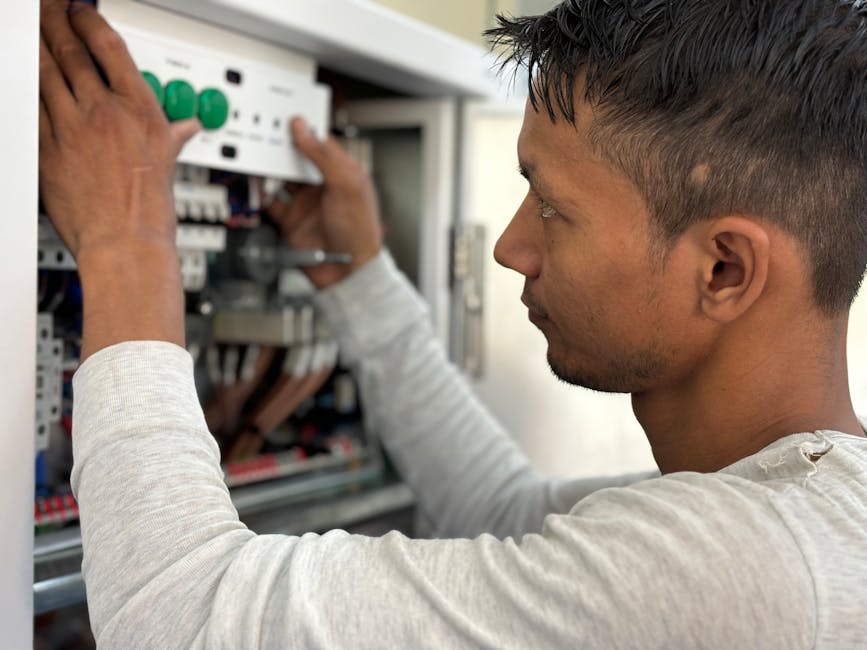
Common mechanical causes for a tripped AC breaker
It might surprise you to learn that many electrical trips start as mechanical problems. When a part of your AC isn't moving as easily as it should, it requires more energy to function. This "mechanical strain" translates directly into a higher electrical draw.
| Problem Type | Effect on System | Resulting Action |
|---|---|---|
| Airflow Blockage | Blower motor works harder to move air | Amperage increases, tripping the breaker |
| Dirty Coils | Heat cannot escape the outdoor unit | Compressor overheats and draws excess power |
| Mechanical Friction | Motor bearings or parts seize up | High startup current (LRA) causes immediate trip |
By keeping your system maintained, you ensure that the blower motor and compressor operate within their intended energy limits. If you've noticed your AC Not Cooling Properly: What to Check First is often the mechanical efficiency of the unit.
Dirty air filters and airflow restrictions
In May 2026, as the cooling season kicks off in the Portland metro area, the most frequent culprit we see is the humble air filter. A clogged filter acts like a pillow held over the "face" of your AC. To pull air through that thick layer of dust, the blower motor has to spin with significantly more force. This creates "static pressure" that forces the motor to draw more electricity than it’s rated for. Eventually, the motor overheats, and the breaker trips to protect the motor from burning out.
Other obstructions can include:
- Closed or blocked supply vents in unused rooms
- Furniture pushed against return air grilles
- Debris or pet hair clogging the internal blower wheel
Dirty condenser coils and outdoor unit debris
Your outdoor unit (the condenser) is responsible for releasing the heat collected from inside your home. If the coils are coated in dirt, grass clippings, or cottonwood seeds, they act as an insulator. The heat stays trapped inside the refrigerant. This forces the compressor to run at much higher temperatures and pressures, leading to a "thermal overload." When the compressor gets too hot, it draws a massive amount of current, and—you guessed it—the breaker trips.
Electrical component failures that trigger the breaker
Sometimes the issue isn't about dirt or airflow; it's about the electrical components themselves wearing out. Over time, the constant expansion and contraction of wires in the Oregon climate can lead to loose connections.
If you have an older home in Oregon City or Portland, you might even be dealing with a Circuit Breaker Replacement issue. Breakers are mechanical devices that can weaken over time, losing their ability to hold a load even if the AC is perfectly healthy.
AC circuit breaker keeps tripping what it means when a capacitor fails
The capacitor is like a high-powered battery that gives your AC motors the "kick-start" they need to get moving. If the capacitor is weak or "blown," the motor will try to start but won't be able to turn. This results in the motor sitting there and hummimg, drawing a massive spike of electricity known as "Locked Rotor Amps." Because the motor isn't actually spinning, all that energy turns into heat, and the breaker trips immediately. You can check for 6 Signs That Your Capacitor Needs to Be Replaced to see if this is your specific problem.
AC circuit breaker keeps tripping what it means if the compressor is grounded
This is the "worst-case scenario" for any homeowner. A grounded compressor occurs when the electrical windings inside the compressor motor break down and hit the side of the metal housing. This creates a direct "short to ground," causing an instantaneous and massive surge of electricity.
When a compressor is grounded, the breaker will usually trip the very second the AC tries to turn on. Unfortunately, this often means the compressor has suffered a "burnout," and in many cases, it is more cost-effective to replace the entire outdoor unit rather than just the compressor.
How to safely troubleshoot your AC unit
If you find yourself standing at your electrical panel in Cornelius or Lake Oswego wondering what to do, follow our "One-Reset Rule."
- Turn off the AC at the thermostat. This ensures the unit doesn't try to start the moment you flip the switch.
- Go to your breaker panel. Look for the breaker labeled "AC" or "HVAC." If it's in the middle position, flip it all the way to "OFF" first, then back to "ON."
- Check your air filter. If it’s gray or covered in dust, replace it immediately.
- Wait 30 minutes. This allows the AC's internal components to cool down if they were tripping due to heat.
- Turn the thermostat back to "Cool."
If the breaker trips again immediately or even an hour later, stop. Do not reset it a second time. This is a sign of a persistent electrical fault. For more detailed steps, see our guide on AC Troubles: 10 Reasons Your AC Is Not Turning On & How to Fix It.
When to stop DIY and call a professional technician
There is a fine line between simple maintenance and dangerous electrical work. At Best Owner Direct HVAC & Electrical, we want you to stay safe. You should stop all DIY efforts and call a professional if:
- You smell burning plastic or ozone. This indicates melting wire insulation or arcing.
- The breaker trips the instant you reset it. This usually points to a direct short circuit or a grounded compressor.
- You see smoke or sparks. This is an emergency; turn off the main power and call us.
- You hear a loud buzzing or "thunking" sound. This often means a motor is seized or a capacitor has failed.
Investing in Top Reasons AC Repair Saves You Money is about more than just comfort; it's about preventing a small electrical issue from turning into a total system replacement.
Frequently Asked Questions about AC Breaker Trips
Is it safe to keep resetting my AC breaker?
No. Think of your breaker like a smoke alarm. If the alarm keeps going off, you don't just take the batteries out; you find the fire. Repeatedly resetting a breaker forces high-voltage electricity through a system that is already struggling. This can melt the copper wiring inside your walls or cause the breaker itself to fail, which could lead to a fire.
Can low refrigerant cause the breaker to trip?
Yes, indirectly. When refrigerant is low, the AC has to run much longer to reach the temperature set on the thermostat. This causes the compressor to run hot. As it overheats, the internal friction increases, and it begins to draw more and more amperage until it exceeds the breaker's limit.
How does a dirty filter affect my electrical bill?
A dirty filter makes your blower motor work harder and run longer. This increases your kilowatt-hour usage significantly. By simply changing a $20 filter, you could save hundreds of dollars in energy costs over a single Oregon summer while preventing a costly breaker trip.
Conclusion
At Best Owner Direct HVAC & Electrical, we’ve served the Portland metro area from Cornelius to Wilsonville for years, and we know that a tripping breaker is one of the most stressful things a homeowner can face. Whether it's a simple fix like a new air filter or a complex electrical issue requiring a panel upgrade, our team of licensed technicians is here to help.
Don't let a tripping breaker put your home at risk. We provide expert diagnostics across Banks, Beaverton, Milwaukie, and the entire surrounding region. Schedule your professional AC service in Portland, OR today, and let us ensure your home stays cool and safe all summer long!


How a Heat Pump Protects Your Family During Extreme Heat in Portland, ORLearn how adding a heat pump protects your family during extreme heat in Portland, OR, with reliable cooling, air purification, and whole-home comfort.
Read more
How Much Clearance Does a House Air Vent Need for Safe Heating?Rearranging your living room for fall? Placing couches or rugs too close to floor registers creates fire hazards and strains your furnace. See the exact measurements for safe furniture placement.
Read more
How to Diagnose a Heat Pump Running But Not Heating or CoolingIs your heat pump running but not heating or cooling? Learn what it means and how to diagnose common causes like reversing valve failure or low refrigerant.
Read more