Menu


Why Knowing the Most Common Heat Pump Repairs and What Causes Them Can Save You Time and Money
Understanding the most common heat pump repairs and what causes them is the first step to keeping your home comfortable year-round — especially here in the Pacific Northwest, where your heat pump works hard in both heating and cooling seasons.
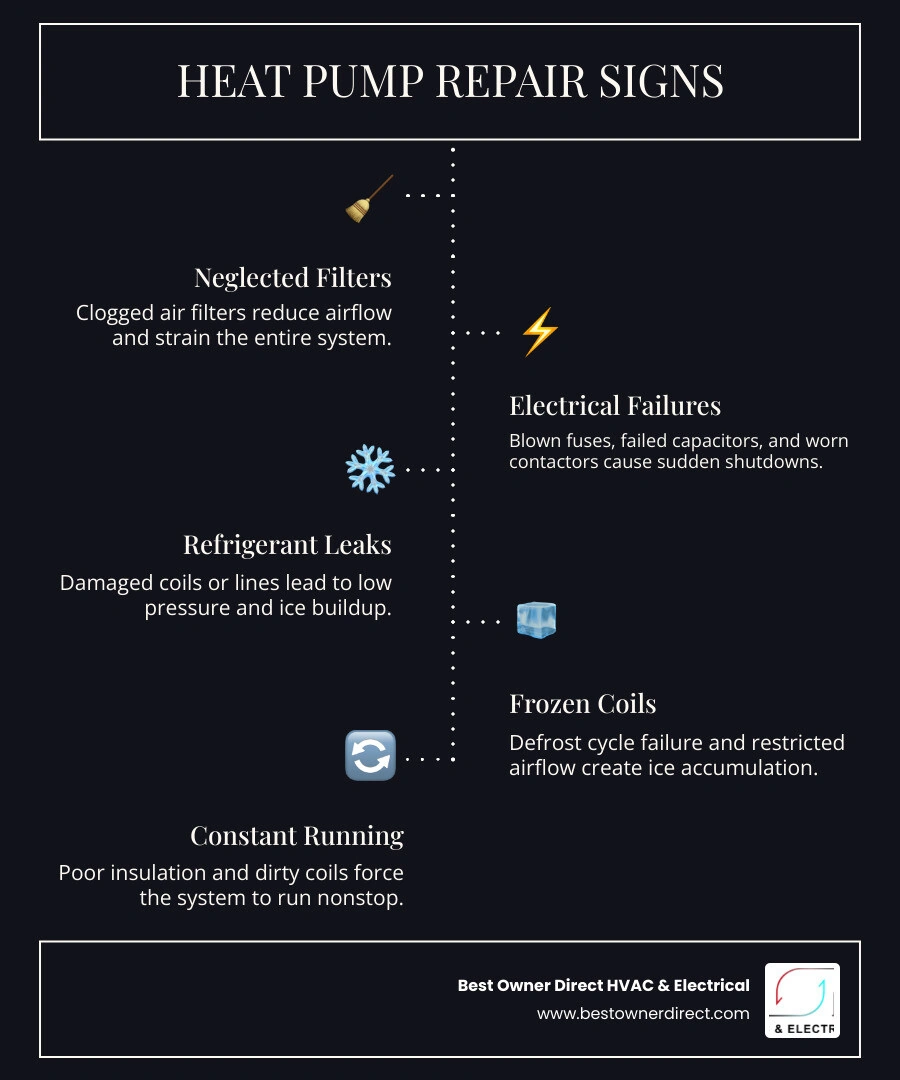
Here's a quick look at the most common issues homeowners run into:
| Repair Issue | Most Common Cause |
|---|---|
| Electrical failures | Blown fuses, failed capacitors, worn contactors |
| Refrigerant leaks | Damaged coils or refrigerant lines |
| Frozen coils | Dirty filters, low refrigerant, defrost cycle failure |
| Short cycling | Oversized system, thermostat issues, dirty coils |
| Weak or no airflow | Clogged filter, blocked vents, failing blower motor |
| Heat pump running constantly | Poor insulation, undersized unit, dirty coils |
| Strange noises | Loose components, failing motor, debris in unit |
Most of these problems share a single root cause: neglected maintenance. In fact, a clogged air filter alone can trigger a chain reaction that strains nearly every part of your system. One HVAC professional put it simply — a $15 filter left unchanged too long can turn into a much bigger service call.
The good news? Most heat pump problems show warning signs early. Knowing what to look for can help you act before a minor issue becomes a major repair.
Living in the Portland metro area means experiencing a beautiful mix of damp winters, crisp autumn days, and increasingly hot summers. Because our climate is relatively mild but highly active, local homeowners rely heavily on their heat pumps. If you want to dive deeper into why these systems are so uniquely suited to our region, check out the Heat Pump Benefits for Pacific Northwest Homeowners.
By learning the mechanics behind your system, you can spot minor operational hiccups before they leave you shivering on a cold January night in Hillsboro or sweltering during a July heatwave in Beaverton.
The Most Common Heat Pump Repairs and What Causes Them
Like any mechanical system that runs almost continuously throughout the year, a heat pump is subject to wear and tear. Unlike standard furnaces or air conditioners that only work for one season, a heat pump pulls double duty. This means its components accumulate operating hours twice as fast as a single-season system.
When we look at the root causes of system breakdowns, they almost always trace back to restricted airflow, electrical stress, or chemical imbalances within the refrigeration circuit. When one component is forced to work harder to compensate for a minor issue, it creates a domino effect that can lead to catastrophic system failure. For a comprehensive breakdown of these mechanical chain reactions, read our guide on Heat Pump Failures Explained.
Electrical Failures and What Causes Them
The electrical system of your heat pump is its nervous system. It coordinates when to start, when to stop, and how to distribute power safely. When an electrical failure occurs, your system might hum helplessly, trip your circuit breaker, or refuse to turn on at all.
- Failed Capacitors: Think of a capacitor as a temporary battery that delivers the high-voltage jolt your compressor and fan motors need to start up and run smoothly. Over time, heat, electrical surges, and constant use degrade the chemical components inside the capacitor. When it fails, your motors cannot start, often leading to a distinct humming sound.
- Worn Contactors: Contactors are the physical switches that close to send electrical current to your compressor and outdoor fan. Because they open and close thousands of times a season, the electrical contacts can pit, burn, or weld shut. This can cause the outdoor unit to run continuously or not at all.
- Tripped Breakers and Blown Fuses: These safety devices are designed to cut power when they detect an electrical overload. If your compressor or fan motor is drawing too much current—often due to mechanical strain or a short circuit—the breaker will trip to prevent an electrical fire. Repeating this process without addressing the underlying issue can cause severe electrical damage.
To better understand how these electrical components coordinate to keep your home comfortable, you can read about How Does a Heat Pump Work.
Refrigerant Leaks: One of the Most Common Heat Pump Repairs and What Causes Them
Refrigerant is the lifeblood of your heat pump. It does not get "used up" or disappear over time; it circulates through a closed loop of copper lines, absorbing and releasing heat. If your system is low on refrigerant, it means you have a leak.
- Where Leaks Occur: Leaks most commonly develop at joints, service valves, or within the delicate copper tubes of the evaporator and condenser coils. In coastal or humid areas of Oregon, environmental factors like formicary corrosion—a chemical reaction between indoor air pollutants and copper—can create microscopic pinholes in the coils.
- The Impact of Low Refrigerant: When refrigerant levels drop, the heat pump loses its ability to transfer heat efficiently. The compressor has to work twice as hard to move the remaining refrigerant, leading to overheating and premature failure. Furthermore, low refrigerant levels cause the pressure inside the system to drop, which leads to the evaporator coil freezing over.
- Environmental and Operational Warning Signs: If you notice a sudden drop in heating or cooling capacity, ice forming on the brass valves of your outdoor unit, or a persistent hissing sound, you likely have a leak. Ignoring these signs can quickly ruin your compressor. Learn more about identifying these issues in our guide on Warning Signs Your Heat Pump Needs Repair or Replacement.
Frozen Coils and Defrost Cycle Failures: Most Common Heat Pump Repairs and What Causes Them
During the cold Oregon winter, it is entirely normal for a thin layer of frost to form on your outdoor unit's coils. To combat this, heat pumps are equipped with a defrost cycle that temporarily reverses the system into cooling mode to warm up the outdoor coils and melt the ice. However, when this cycle fails, the outdoor unit can quickly turn into a solid block of ice.
- Defrost Control Board Failures: The defrost control board is the brain that tells the system when to melt ice. If the board's relays fail, or if the temperature sensors (thermistors) that monitor the coil's temperature stop working, the system will not know it needs to defrost, leading to thick ice accumulation.
- Reversing Valve Malfunctions: The reversing valve is the physical component that switches the direction of refrigerant flow, allowing your system to transition from heating to cooling (and defrost) mode. If this valve gets physically stuck or its electrical solenoid fails, the system cannot enter defrost mode.
- Restricted Airflow: If leaves, snow, or debris block the outdoor unit, or if a thick layer of dust coats the indoor coil, the system cannot transfer heat properly. This lack of airflow causes temperatures to plunge below freezing across the coils, accelerating ice buildup faster than the defrost cycle can handle.
If you are dealing with frequent freezing issues and are considering alternative system styles, you might want to read our article: Should You Get a Ductless Heat Pump.
Troubleshooting Your System: Safe DIY Steps Before Calling a Professional
Before you pick up the phone to schedule a professional diagnostic visit, there are several safe, straightforward troubleshooting steps you can perform. Quite a few of our service calls in communities like Cornelius, Hillsboro, and Beaverton turn out to be simple issues that homeowners can resolve themselves in a matter of minutes.
- Inspect and Replace the Air Filter: A clogged, dusty air filter is the number one enemy of your heat pump. It suffocates the system, leading to frozen coils, short cycling, and high energy bills. If you cannot see light through your pleated filter, replace it immediately.
- Verify Thermostat Settings: Make sure your thermostat is actually set to "Heat" or "Cool" (depending on the season) and that the fan is set to "Auto" rather than "On." Ensure the temperature setting is at least a few degrees above or below the current room temperature to trigger the system.
- Check the Electrical Panel: Locate your home's main electrical panel and check the circuit breakers dedicated to your heat pump's indoor and outdoor units. If a breaker has tripped, flip it completely to the "Off" position first, then back to "On." Note: If it trips again immediately, do not attempt to reset it a second time; call us right away.
- Clear the Outdoor Unit: Walk outside and inspect your heat pump. Ensure there is at least two feet of clear space around the entire unit. Remove any accumulated leaves, weeds, lawn furniture, or heavy snow drifts that could block airflow.
- Check the Condensate Drain Line: If your heat pump is running in cooling mode, it pulls moisture out of the air. If the plastic drain line becomes clogged with algae or debris, safety switches will trip to shut down the system and prevent water damage to your home.
Performing these simple checks can save you time and restore comfort instantly. To see what our technicians look for when we perform a comprehensive check, read about What Does a Professional Heat Pump Tune-Up Include.
Repair vs. Replace: How to Make the Right Decision for Your Oregon Home
When your heat pump experiences a significant component failure, you will face a classic homeowner dilemma: do you repair the existing unit, or is it time to invest in a replacement?
To make this decision easier, we recommend evaluating your system across several key areas:
| Decision Factor | Lean Toward Repair | Lean Toward Replacement |
|---|---|---|
| System Age | Under 10 years old | Over 12 to 15 years old |
| Repair Cost vs. Value | Minor electrical or sensor replacement | Major failure (e.g., failed compressor) on an older unit |
| Operational History | Rarely breaks down; well-maintained | Frequent service calls over the last two years |
| Energy Efficiency | Utility bills remain steady and reasonable | Energy bills are climbing due to declining efficiency |
| Warranty Status | Parts are still covered under manufacturer warranty | Warranty has expired, leaving you responsible for all parts |
A good rule of thumb is the 50% Rule: if the cost of the repair exceeds 50% of the value of a brand-new, high-efficiency heat pump system, replacement is almost always the more economical choice in the long run. Additionally, older systems running on R-22 refrigerant should generally be replaced, as this refrigerant is phased out and servicing these systems is no longer practical.
For a deeper dive into system longevity and planning for the future, consult our Heat Pump Lifespan Complete Guide or read our specialized advice on When Should You Replace Your Heat Pump.
Frequently Asked Questions About Heat Pump Issues
Why is my heat pump blowing cold air in winter?
There are a few reasons why your heat pump might blow cooler air during the winter. First, during a normal defrost cycle, the system temporarily switches into cooling mode to melt ice on the outdoor coil. During this 5-to-15-minute window, the indoor air may feel slightly cool.
Second, heat pumps deliver heat at a lower, more consistent temperature (typically around 90°F to 100°F) compared to a gas furnace (which blasts air at 120°F+). Since this air is cooler than your body temperature, it might feel cool to the touch even though it is actively warming your home. However, if the air is truly cold and your home's temperature is dropping, you could have a stuck reversing valve, a refrigerant leak, or a failure in your auxiliary heating elements. For more on how these systems operate, check out our guide on Understanding Ductless Mini Split Systems and Heat Pumps.
Why does my heat pump run constantly?
In periods of extreme winter cold or intense summer heat, it is normal for a heat pump to run almost continuously. Unlike traditional systems that blast on and off, heat pumps are designed to run at steady, low speeds to maintain a constant temperature.
However, if your system is running constantly during mild weather, it could be caused by an undersized system, poor home insulation, dirty outdoor coils, or low refrigerant levels. When coils are dirty or refrigerant is low, the system cannot transfer heat efficiently, meaning it has to run non-stop to try to meet your thermostat's settings.
How long do heat pumps typically last with proper care?
With consistent professional maintenance and regular filter changes, a standard heat pump typically lasts between 12 and 15 years. Newer, high-efficiency models can sometimes push closer to 20 years when installed correctly and protected from extreme wear and tear.
Skipping seasonal tune-ups can shorten this lifespan to just 10 years or less due to the strain of running with dirty coils and restricted airflow. To see how these systems compare to traditional setups over time, read about the Heat Pump Advantages Over Traditional HVAC.
Conclusion
Your heat pump is a highly efficient, hard-working system that keeps your family comfortable through every Oregon season. Recognizing the most common heat pump repairs and what causes them empowers you to take action early, protecting your investment and preventing minor issues from turning into major disruptions.
At Best Owner Direct HVAC & Electrical, we are dedicated to providing reliable, affordable, and energy-efficient home comfort solutions. Whether you live in Cornelius, Hillsboro, Beaverton, Portland, or any of the surrounding communities, our family-owned team is here to support you with expert workmanship and honest customer care.
If your heat pump is making strange noises, struggling to keep up with the weather, or simply due for a seasonal tune-up, do not wait for a complete system breakdown. Visit our Heat Pump Services page today to schedule your professional diagnostic visit and keep your home comfortable all year long!


Why August Is the Best Time to Plan a Furnace ReplacementAvoid the September supply chain bottleneck by upgrading your aging heating system now. Booking early secures the best equipment and an installation date that fits your busy schedule.
Read more
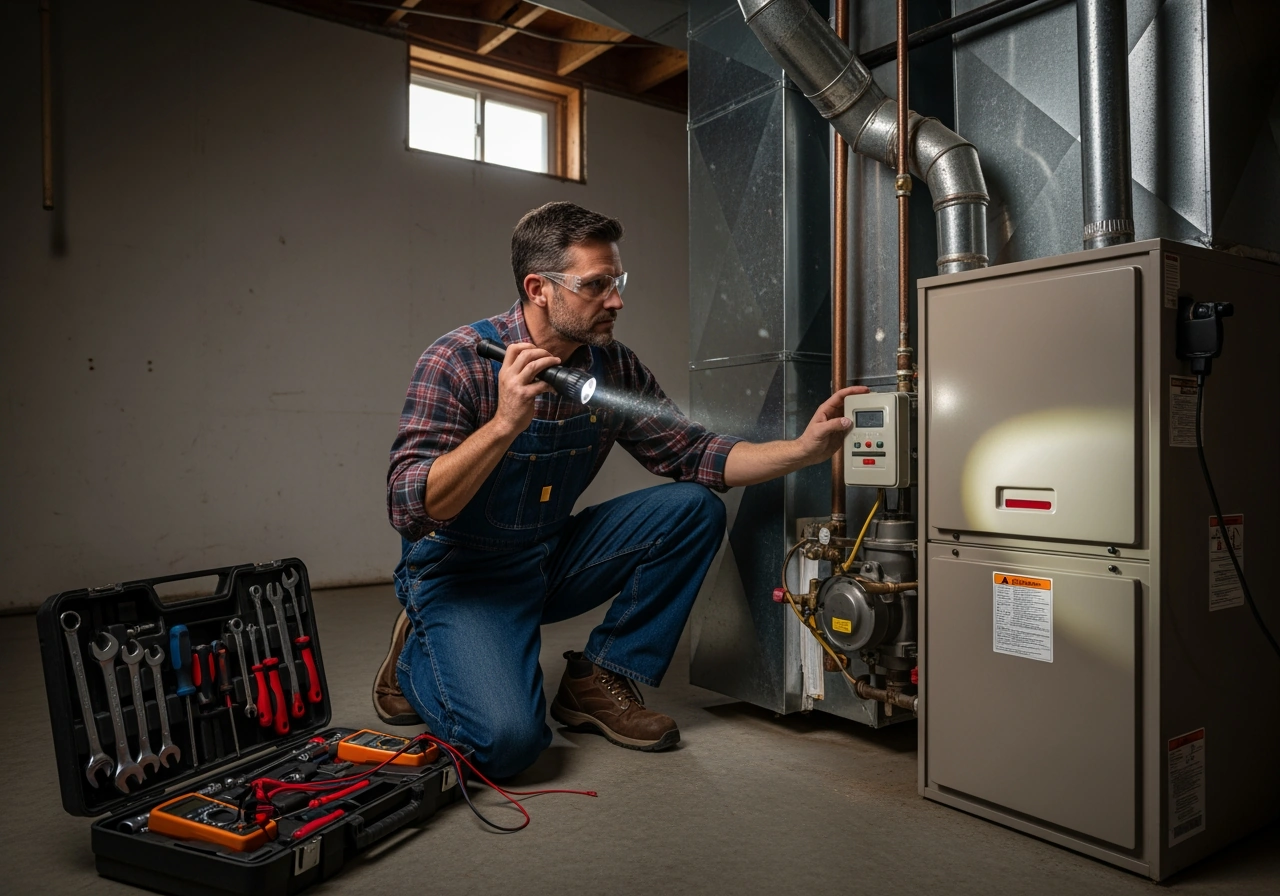
A Practical Guide to Ductless Mini Split Value in OregonIs a ductless mini split worth the investment in Oregon? Discover zoned comfort, energy savings, and incentives for older homes.
Read more
Direct-to-Owner HVAC Services vs. Large Franchises for AccountabilityWhen an AC breaks down in late summer, the technician's accountability is critical. See how an owner-operated business compares to a massive corporate dispatch fleet.
Read more