Menu


Is a Heat Pump or Tankless Water Heater the Better Investment for Your Home?
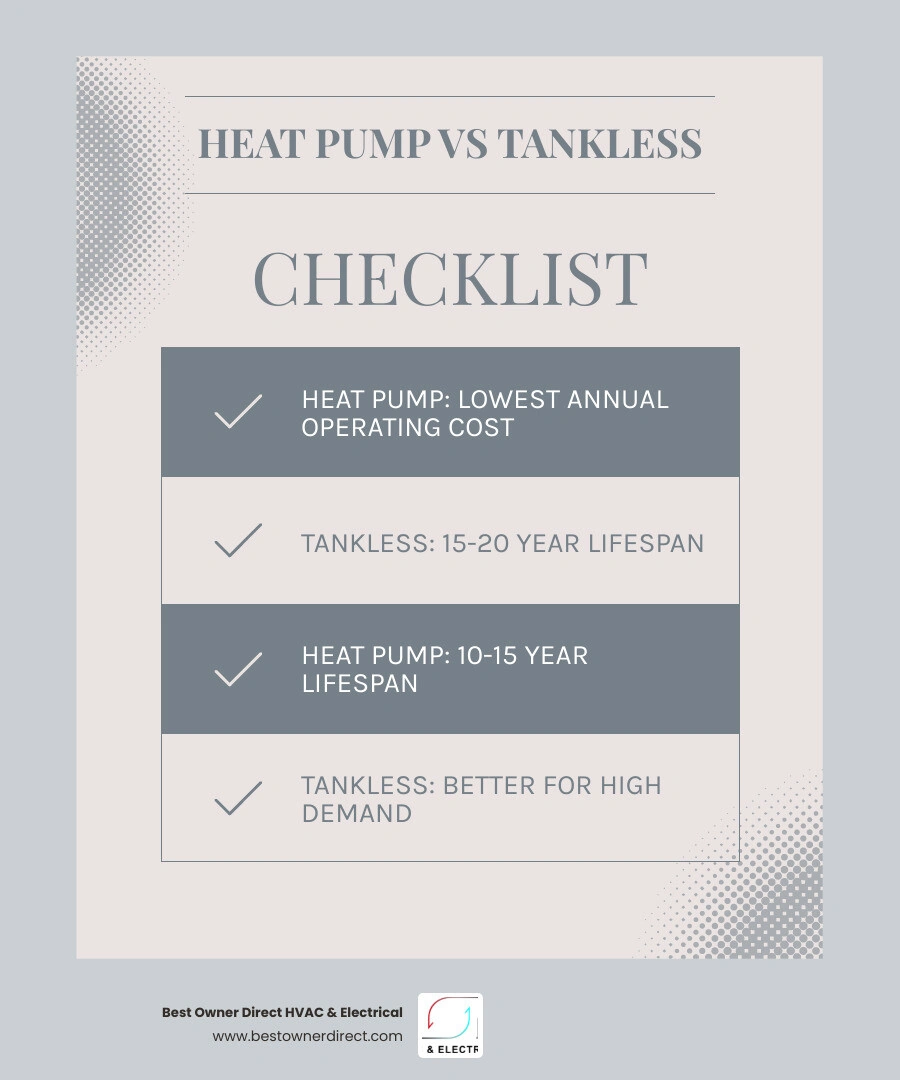
When making a heat pump water heater vs tankless cost comparison, the short answer is: heat pump water heaters win on long-term operating costs, while propane tankless units typically cost less upfront but more to run year-over-year. Here's a quick breakdown:
| Factor | Heat Pump Water Heater | Propane Tankless |
|---|---|---|
| Upfront cost | Higher | Moderate to high |
| Annual operating cost | Lowest of any type | Moderate |
| Lifespan | 10-15 years | 15-20 years |
| Federal tax credit (2026) | State/utility rebates may apply | Up to $600 (ENERGY STAR) |
| Best for | Lower long-term bills | High simultaneous demand |
| Cold climate performance | Needs temps above 40°F | Not affected by ambient air |
| Environmental impact | Very low emissions | Fossil fuel dependent |
Picking a new water heater feels simple until you start comparing the numbers. Water heating is the second-biggest energy expense in most homes — so getting this decision wrong costs you money every month for the next decade or more.
Homeowners across the Portland metro area, from Hillsboro to Lake Oswego, are increasingly weighing the real trade-offs between heat pump and propane tankless systems. The efficiency claims sound impressive on both sides. The installation requirements are different. The incentives have changed. And if your water heater sits in an unheated garage — which is very common in Oregon — that changes the math even further.
This guide cuts through the noise and gives you the actual numbers, side-by-side, so you can make a confident decision for your home.
Learn more about heat pump water heater vs tankless cost comparison:
Understanding the Technologies: How Heat Pumps and Tankless Systems Work
To make a fair comparison, we first need to understand how these two systems generate hot water. They rely on completely opposite physical principles. One is a master of heat preservation and transfer, while the other is a high-powered, on-demand burner.
Understanding these foundational differences helps clarify why their installation requirements and operating profiles vary so dramatically. For a deeper dive into how these systems stack up against traditional options, check out our tankless vs tank vs heat pump water heater comparison or read through our Ultimate Heat Pump Water Heater Guide.
The Mechanics of Hybrid Heat Pump Water Heaters
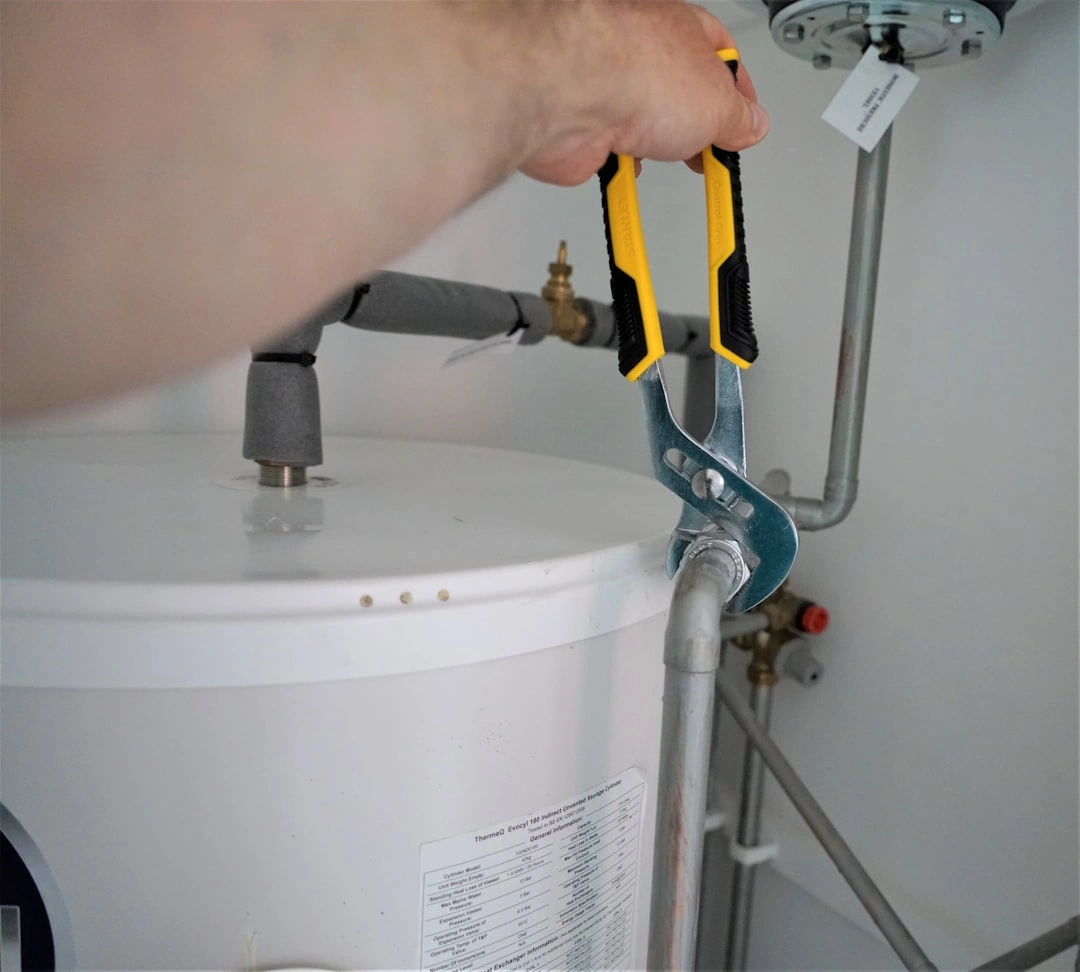
A hybrid heat pump water heater (HPWH) doesn't actually generate heat directly. Instead, it works like a refrigerator in reverse. It pulls heat from the surrounding ambient air, uses a compressor and a refrigeration cycle to intensify that heat, and then transfers it directly into a built-in insulated storage tank.
Because they move heat rather than creating it, these units are incredibly efficient. They are called "hybrids" because they still contain standard electric resistance heating elements. If hot water demand suddenly spikes or the surrounding air becomes too cold, the system automatically switches to traditional electric heating to ensure you don't end up taking a shivering cold shower. To learn more about how this cycle works, explore our Heat Pump Water Heaters Complete Guide.
How Tankless Water Heaters Deliver On-Demand Hot Water
Tankless water heaters, often called demand-type water heaters, completely eliminate the storage tank. When you turn on a hot water tap anywhere in your home, cold water flows into the unit. A sensor detects this flow and immediately ignites a high-powered propane gas burner.
This flame rapidly heats a heavy-duty copper or stainless steel heat exchanger. As the water passes through this exchanger, it is instantly brought up to your target temperature. Because there is no tank keeping dozens of gallons hot all day, standby energy loss is completely eliminated. However, the system's ability to supply hot water is bound by its maximum flow rate, measured in gallons per minute (GPM).
Heat Pump Water Heater vs Tankless Cost Comparison: Upfront and Installation Factors
When evaluating a heat pump water heater vs tankless cost comparison, looking only at the retail price of the equipment is a common mistake. The real differentiator is the installation complexity. Depending on the current layout of your home, retrofitting one system over another can introduce significant labor and infrastructure expenses.
| Installation Requirement | Hybrid Heat Pump (80-Gallon) | Propane Tankless (9 GPM) |
|---|---|---|
| Space Needed | Large footprint; needs 700–1,000 cu. ft. of air | Minimal; wall-mounted, compact |
| Electrical Needs | Dedicated 240V / 30-amp circuit | Standard 120V outlet (for controls/igniter) |
| Gas Piping | None | High-capacity propane line required |
| Venting | None (unless ducting cold exhaust air) | Dedicated stainless steel or PVC direct-vent |
| Condensate Drain | Yes (removes moisture from air) | Yes (for high-efficiency condensing units) |
To understand how these installation requirements translate into overall home efficiency, you can read our guide on Energy Efficient Water Heater Options Compared.
Electrical and Gas Infrastructure Upgrades for Oregon Homes
For homeowners in communities like Hillsboro, Tigard, or Beaverton, upgrading your water heater often means bringing your utility infrastructure up to code.
If you are replacing an older gas water heater with a hybrid heat pump, you will need to run a dedicated 240-volt, 30-amp circuit from your main electrical panel to the water heater location. If your panel is already full, this might require a subpanel or a complete panel upgrade.
Conversely, switching to a high-capacity 9 GPM propane tankless unit requires a substantial gas supply. Tankless units burn gas at an incredibly high rate when active. This means your existing propane line may need to be upsized to a larger diameter pipe to handle the load. Additionally, propane tankless units require dedicated venting through an exterior wall or roof to safely exhaust combustion gases, which requires cutting and sealing penetrations in your home's envelope.
Financial Incentives and Rebates for Your Heat Pump Water Heater vs Tankless Cost Comparison
Fortunately, you don't have to shoulder these upgrade costs alone. Because both technologies represent a massive leap forward in efficiency compared to standard tanks, they qualify for various financial incentives.
While federal tax credits under the Inflation Reduction Act have shifted, many ENERGY STAR certified models still qualify for federal tax credits. More importantly for local homeowners, regional utility programs — such as those offered through Energy Trust of Oregon, Portland General Electric (PGE), and Pacific Power — frequently offer substantial rebates for hybrid heat pump installations. These local utility rebates can significantly offset the upfront cost of fuel-switching, making the heat pump option highly competitive right out of the gate.
For a closer look at how these financial perks benefit your wallet, check out our article on Heat Pump Water Heater Benefits for Homeowners.
Long-Term Value: Operating Costs, Lifespan, and Maintenance
Once your new system is installed, the financial narrative shifts from upfront costs to ongoing ownership expenses. Over a typical 15- to 20-year window, the operating costs will completely dwarf the initial installation bill.
To see which systems consistently come out on top over time, take a look at our analysis of Which Water Heater Saves the Most Energy.
Annual Energy Efficiency and Operating Cost Math
The true efficiency of a water heater is measured by its Uniform Energy Factor (UEF). The higher the UEF, the more efficiently the unit converts energy into hot water.
- Hybrid Heat Pump Water Heaters boast incredibly high UEF ratings, often ranging from 3.30 to 4.00. This means they deliver three to four times more heat energy than they consume in electricity.
- Propane Tankless Water Heaters typically have UEF ratings between 0.80 and 0.95. While highly efficient for a combustion appliance, they cannot match the multiplying effect of heat pump technology.
In the Pacific Northwest, electricity rates are relatively stable compared to the volatile cost of delivered propane. Because propane must be trucked to your home and stored in a local tank, it is generally one of the most expensive residential fuel sources. Running a high-draw propane burner on demand will almost always result in higher annual utility bills than running a highly efficient hybrid heat pump that leverages Oregon's electricity grid.
Lifespan and Maintenance Needs in a Heat Pump Water Heater vs Tankless Cost Comparison
To protect your investment and ensure your water heater achieves its maximum expected lifespan, regular maintenance is non-negotiable.
Water Heater Lifespan Comparison:
- Hybrid Heat Pump: 10 to 15 Years
- Propane Tankless: 15 to 20+ Years
While a propane tankless unit generally boasts a longer overall lifespan, it requires meticulous care. Hard water minerals can quickly scale up the narrow passages of a tankless heat exchanger. If you live in an area with moderate to hard water, you must descale and flush your tankless system with a vinegar solution every 6 to 12 months. Failing to do so can cause the heat exchanger to overheat and crack, leading to a premature and costly replacement.
Hybrid heat pump water heaters require a different maintenance routine. Because they store water, they utilize a sacrificial anode rod to prevent tank corrosion, which should be inspected every few years. Additionally, because they pull in surrounding air, you will need to clean the unit's air filter every few months to maintain optimal airflow and efficiency. For a side-by-side comparison of the maintenance requirements of tank systems versus hybrid options, read our comparison on Heat Pump Water Heater vs Traditional Tank Comparison.
Performance and Climate Considerations for Pacific Northwest Homes
The climate in western Oregon is generally mild, but our damp, chilly winters present unique challenges for water heaters. This is especially true if your unit is installed in an unheated space like a garage or basement.
Because a heat pump extracts heat from the surrounding air, its efficiency drops when the ambient temperature falls below 40°F. In the dead of winter, an unheated garage in Forest Grove or Sherwood can easily hover near freezing. When this happens, the hybrid water heater will rely more heavily on its backup electric resistance elements. While this guarantees you still get hot water, it temporarily lowers the system's efficiency to that of a standard electric tank.
On the other hand, a propane tankless unit is completely unaffected by ambient air temperatures. It will deliver the exact same high-powered heating performance whether it is 90°F or 15°F outside.
However, tankless units face a different winter challenge: incoming groundwater temperatures. In the winter, the water entering your home from municipal pipes or wells is much colder. A tankless unit must work significantly harder to raise that freezing groundwater to a comfortable shower temperature. This can reduce the maximum flow rate (GPM) the system can support simultaneously. If you have a large family or a high-demand luxury feature like a large Jacuzzi tub, a tankless unit might struggle to keep up during a cold snap, whereas an 80-gallon hybrid tank provides a large reservoir of pre-heated water ready to go.
Frequently Asked Questions about Water Heater Upgrades
Choosing the right water heater requires balancing your household habits with your home's physical layout. Here are answers to some of the most common questions we hear from local homeowners. For more answers, browse our Heat Pump Water Heater Frequently Asked Questions.
Can a heat pump water heater work efficiently in a cold Oregon garage during winter?
Yes, but with minor caveats. Modern hybrid water heaters are designed to operate in ambient temperatures down to approximately 40°F. When garage temperatures drop below this threshold during freezing winter nights, the system's smart controls will temporarily engage the backup electric resistance elements to assist. While this slightly increases energy use for a few weeks out of the year, the unit remains incredibly efficient over the course of the entire year.
Do tankless water heaters provide truly instant hot water for high-demand homes?
There is a common misconception that "on-demand" means "instant." When you turn on a faucet, a tankless unit still takes a few seconds to ignite the burner and heat up the exchanger, and that hot water still has to travel through your pipes to reach the tap. Additionally, if you turn the water off and quickly back on, you may experience a brief pocket of cold water — often called a "cold water sandwich." If you have a large household where multiple showers, the dishwasher, and the washing machine run simultaneously, a single tankless unit can hit its flow limit, resulting in lukewarm water for some users.
Which system has a lower carbon footprint and environmental impact?
The hybrid heat pump is the clear winner here. By moving heat rather than burning fuel, a heat pump water heater reduces greenhouse gas emissions by up to 85% compared to standard fossil-fuel-burning units. Because Oregon's electrical grid continues to incorporate more renewable energy sources, running a heat pump water heater means your home's carbon footprint will naturally decrease over time. Propane tankless units, while highly efficient compared to old-school gas tanks, still rely entirely on burning a fossil fuel.
Conclusion
When you run the numbers for a heat pump water heater vs tankless cost comparison, the best choice ultimately depends on your home's existing infrastructure and your family's daily routine. If you have a large family with back-to-back showers and access to cheap propane, a tankless system offers the luxury of endless hot water. However, for the vast majority of homeowners in the Portland metro area looking to secure the lowest possible utility bills, reduce their carbon footprint, and take advantage of robust local utility rebates, the hybrid heat pump water heater is an incredibly tough value proposition to beat.
At Best Owner Direct HVAC & Electrical, we help families throughout Cornelius, Beaverton, Hillsboro, and the surrounding areas find the perfect comfort solutions for their homes. Whether you need an electrical panel upgrade to support a new hybrid system or professional installation of an energy-efficient water heater, our family-owned team is here to help with quality workmanship and honest, reliable service.
Schedule your professional water heater consultation today and let us help you maximize your home's comfort and energy savings!


Navigating Fall HVAC Tune-Ups in Cornelius Before the Rain StartsThe Pacific Northwest's sudden shift to autumn rain creates a narrow window for outdoor maintenance. Booking your heating tune-up in September prevents dangerous delays once the storms hit.
Read more

How Pacific Northwest Heat Domes Made Heat Pumps a NecessityDiscover how Pacific Northwest heat domes changed the need for heat pumps for year-round resilience, cooling, and safety across Cascadia.
Read more
Understanding How Heat Pumps Defrost During Early Oregon FrostsWaking up to steam billowing from your outdoor unit is alarming, but it rarely means fire. Discover how this normal defrost cycle protects your equipment during the first fall freeze.
Read more