Menu

Why Knowing How to Extend the Life of Your Water Heater Can Save You Thousands
Knowing how to extend the life of your water heater is one of the smartest and most affordable things you can do as a homeowner. Most water heaters quietly do their job for years — until they don't. And when they fail, it's rarely convenient.
Here's the quick answer if you're short on time:
To extend the life of your water heater:
- Flush the tank annually to remove sediment buildup
- Inspect and replace the anode rod every 3–5 years
- Test the temperature and pressure (T&P) relief valve once a year
- Set the thermostat to 120°F for optimal efficiency and reduced mineral buildup
- Check water pressure and keep it below 80 PSI
- Descale tankless units annually if you have hard water
- Insulate the tank and hot-water pipes to cut standby heat loss
- Schedule a professional inspection every 4–5 years
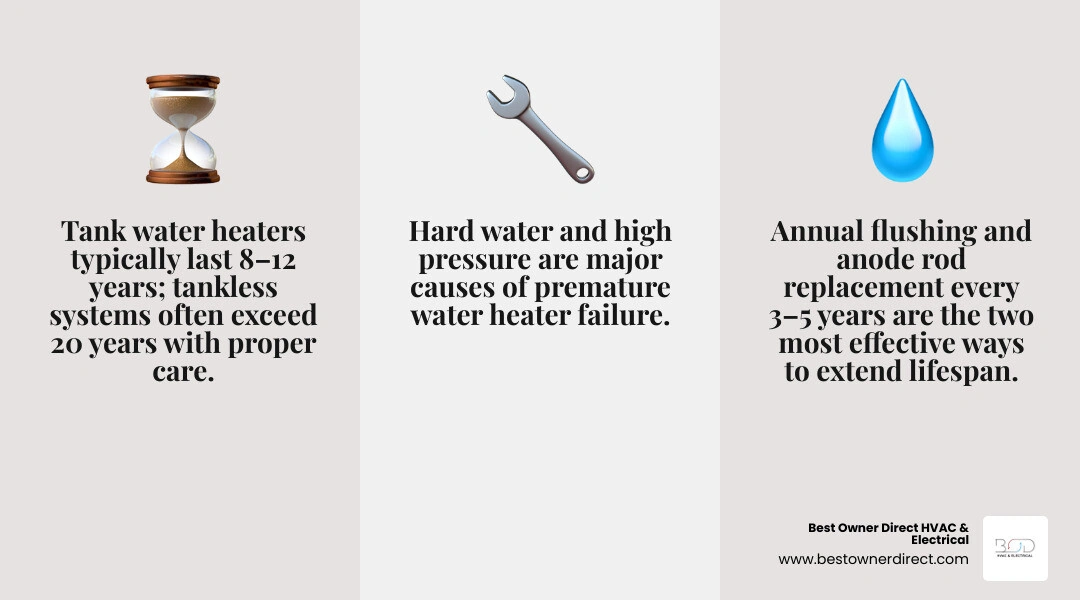
The average tank-style water heater lasts 8–12 years. But without any maintenance, that lifespan can shrink to just 6–8 years. On the flip side, well-maintained units regularly reach 15 years or more. For tankless systems, consistent care can push longevity past 20 years.
For homeowners in Cornelius, OR and the surrounding Portland metro area, where water quality and seasonal temperature swings can put extra stress on aging equipment, a little proactive attention goes a long way. The sections below walk you through everything you need to know — step by step.
Understanding Lifespans: Tank, Tankless, and Heat Pump Models
Not all water heaters are created equal. The technology keeping your morning shower hot plays a massive role in how long the appliance will last and what kind of care it needs.
Before diving into maintenance steps, it helps to understand what you are working with. Standard tank systems, modern tankless units, and energy-efficient heat pump hybrids all have different life expectancies and maintenance profiles.
| Water Heater Type | Average Lifespan (Unmaintained) | Extended Lifespan (Well-Maintained) | Primary Maintenance Tasks |
|---|---|---|---|
| Traditional Storage Tank | 6–8 Years | 12–15+ Years | Annual flush, anode rod replacement, T&P valve check |
| Tankless (On-Demand) | 10–12 Years | 20+ Years | Annual descaling, inlet filter cleaning |
| Heat Pump (Hybrid) | 8–10 Years | 13–15 Years | Air filter cleaning, condensate line check, annual flush |
Traditional Storage Tank Water Heaters
These are the classic metal cylinders found in most closets or garages. They keep 30 to 80 gallons of water continuously hot. Because they constantly hold water, they are highly susceptible to internal rust and sediment accumulation. Without regular flushing and anode rod swaps, the steel tank will eventually corrode and leak.
Tankless Water Heaters
Tankless models only heat water when you turn on a tap. Because they do not store water, they bypass the risk of a massive tank rupture. However, they rely on compact, high-powered heat exchangers. If mineral scale coats these exchangers, the system will overheat and eventually fail. Annual descaling can easily push their lifespan past two decades. If you are debating which setup fits your home, you can read our Tankless vs Tank vs Heat Pump Water Heater Comparison to explore the pros and cons of each.
Heat Pump (Hybrid) Water Heaters
Heat pump water heaters work like a refrigerator in reverse. They pull warmth from the surrounding air and transfer it to an insulated water tank. Because they pull double duty, they have a few extra components—like air filters and condensate lines—that require periodic attention. They are incredibly efficient and place less thermal stress on their heating elements than standard electric tanks. For a deep dive into how these modern systems operate, check out our Ultimate Water Heater Guide 2026.
Essential Maintenance: How to Extend the Life of Your Water Heater

If you ignore your water heater, it will eventually remind you of its existence in the worst way possible—often with an icy-cold shower or a puddle on your floor. Fortunately, a few simple maintenance tasks can dramatically increase its longevity.
To understand how to extend the life of your water heater, we have to look at the three main culprits behind premature failure:
- Sediment Buildup: Minerals like calcium and magnesium naturally settle at the bottom of standard tanks. This sediment acts as an insulating barrier, forcing the burner or heating element to work twice as hard to heat the water. This extra strain overheats the tank bottom, weakening the steel and leading to premature cracks.
- Corrosion: Water and steel are natural enemies. Left alone, water will rust through a steel tank in a matter of years.
- Excessive Pressure: Thermal expansion occurs when water is heated and expands. In a closed plumbing system, this expansion can cause water pressure to spike, putting immense stress on the tank welds.
Addressing these issues does not require a degree in engineering. By focusing on a couple of key DIY tasks, you can keep your system running smoothly. If you want to see how these maintenance habits tie into your overall utility bills, take a look at our guide on Energy Efficient Water Heater Options Compared.
Step-by-Step Tank Flushing: How to Extend the Life of Your Water Heater
Flushing your water heater is like changing the oil in your car. It is simple, highly effective, and skipping it is a recipe for disaster. We recommend flushing your tank once a year—or every six months if you live in an area with particularly hard water.
Here is how to flush a standard tank-style water heater:
- Turn Off the Power: For electric water heaters, flip the dedicated breaker in your electrical panel. For gas heaters, turn the control dial to the "Pilot" setting. Never flush a water heater while the power is on, as you can burn out the heating elements or damage the burner.
- Shut Off the Cold Water: Locate the cold water inlet valve at the top of the tank and turn it off.
- Attach a Garden Hose: Connect a standard garden hose to the drain valve located near the bottom of the tank. Run the other end of the hose to a safe drainage spot, like a floor drain, driveway, or backyard.
- Open a Hot Water Faucet: Turn on a hot water tap somewhere in your house (like a bathroom sink). This lets air into the system, preventing a vacuum from forming and allowing the tank to drain faster.
- Open the Drain Valve: Carefully open the drain valve on the water heater. The water coming out will be very hot, so keep pets and children away.
- Flush with Fresh Water: Once the tank is empty, turn the cold water supply valve back on for a minute or two. This temporary burst of pressure will stir up and wash out any stubborn sediment clinging to the bottom of the tank. Repeat this until the water running out of the hose is completely clear.
- Refill and Power Up: Close the drain valve and remove the hose. Turn the cold water supply back on and let the tank fill completely. Keep the hot water faucet in your house open until water flows out of it steadily—this ensures all air has been purged from the tank. Finally, restore power or turn the gas valve back to "On".
If your drain valve is old, plastic, or leaking, it might be time to have it repaired. Homeowners in the northern metro area can reach out to our team for professional assistance with Water Heater Repair Forest Grove OR.
Anode Rod Replacement: How to Extend the Life of Your Water Heater
Inside every standard storage tank sits a silent hero: the sacrificial anode rod. This rod is made of a highly active metal (usually magnesium or aluminum) that attracts corrosive elements in the water.
Essentially, the anode rod is designed to rust and corrode so your steel tank doesn't have to.
Over three to five years, the anode rod will slowly degrade. Once it is completely eaten away, those corrosive elements will turn their attention to the steel walls of your tank. Replacing this rod on schedule is the single most effective way to prevent internal tank rust.
- How to Check It: Unscrew the hex bolt at the top of your water heater and pull the rod out. If you see deep pitting, exposed wire, or if the rod has thinned out significantly, it is time for a replacement.
- Magnesium vs. Aluminum: Magnesium rods generally offer the best protection but degrade faster. Aluminum rods are ideal for homes with high-pH water or a rotten-egg smell.
- Powered Anode Rods: If you want a modern upgrade, consider a powered titanium anode rod. These do not degrade over time; instead, they use a tiny, safe electrical current to neutralize corrosion. They can last the entire life of your system without needing replacement.
If you are located in our home base of Cornelius and need a hand checking or replacing your rod, we are happy to help. You can learn more about our local services at Water Heater Repair Cornelius OR.
Specialized Care for Tankless and Heat Pump Systems
If you have upgraded to a modern, high-efficiency water heater, your maintenance checklist will look a bit different. While you do not have to worry about a sacrificial anode rod, these systems have their own unique vulnerabilities.
Tankless Descaling
Because tankless systems flash-heat water on demand, minerals can rapidly bake onto the internal copper heat exchanger. This creates a hard, chalky scale that blocks heat transfer, forcing the unit to run hotter and eventually crack.
To prevent this, you should descale your tankless system annually using a simple vinegar solution:
- Shut off the power, gas, and water valves to the unit.
- Connect a set of service hoses to the isolation valves (hot and cold service ports).
- Submerge a small submersible utility pump in a bucket filled with 3 to 4 gallons of food-grade white vinegar.
- Pump the vinegar through the heater for about 45 to 60 minutes to dissolve the mineral scale.
- Flush the system with clean water to remove any remaining vinegar, clean the inlet sediment screen, and turn the water and power back on.
If you are looking for reliable service in the western suburbs, our technicians specialize in Tankless Water Heaters Hillsboro OR.
Heat Pump Hybrid Maintenance
Because heat pump water heaters pull heat from the surrounding air, they function a lot like miniature HVAC systems. This means they require two unique maintenance steps:
- Clean the Air Filter: Dust and pet dander can clog the heat pump’s air filter, reducing airflow and forcing the system to rely on less efficient backup heating elements. Slide the filter out every 3 to 6 months, rinse it with warm water, let it dry, and slide it back in.
- Clear the Condensate Line: As the heat pump cools and dehumidifies the air, it produces condensation. Make sure the drain line is clear of algae and debris so water does not back up into the unit.
Curious about how to maximize the efficiency of your hybrid model? Dive into our Ultimate Heat Pump Water Heater Guide for expert tips and tricks.
Water Quality, Pressure, and Temperature Optimization
While direct hands-on maintenance is crucial, the environment surrounding your water heater also dictates how long it will survive. By optimizing your home's water quality, pressure, and temperature settings, you can eliminate structural stress before it even starts.
Manage Your Water Pressure
High water pressure might feel great in the shower, but it is a silent killer for your plumbing appliances. Most municipal water systems deliver water at high pressures—sometimes over 100 PSI.
We recommend keeping your home's water pressure between 50 and 60 PSI. If your pressure regularly spikes above 80 PSI, the continuous stress will stretch the steel tank and cause premature leaks. You can easily test this by screwing a simple pressure gauge onto an outdoor hose bib. If the reading is too high, consider installing a Pressure Regulating Valve (PRV) or checking your existing one.
Install an Expansion Tank
When water is heated, it expands. In an older "open" plumbing system, this extra volume simply pushed back out into the city water main. Modern homes, however, use "closed" systems with backflow preventers. This means the expanding water has nowhere to go, causing pressure to spike every time your water heater cycles on. Installing a thermal expansion tank gives this expanding water a safe place to go, protecting your water heater from daily pressure fatigue.
Tame Hard Water
Hard water is packed with calcium and magnesium. When heated, these minerals crystallize and settle out of the water, creating the destructive sediment we discussed earlier. Installing a whole-home water softener or a physical water conditioner filters out or neutralizes these minerals before they ever reach your water heater, instantly adding years to its lifespan.
Lower the Thermostat to 120°F
Most water heaters leave the factory set to 140°F. However, lowering the temperature to 120°F offers three major benefits:
- Slower Mineral Accumulation: Scale and sediment form much faster at higher temperatures. Dropping the temperature significantly slows down mineral crystallization.
- Reduced Standby Heat Loss: You will save energy by not continuously heating water to an unnecessarily high temperature.
- Safety: 120°F is much safer for households with children or elderly family members, virtually eliminating the risk of accidental scalding.
If you are looking to upgrade to a highly efficient hybrid system that pairs perfectly with these optimization strategies, you might qualify for significant savings. Read our guide on Heat Pump Water Heater Rebates and Incentives to see how you can save on your next installation.
Frequently Asked Questions About Water Heater Longevity
What are the signs that a water heater is about to fail?
Your water heater will usually give you a few warning signs before it gives up the ghost entirely. Keep an eye and ear out for:
- Rusty Water: If your hot water looks rusty but your cold water runs clear, your tank is actively corroding from the inside out.
- Rumbling or Popping Noises: This is the sound of water boiling beneath a thick layer of sediment at the bottom of the tank. It is a clear sign that your system is overheating.
- Slow Recovery Time: If it takes forever for your water to get hot, your heating elements or burners are likely failing due to mineral buildup.
- Active Leaks: Any pooling water around the base of the tank is an immediate red flag.
If you notice any of these signs, it is best to act quickly. Homeowners in the Forest Grove area can explore replacement options and professional consultations at Water Heater Replacement Forest Grove OR.
How does cold weather affect an older water heater?
Cold weather places immense thermal stress on your water heater. When freezing winter water enters a warm tank, the rapid temperature difference causes the metal tank to contract quickly. If the tank is already weakened by rust or sediment buildup, this sudden contraction can trigger hairline cracks and immediate leaks. This is why plumbing companies see a massive spike in water heater failures during the first major cold snap of the year.
When should I call a professional for water heater maintenance?
While flushing a tank is a great DIY project, some tasks are best left to licensed professionals. You should always call an expert if you experience:
- Gas Connection Issues: If you smell gas or have trouble with your pilot light assembly, do not attempt to fix it yourself.
- Electrical Failures: High-voltage electrical wiring and water do not mix. If your electric water heater is tripping breakers, call a pro.
- Stuck T&P Valves: If you test your temperature and pressure relief valve and it refuses to close or leak-test properly, it needs immediate professional replacement to prevent unsafe pressure buildup.
If you are ready to upgrade to a highly efficient hybrid system, you can check out our specialized local services at Heat Pump Water Heater Replacement Cornelius OR.
Conclusion
Taking a proactive approach and knowing how to extend the life of your water heater is one of the best investments you can make in your home's comfort and safety. With just an hour or two of annual maintenance—like flushing the sediment and checking your anode rod—you can easily double the lifespan of your appliance, keep your utility bills low, and avoid the headache of an unexpected breakdown.
At Best Owner Direct HVAC & Electrical, we are dedicated to keeping homes throughout Cornelius, OR, and the entire Portland metro area safe, comfortable, and energy-efficient. Whether you need a quick annual inspection, a complex repair, or a complete high-efficiency system upgrade, our licensed team is always here to provide reliable, professional service.
Don't wait for your hot water to run cold. Schedule Water Heater Service Today and let us help you maximize your home comfort investment!


Tankless vs. Traditional Hot Water Heaters for Fall UpgradesChoosing a new water heater isn't a simple appliance swap. Before winter hits, find out how your home's existing electrical panel and gas lines dictate your best replacement option.
Read more
How to Prevent Rain Damage to Your Outdoor Mini Split Unit Fast by Using a CoverLearn how moisture and rain affect your outdoor mini split unit and protect it from damage with proper covers, drainage, and seasonal maintenance tips.
Read more
Sealing Leaky Ductwork Before the Winter Cold Sets InYour furnace is only as effective as the ducts delivering its warmth. If you're tired of drafty rooms, securing your system's thermal envelope is the first step to true winter comfort.
Read more