Menu


Understanding Energy Metrics: SEER2, HSPF2, and COP
To truly evaluate how heat pump efficiency compares to traditional systems, you first need to understand the language of HVAC metrics. Comparing a gas furnace to an electric heat pump using older standards was like comparing apples to oranges because furnaces were measured on fuel combustion, while cooling units were measured on seasonal power draw. Updated regional standards (M1 testing) give us precise, standardized numbers.
When shopping for an efficient system, these four core energy metrics tell the story:
- SEER2 (Seasonal Energy Efficiency Ratio 2): Measures cooling efficiency over a typical cooling season. The standard split-system minimum standard set by the U.S. Department of Energy (DOE) is 14.3 SEER2, while high-efficiency heat pumps easily reach 17 to 20+ SEER2. To learn more about this cooling standard, check out our guide on what is SEER and why is it essential for your summer HVAC system.
- HSPF2 (Heating Seasonal Performance Factor 2): Measures heat pump heating performance over a full winter season, accounting for variable seasonal ambient outdoor temperatures. The federal baseline minimum sits at 7.5 HSPF2, but top-tier cold-climate units achieve ratings of 9.0 to 10.5 HSPF2.
- COP (Coefficient of Performance): A snapshot metric measuring instantaneous efficiency at a specific outdoor temperature. A system with a COP of 3.0 delivers 3 units of thermal heat energy for every 1 unit of electrical power consumed.
- AFUE (Annual Fuel Utilization Efficiency): Used exclusively for combustion-based systems like gas, propane, or oil furnaces. An 80% AFUE furnace turns 80% of its fuel into heat while losing 20% up the chimney exhaust flue. High-efficiency condensing gas furnaces top out around 95% to 98% AFUE.
Understanding these numbers makes it easier to figure out how to choose an efficient heating system tailored directly to your home's energy demands.
How Heat Pump Efficiency Compares to Traditional Systems Across All Seasons
One of the biggest functional advantages of a modern heat pump is its all-in-one HVAC design. Unlike traditional configurations that require a gas furnace for winter and a standalone central air conditioner for summer, a heat pump handles both heating and cooling seamlessly.
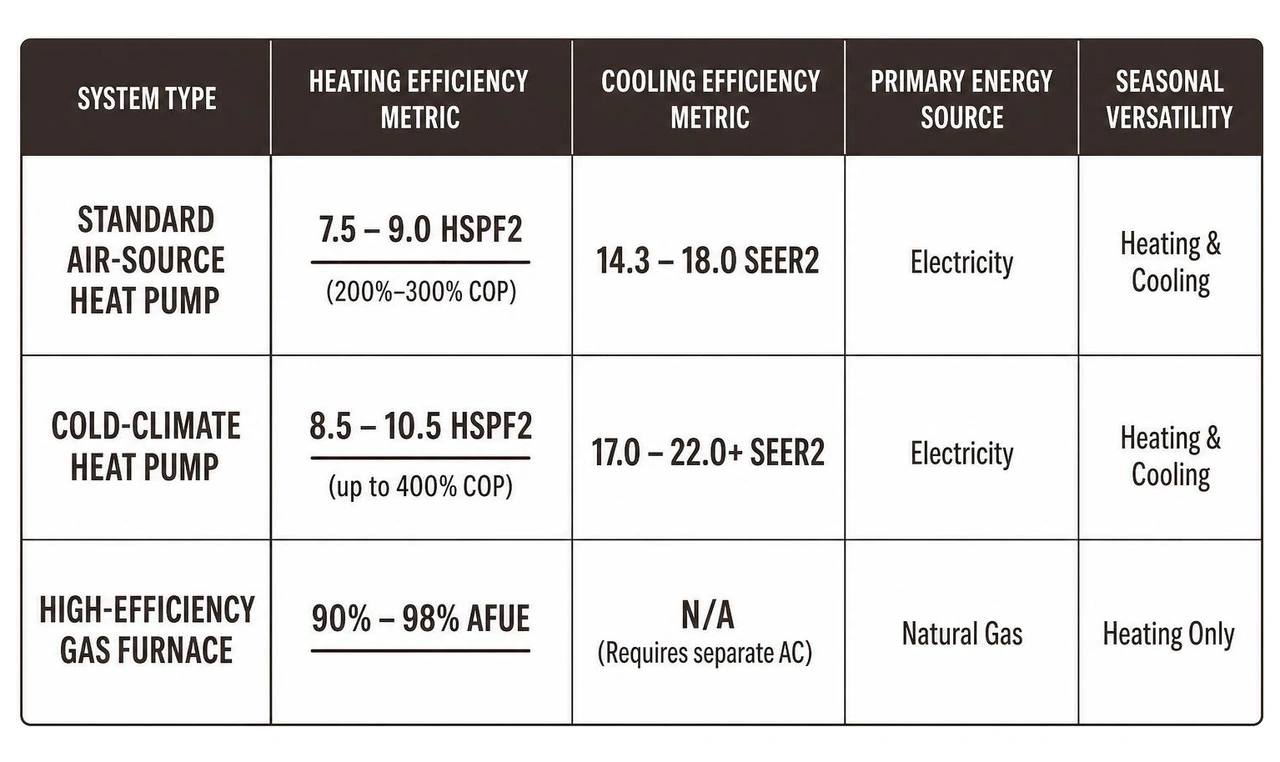
| System Type | Heating Efficiency Metric | Cooling Efficiency Metric | Primary Energy Source | Seasonal Versatility |
|---|---|---|---|---|
| Standard Air-Source Heat Pump | 7.5 – 9.0 HSPF2 (200%–300% COP) | 14.3 – 18.0 SEER2 | Electricity | Heating & Cooling |
| Cold-Climate Heat Pump | 8.5 – 10.5 HSPF2 (up to 400% COP) | 17.0 – 22.0+ SEER2 | Electricity | Heating & Cooling |
| High-Efficiency Gas Furnace | 90% – 98% AFUE | N/A (Requires separate AC) | Natural Gas | Heating Only |
| Oil / Propane Boiler or Furnace | 80% – 86% AFUE | N/A (Requires separate AC) | Fuel Oil / Propane | Heating Only |
| Electric Resistance Baseboard | 100% Thermal (1.0 COP) | N/A (Requires separate AC) | Electricity | Heating Only |
Heating Mode Breakdown: How Heat Pump Efficiency Compares to Traditional Systems
When heating a home, thermal transfer mechanics completely outpace thermal combustion. Gas, oil, and propane units must burn fossil fuels to generate heat. Even if you purchase a top-tier gas furnace boasting a 98% AFUE rating, 2% of the thermal energy you pay for escapes outdoors through system exhaust.
Electric resistance heating (like electric furnaces or baseboard heaters) turns 100% of incoming electricity into heat energy, achieving a COP of exactly 1.0. While that means no fuel is wasted up a flue, it is an expensive way to heat a home because generating heat directly requires massive amounts of electrical power.
By contrast, an air-source heat pump extracts existing heat energy from ambient outdoor air and concentrates it inside your living spaces. To understand the underlying thermodynamics, read our deep dive on how does a heat pump work. Even during chilly winter days, outdoor air contains abundant thermal energy. Because the system's compressor only spends energy moving that heat, heat pumps operate at an average efficiency range of 300% to 500% (COP 3.0 to 5.0).
For homeowners experiencing rainy, cool winters, seeing how a heat pump heats your home in Pacific Northwest winters shows why this technology is so popular across local communities like Beaverton, Hillsboro, and Oregon City.
Cooling Mode Breakdown: How Heat Pump Efficiency Compares to Traditional Systems
In cooling mode, a heat pump is mechanically identical to a standard central air conditioner. Both systems use refrigerant liquid to absorb thermal heat from indoor air and dump it outdoors.
The secret weapon of a heat pump is its reversing valve. In summer, this valve flips the flow of refrigerant, allowing the exact same equipment to act as a high-efficiency central air conditioner. For an in-depth breakdown of summer operation, explore how a heat pump cools your home in summer.
Modern heat pumps often come equipped with variable-speed inverter technology. Unlike traditional single-stage air conditioners that blast on at 100% capacity and cycle off abruptly, inverter-driven heat pumps modulate their compressor speed continuously in small increments. This offers key indoor performance advantages:
- Enhanced Dehumidification: Long, low-speed running cycles remove significantly more moisture from the air during humid weather.
- Precise Comfort Control: Room temperatures remain consistent within a fraction of a degree, eliminating cold or hot room swings.
- Energy Consumption Savings: Running continuously at low speeds consumes a fraction of the electricity required for high-draw single-stage cycling.
For homes without central ductwork, pair an inverter heat pump outdoor unit with ductless indoor heads. You can learn more by checking out our guide to understanding ductless mini split systems and heat pumps.
Climate Performance: Cold-Weather Efficiency and Dual-Fuel Hybrid Systems
Older air-source heat pumps from twenty years ago earned a bad reputation in cold weather because older refrigerants and single-stage compressors struggled when outdoor temperatures dropped below 30°F. Modern heat pump engineering has transformed cold-weather capabilities.

Modern cold-climate heat pumps feature inverter-driven compressors, electronic expansion valves, and enhanced vapor injection technology. These innovations allow ENERGY STAR cold-climate certified heat pumps to maintain 100% heating capacity down to 5°F and continue providing efficient, reliable space heating in extreme ambient temperatures down to -15°F or -22°F. Even at sub-zero temperatures, certified cold-climate units achieve a COP above 1.75 — delivering nearly double the efficiency of electric resistance heating.
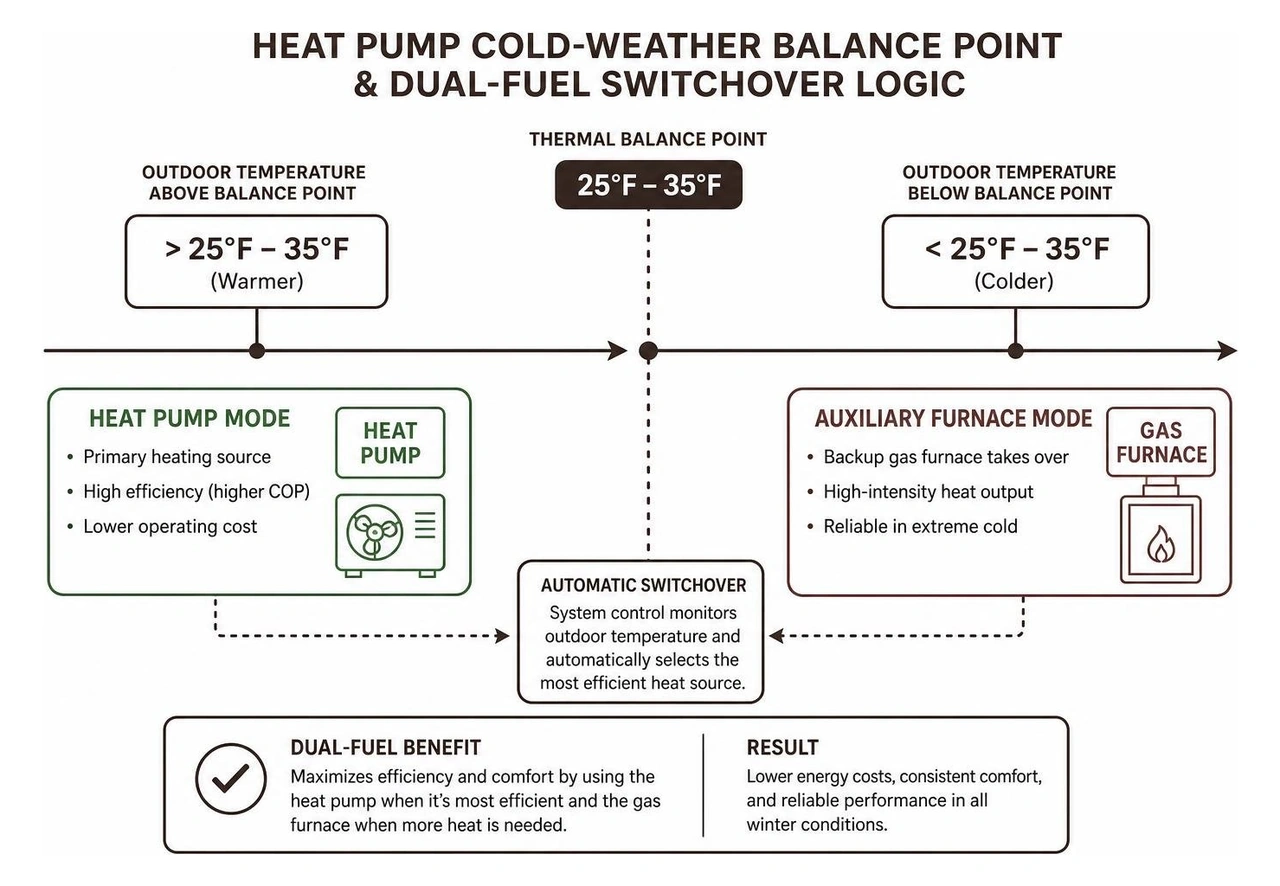
For homeowners living in mixed regions where winter freezes occasionally drop into severe single digits, dual-fuel (hybrid) systems offer an alternative strategy. A dual-fuel hybrid system pairs an electric air-source heat pump with an auxiliary backup gas furnace.
In a dual-fuel configuration:
- Above the Thermal Balance Point (typically 25°F to 35°F): The heat pump operates as the primary heat source, taking advantage of ultra-high seasonal COP ratings to keep heating bills low.
- Below the Thermal Balance Point: The system control board automatically switches heating over to the backup gas furnace, taking advantage of quick, high-intensity gas heating during extreme winter freezes.
Discovering these hybrid capabilities is a key reason homeowners explore the broad range of heat pump advantages over traditional HVAC options available today.
Factors That Influence Real-World Efficiency and System Lifespan
While factory ratings like SEER2 and HSPF2 tell you how a system performs under laboratory testing, real-world efficiency depends heavily on home conditions and equipment maintenance.
Key factors that directly impact operational heat pump efficiency include:
- Home Thermal Envelope & Air Sealing: Heat pumps deliver maximum efficiency when heat loss is minimized. Properly insulating your attic, weather-stripping doors, and sealing drafty windows allows you to install smaller, less expensive heating equipment that consumes far less power.
- Ductwork Quality & Static Pressure: Leaky, uninsulated, or undersized air ducts can waste up to 30% of a heating system's conditioned air before it ever reaches your living spaces.
- Proper Equipment Sizing (Manual J Calculations): Rules of thumb based strictly on square footage often lead to oversized or undersized systems. Oversized units short-cycle constantly, causing mechanical wear and driving up energy usage. Undersized units run continuously and struggle during winter temperature drops.
- Air Filter Maintenance & Airflow Restrictions: Restricted airflow forces the compressor and blower motor to work harder, consuming 5% to 15% more electricity. Replacing filters every 60 to 90 days preserves airflow velocity and protects internal heat exchangers.
- Routine Professional Maintenance: Annual maintenance inspections ensure proper refrigerant charge levels, clean outdoor coils, and verified electrical connections, preserving high operational COP season after season.
When evaluating lifespan, traditional gas furnaces generally last 15 to 20 years because they only run during winter months. Standard air-source heat pumps typically last 12 to 15 years because they work year-round managing both summer cooling and winter heating.
Proper maintenance helps maximize equipment performance throughout its working life. For more details on system longevity, read our heat pump lifespan complete guide, and explore our advice on upgrading your HVAC system when the time comes.
Environmental Impact and Long-Term Energy Performance
Evaluating how heat pump efficiency compares to traditional systems isn't just about utility costs — it also involves examining total carbon emissions and environmental footprint.
Furnaces and boilers generate heat by burning fossil fuels like natural gas, propane, or fuel oil on-site. This combustion releases greenhouse gases like carbon dioxide directly into the atmosphere, along with trace combustion byproducts.
Heat pumps run entirely on electricity and generate zero direct greenhouse gas emissions at the home. Their indirect environmental impact depends on how your local utility company generates power:
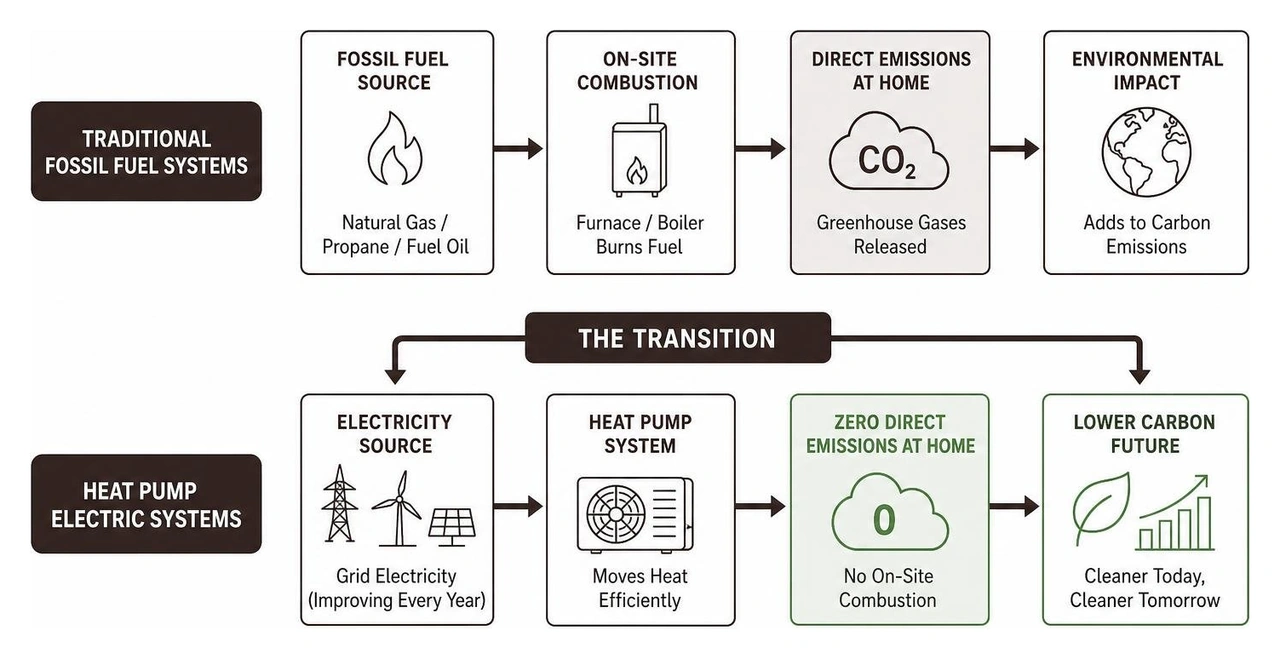
- Grid Decarbonization: As electric utilities phase out coal and transition toward renewable power like hydro, wind, and solar, a heat pump automatically becomes cleaner every single year without requiring system upgrades.
- Pacific Northwest Clean Power: In Oregon communities like Portland, Lake Oswego, West Linn, and Tualatin, local power grids benefit heavily from regional hydroelectric generation, making electric heat pumps one of the cleanest choices for home comfort.
- Solar PV Integration: Homeowners with rooftop solar panels can pair electric heat pumps directly with solar production, offsetting space heating and air conditioning power consumption with clean energy generated right on the roof.
Research from national energy laboratories shows that over 90% of U.S. households would reduce their overall carbon footprint by upgrading to a modern heat pump system.
Frequently Asked Questions About Heat Pump Efficiency
Do heat pumps lose efficiency in freezing temperatures?
Yes, standard air-source heat pumps lose some efficiency as outdoor temperatures drop because there is less ambient thermal energy to extract. However, modern cold-climate certified heat pumps are specifically engineered with variable-speed inverter compressors and enhanced vapor injection to maintain efficiency and strong heat output in sub-zero temperatures as low as -15°F to -22°F.
Can a heat pump completely replace both a furnace and an air conditioner?
Yes, absolutely. A heat pump acts as a high-efficiency central air conditioner during summer and reverses cycle to provide primary home heating during winter. In most mild or moderate climates, a single heat pump system fully replaces both an aging furnace and a standalone AC unit.
What factors cause a heat pump to lose real-world efficiency?
The most common factors that degrade heat pump efficiency include clogged air filters, leaky or uninsulated ductwork, incorrect refrigerant charges, lack of routine maintenance, and poor home insulation. Ensuring proper system sizing with a professional Manual J load calculation prevents efficiency losses.
Upgrade Your Home Comfort with Best Owner Direct HVAC & Electrical
Understanding how heat pump efficiency compares to traditional systems makes one thing clear: heat pumps offer unmatched seasonal efficiency, all-in-one heating and cooling comfort, and lower total carbon emissions. Moving thermal heat energy rather than burning fossil fuel creates a smarter way to manage year-round home comfort.
Whether you live in Banks, Beaverton, Canby, Carlton, Cornelius, Dayton, Dundee, Forest Grove, Gaston, Gladstone, Hillsboro, King City, Lafayette, Lake Oswego, Milwaukie, Newberg, North Plains, Oregon City, Portland, Sherwood, Tigard, Tualatin, West Linn, Wilsonville, or Yamhill, choosing the right system depends on your home's layout, insulation, and comfort goals.
At Best Owner Direct HVAC & Electrical, we focus on reliable, high-quality workmanship and honest, customer-focused care. Our licensed technicians perform precise home evaluations to help you choose the best high-efficiency setup for your household.
Ready to explore your options? Visit our central heat pump service page or contact our friendly team today to schedule an expert home consultation!


How Blocked Return Vents Suffocate Your Heating SystemMany homeowners accidentally cover large return grilles when rearranging furniture for the fall. Find out how this simple mistake starves your furnace of airflow and causes it to overheat.
Read more
How to Diagnose Electrical AC Problems in 3 Easy-to-Follow StepsLearn how electrical connection problems cause AC breakdowns with 3 easy steps. Diagnose warning signs, prevent failures, and protect your system.
Read more
Why Does the Furnace Smell Like Burning Dust on the First Start?That sharp odor on the first chilly September night is alarming, but it rarely means your house is in danger. Learn how to tell harmless burning dust from a serious hazard.
Read more