Menu


Why Knowing How to Apply for Energy Rebates in Oregon Can Save You Real Money
Learning how to apply for energy rebates in Oregon is one of the smartest moves a homeowner can make right now. Oregon received over $113 million in federal funding for two brand-new home energy rebate programs, and a phased rollout is underway in 2026. If you qualify, you could get back thousands of dollars on heat pumps, weatherization, electric appliances, and more.
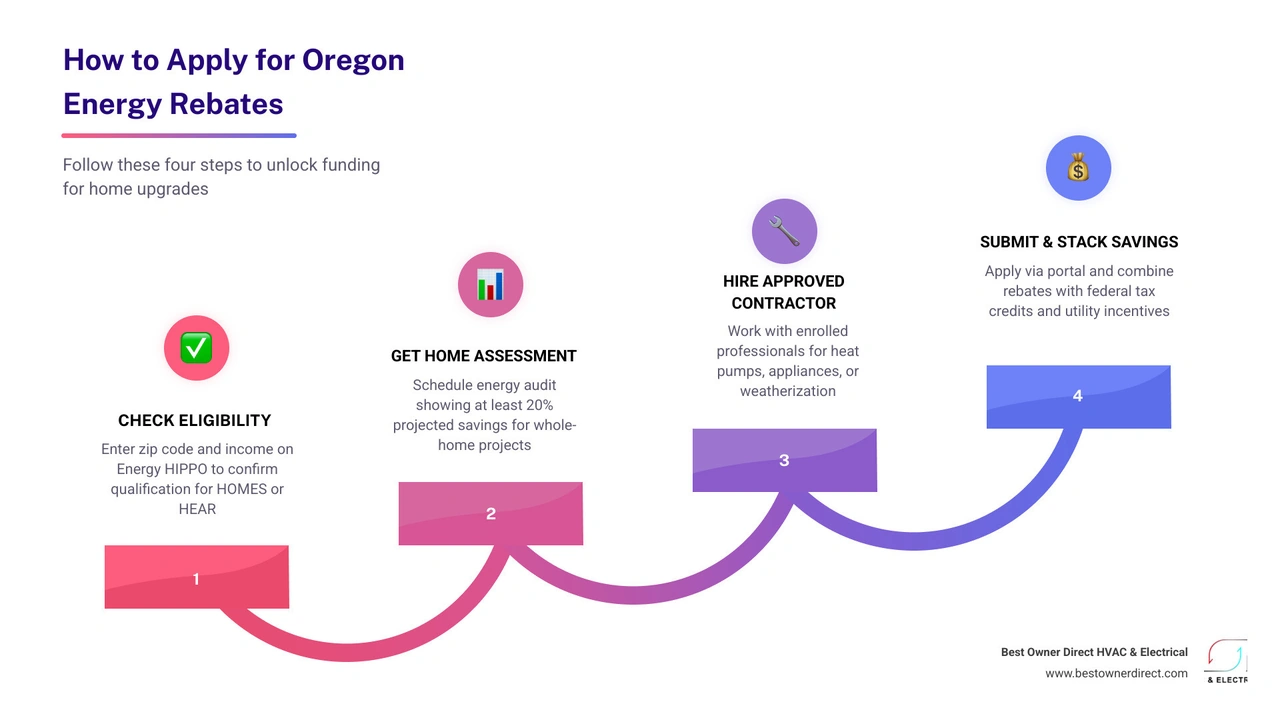
Here is a quick overview of how to apply:
1. Check your eligibility – Use Energy HIPPO to enter your zip code, income, and household size and see which rebates you qualify for.
2. Choose your program – The HOMES program covers whole-home efficiency upgrades; the HEAR program covers specific electric appliances and equipment.
3. Schedule a home energy assessment – HOMES applicants need energy modeling showing at least 20% projected energy savings.
4. Hire an approved contractor – Nearly all rebate-eligible work must be completed by a pre-approved, enrolled contractor.
5. Submit your application – Applications go through the program portal managed by either Earth Advantage or Energy Trust of Oregon, depending on your utility service area.
6. Stack your savings – Combine rebates with federal tax credits and local utility incentives for maximum benefit.
These programs are specifically designed to help Oregon homeowners reduce energy costs and upgrade to cleaner, more efficient systems. Low- and moderate-income households get priority funding and higher rebate percentages. But with fewer than 11,000 households estimated to benefit statewide, funding is limited and will move fast once programs fully open.
Whether you are planning a heat pump installation, replacing an old water heater, or looking to weatherize your home, understanding the process now puts you ahead of the crowd.
Must-know how to apply for energy rebates in oregon terms:
• federal tax credits for heat pump and water heater upgrades
• heat pump water heater rebates in oregon
Oregon’s New Home Energy Rebate Programs (HOMES vs. HEAR)
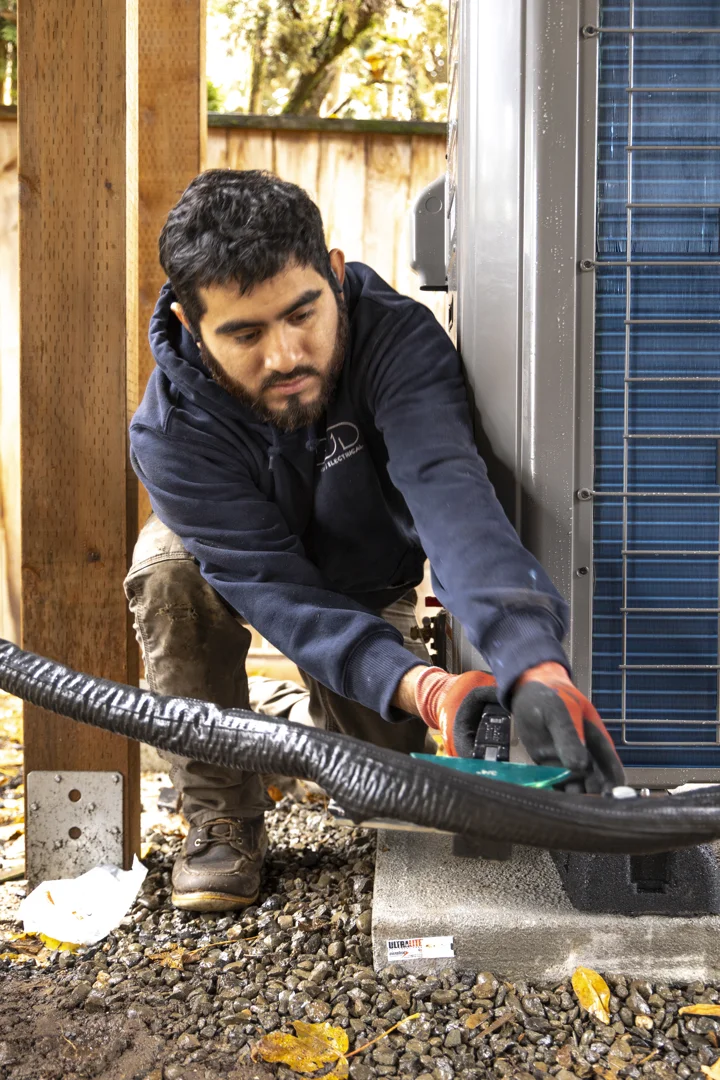
Oregon’s Department of Energy (ODOE) is rolling out two major rebate programs funded by the federal Inflation Reduction Act. These programs are designed to drastically reduce energy consumption while making home comfort more affordable. However, they are administered differently depending on where you live and which utility company keeps your lights on.
If you live in PGE or Pacific Power service territories—which includes most of our neighbors in Portland, Beaverton, Hillsboro, Lake Oswego, Tigard, and Tualatin—your programs will be delivered by the Energy Trust of Oregon. If you live in a consumer-owned utility area or are served by Idaho Power, your programs will be delivered by Earth Advantage.
Understanding which program fits your planned upgrades is the first step in learning how to apply for energy rebates in Oregon. Here is a quick comparison of the two programs:
• Primary Focus — Home Efficiency Rebates (HOMES): Whole-home energy performance & consumption reduction — Home Electrification & Appliance Rebates (HEAR): High-efficiency electric appliance & equipment installation
• Requirement — Home Efficiency Rebates (HOMES): Minimum 20% modeled energy savings — Home Electrification & Appliance Rebates (HEAR): Installation of certified ENERGY STAR appliances
• Best For — Home Efficiency Rebates (HOMES): Comprehensive weatherization, insulation, and multi-system upgrades — Home Electrification & Appliance Rebates (HEAR): Heat pumps, heat pump water heaters, and electric stoves
• Funding Split — Home Efficiency Rebates (HOMES): At least 40% reserved for low-income households — Home Electrification & Appliance Rebates (HEAR): 60% reserved for low-income single-family households
• Eligible Upgrades — Home Efficiency Rebates (HOMES): Insulation, air sealing, duct sealing, and HVAC upgrades — Home Electrification & Appliance Rebates (HEAR): Heat pumps, heat pump water heaters, induction cooktops
What is the Home Efficiency Rebates (HOMES) Program?
The HOMES program is all about performance. Instead of focusing on a single appliance, it looks at your home as a complete system. To qualify for a rebate through the HOMES program, we must use sophisticated energy modeling software to project how much energy your upgrades will save.
Your project must achieve a minimum of 20% projected energy savings to qualify for the baseline rebate. If your upgrades achieve 35% or more in projected savings, your rebate percentage increases significantly, covering a massive portion of the project. This is perfect for older homes in historic areas like Oregon City, Forest Grove, or Yamhill that need a combination of insulation, duct sealing, and a high-efficiency heating upgrade to keep comfortable.
When you combine weatherization with modern heating systems, you do more than just lower your monthly bills. You also make a lasting investment in your property. To see how these whole-home improvements impact your property value, read our guide on Do HVAC Upgrades Add Home Equity. If you are preparing your home for the colder months ahead, you should also check out our practical tips on how to Reduce Energy Costs for This Cold Season.
What is the Home Electrification and Appliance Rebates (HEAR) Program?
While the HOMES program looks at the big picture, the HEAR program is highly specific. It targets the installation of high-efficiency electric appliances and equipment. If you are looking to replace an old, inefficient gas furnace or a standard electric tank water heater with clean, modern electric alternatives, HEAR is your go-to program.
The HEAR program covers up to 100% of the project costs for low-income households and up to 50% for moderate-income households, up to maximum program limits. This program specifically requires the installation of ENERGY STAR certified products. Eligible upgrades include:
• Heat pumps for heating and cooling
• Heat pump water heaters
• Electric stove tops, ranges, and induction cooktops
• Electric heat pump clothes dryers
Switching to a heat pump water heater is one of the single most impactful upgrades you can make. To understand exactly how these systems work and how much they can trim from your utility bills, check out Heat Pump Water Heater Energy Savings Explained. If you are on the fence about making the switch, our Heat Pump Water Heater vs Traditional Tank Comparison breaks down the differences clearly. For a complete deep dive, read our Ultimate Heat Pump Water Heater Guide.
How to Apply for Energy Rebates in Oregon: Step-by-Step Guide
Now that you know the difference between the two primary programs, let’s walk through the actual application process. Navigating state and federal portals can sometimes feel like trying to program an ancient VCR, but taking it step-by-step makes it simple. Before you jump into the paperwork, it is always wise to look at your overall energy habits. You can start saving immediately by following these Essential Tips to Reduce Energy Consumption in Your Home.
Step 1: Verify Your Income and Household Eligibility
Because these programs are funded by federal grants, they place a heavy emphasis on supporting low- and moderate-income households. In fact, ODOE has reserved at least 40% of HOMES funding and 60% of HEAR single-family funding specifically for low-income households.
To see where your household stands, you will need to compare your total household income against the Area Median Income (AMI) for your specific county.
• Low-Income: Households earning 80% or less of the AMI.
• Moderate-Income: Households earning between 80% and 150% of the AMI.
You can verify your income through several pathways. The easiest method is “categorical eligibility.” If you already participate in programs like Oregon Housing and Community Services (OHCS) energy assistance, the Oregon Health Authority, or the Department of Human Services, you may automatically qualify. Otherwise, you will need to provide official tax transcripts from the IRS or the Oregon Department of Revenue to verify your household income during the application process.
Step 2: Schedule a Home Energy Assessment
If you are applying for the performance-based HOMES program, you cannot skip this step. A professional energy assessment is required to establish a baseline of your home’s current energy performance.
During the assessment, an energy auditor will evaluate your home’s insulation, windows, heating and cooling equipment, and ductwork. They will often perform a blower door test to measure air leakage. This data is then plugged into approved energy modeling software to project which upgrades will yield that golden 20% or 35% energy savings mark. In many cases, obtaining a certified Home Energy Score is also highly recommended to ensure your application sails through the approval process smoothly.
While planning large-scale upgrades, do not overlook simple, high-impact changes you can make right now. For instance, discover the Ways the Right Thermostat Can Improve Energy Efficiency to start saving before your major installation even begins.
Step 3: Work with an Approved Contractor
You cannot simply buy a heat pump online, install it yourself over the weekend, and expect a rebate check in the mail. To protect consumers and ensure high-quality work, ODOE requires that nearly all rebate-eligible projects be completed by an enrolled, state-approved contractor.
Approved contractors are trained on program specifications, safety standards, and proper installation techniques. Working with a professional ensures that your system is sized correctly for our unique Pacific Northwest climate—whether you are dealing with damp winters in Sherwood or hot summer days in West Linn.
Additionally, keeping your systems maintained is key to protecting your investment over time. If you are wondering how to keep your new system running at peak efficiency, read our analysis on Are HVAC Service and Maintenance Programs Worth the Cost.
If you live in Cornelius, Hillsboro, Beaverton, or anywhere else in our Portland-metro service area, our team at Best Owner Direct HVAC & Electrical is here to help you navigate the entire process from start to finish.
Maximizing Your Savings: Combining Rebates with Tax Credits and Utility Incentives
The secret to getting the absolute best return on your investment is “incentive stacking.” This is the practice of combining state rebates, federal tax credits, and local utility incentives on a single project. When done correctly, stacking can cover a massive portion of your total upgrade costs.
How to Apply for Energy Rebates in Oregon Alongside Federal Tax Credits
In addition to the state-run HOMES and HEAR programs, the federal government offers the Energy Efficient Home Improvement Credit (Section 25C). This allows homeowners to claim a tax credit of up to 30% of the cost of eligible energy-efficient upgrades when they file their annual taxes.
You can combine these tax credits with your Oregon state rebates. For example, if you install a qualifying high-efficiency heat pump, you can receive your point-of-sale or post-purchase rebate through the state program, and then claim the 30% tax credit on the remaining out-of-pocket balance when you file your taxes.
If you are planning to upgrade your cooling system, you can learn more about modern, high-efficiency options in our guide on Energy Efficient Air Conditioning. If a water heater upgrade is on your horizon, check out our breakdown of Energy Efficient Water Heater Options Compared to find the perfect system to pair with your tax credits.
Local Utility Programs and the Oregon Solar + Storage Rebate
Your local electric utility is another great source of savings. PGE and Pacific Power offer robust cash-back incentives and programs like Wattsmart. These programs often run in tandem with the Energy Trust of Oregon, making it easy to claim utility-specific discounts directly through your approved contractor.
Furthermore, if you are looking to pair your HVAC with solar energy, the Oregon Solar + Storage Rebate Program is an incredible resource. The state has allocated $1.1 million for a new round of funding opening on June 15, 2026.
This program provides rebates directly to approved contractors, who pass the savings on to you. Low- and moderate-income homeowners can receive substantial rebates for solar electric systems and paired energy storage systems (which must have “islanding” capability to provide backup power during grid outages). Affordable housing developers and low-income service providers in our communities can also apply for these solar rebates to help lower operational costs.
Frequently Asked Questions About Oregon Energy Rebates
When will the 2026 HOMES and HEAR rebate programs officially launch?
The Oregon Department of Energy is rolling out the programs in phases throughout 2026. The initial launch for single-family home upgrades is scheduled for Spring 2026, followed by multi-unit and multifamily housing programs in Summer 2026. The final phase, which includes convenient in-store retail coupons for appliances like heat pump clothes dryers and induction cooktops, is expected to launch in Fall 2026. Always check the official ODOE portal or sign up for their newsletter to get the exact launch dates as federal approvals are finalized.
Can renters learn how to apply for energy rebates in oregon?
Yes! Renters are absolutely eligible for energy rebates, particularly under the HEAR program. However, because these upgrades involve permanent physical changes to the property (like installing a new heat pump water heater or upgrading an electrical panel), you must obtain written permission from your landlord before any work begins. Multifamily building owners can also apply for building-wide rebates, which is a fantastic way to improve comfort for all tenants.
What documentation is required to verify my income?
To qualify for low- or moderate-income tiers, you will typically need to provide your most recent IRS tax transcripts or documents from the Oregon Department of Revenue. If you already receive state assistance—such as through OHCS, SNAP, or Oregon Health Plan programs—you can often use your participation in those programs as automatic “categorical” proof of income, simplifying the paperwork significantly.
Conclusion
Upgrading your home’s HVAC is one of the best ways to lower your utility bills, improve your daily comfort, and reduce your environmental footprint. With Oregon’s new home energy rebate programs rolling out in 2026, there has never been a better time to plan your upgrades.
At Best Owner Direct HVAC & Electrical, we are proud to serve our neighbors throughout Cornelius, Hillsboro, Beaverton, Portland, and the surrounding areas. Our family-owned business is dedicated to providing reliable, high-quality workmanship, and we are ready to help you maximize your savings.
Ready to make your home more energy-efficient? Learn more about Oregon energy rebates and schedule your upgrade today.


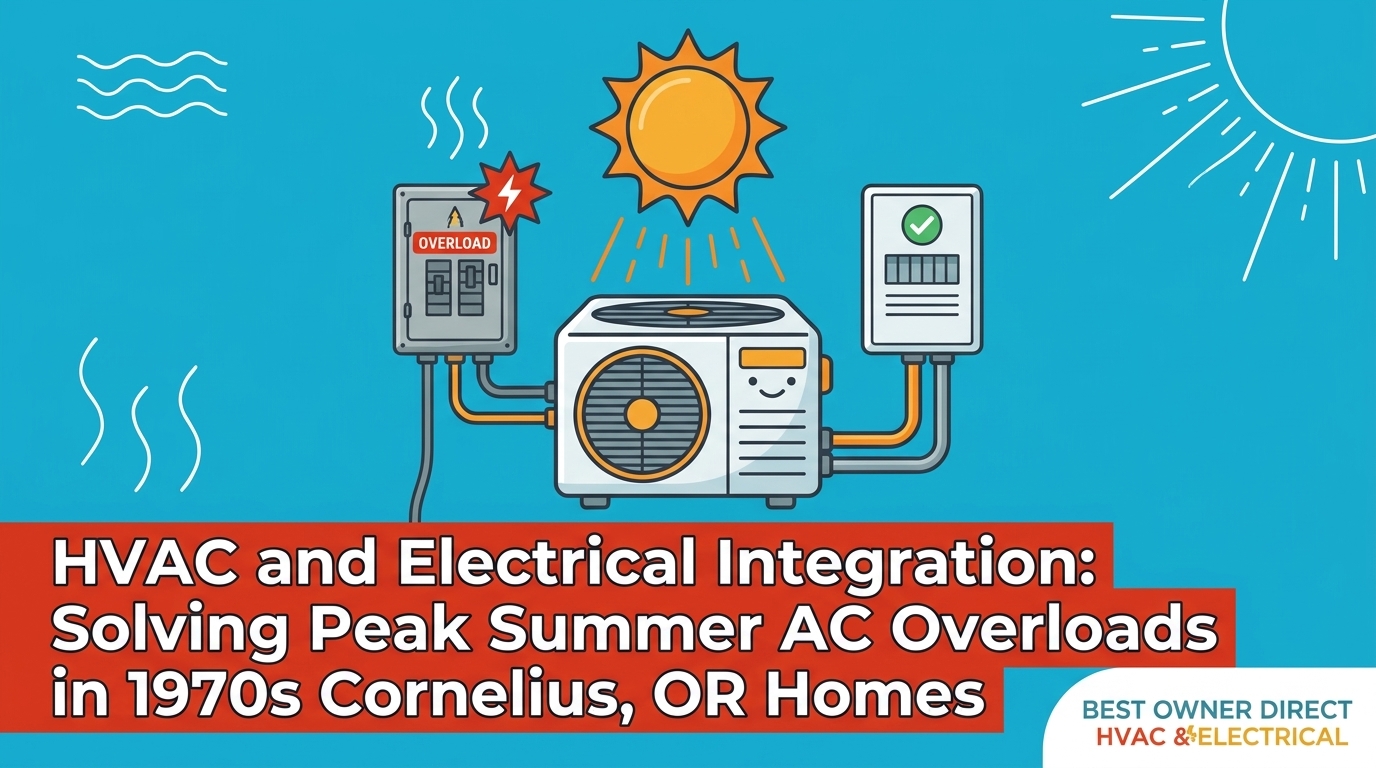
How Cornelius Homes Handle Peak Summer AC Loads on Older Electrical PanelsModern AC units often overwhelm aging 1970s electrical panels during intense summer heat. Review the warning signs and specific upgrades needed to keep your home safely cooled.
Read more

The Electrical Toll of a Struggling HVAC System on Your Home's BreakersAn aging air conditioner does not just lose cooling power; it actively stresses your electrical panel. A tripping breaker during late summer heat is a warning sign requiring professional diagnosis.
Read more
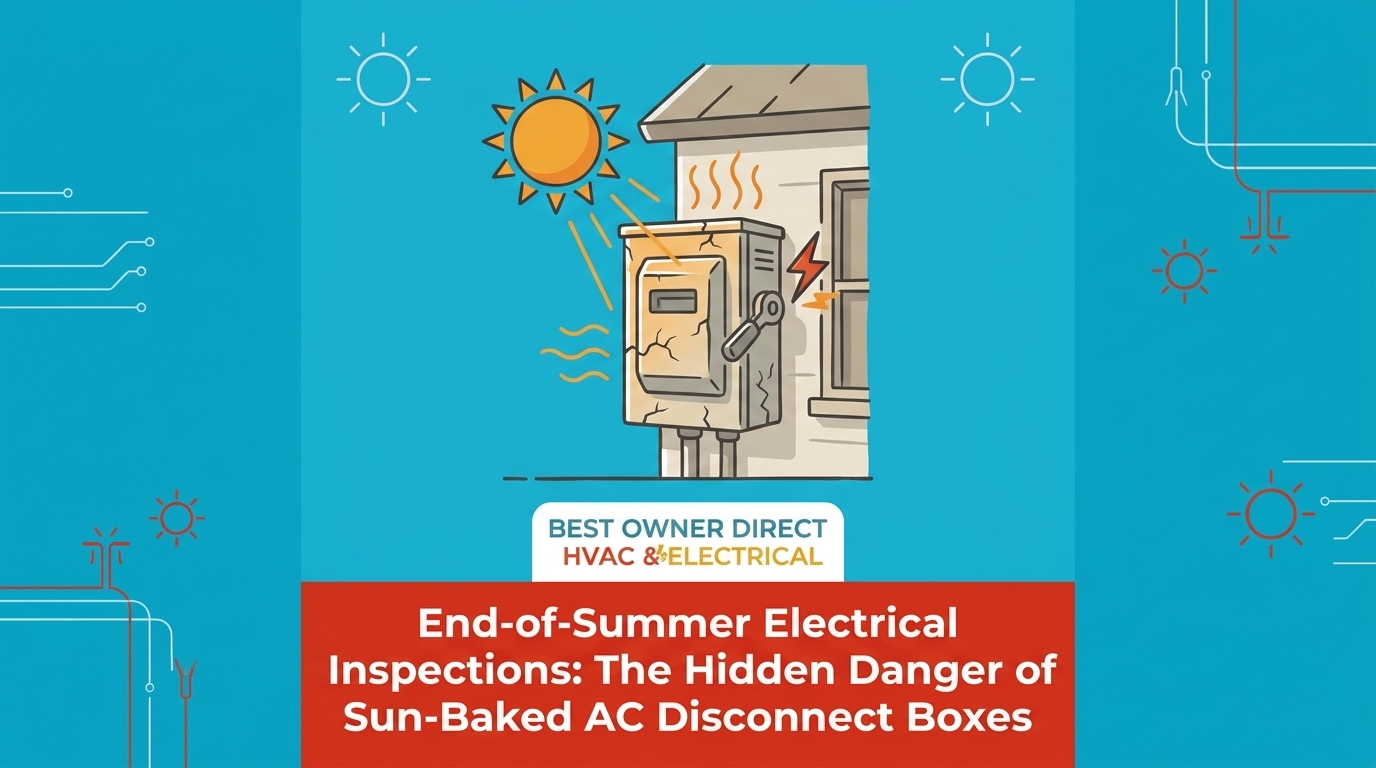
End-of-Summer Electrical Inspections: Checking Outdoor Disconnect BoxesAfter months of intense Pacific Northwest sun, your outdoor AC disconnect box can become brittle and unsafe. Learn the visual warning signs of UV degradation.
Read more